
- Our Services
- Concept Design›Kitchen Design›Renovation›Cloud Kitchen Setup›2D/3D Layout Design›Turnkey Solutions›Tile Work›Painting›Joinery›Custom Furniture›MEP Engineering›HVAC Installation›Kitchen Exhaust›Fire Suppression›Stainless Steel Fabrication›Food Truck & Container›Staff Uniforms›LED Signage›Bill of Quantities›OUR SERVICESConcept Design VIEW MAIN PAGE →
Brand, cuisine and concept development that defines your restaurant before design begins.
Turnkey DeliveryUAE-Code CompliantOn-Time HandoverLearn More →OUR SERVICESKitchen Design VIEW MAIN PAGE →Commercial kitchen layouts engineered for flow, capacity and UAE code.
Turnkey DeliveryUAE-Code CompliantOn-Time HandoverLearn More →OUR SERVICESRenovation VIEW MAIN PAGE →Refresh or fully transform an existing restaurant with minimal downtime.
Turnkey DeliveryUAE-Code CompliantOn-Time HandoverLearn More →OUR SERVICESCloud Kitchen Setup VIEW MAIN PAGE →Turnkey delivery-only kitchens — licensed, fitted and platform-ready.
Turnkey DeliveryUAE-Code CompliantOn-Time HandoverLearn More →OUR SERVICES2D/3D Layout Design VIEW MAIN PAGE →Concept layouts and photoreal 3D visuals so you see the space before you build it.
Turnkey DeliveryUAE-Code CompliantOn-Time HandoverLearn More →OUR SERVICESTurnkey Solutions VIEW MAIN PAGE →One contract from empty shell to opening day — design, build, MEP and handover.
Turnkey DeliveryUAE-Code CompliantOn-Time HandoverLearn More →OUR SERVICESTile Work VIEW MAIN PAGE →Durable, hygienic floor and wall tiling built for high-traffic F&B spaces.
Turnkey DeliveryUAE-Code CompliantOn-Time HandoverLearn More →OUR SERVICESPainting VIEW MAIN PAGE →Flawless interior and exterior finishes with food-safe, washable paints.
Turnkey DeliveryUAE-Code CompliantOn-Time HandoverLearn More →OUR SERVICESJoinery VIEW MAIN PAGE →Bespoke counters, bars, millwork and custom woodwork.
Turnkey DeliveryUAE-Code CompliantOn-Time HandoverLearn More →OUR SERVICESCustom Furniture VIEW MAIN PAGE →Made-to-measure seating, tables and fixtures for your concept.
Turnkey DeliveryUAE-Code CompliantOn-Time HandoverLearn More →OUR SERVICESMEP Engineering VIEW MAIN PAGE →Mechanical, electrical and plumbing designed and installed to UAE code.
Turnkey DeliveryUAE-Code CompliantOn-Time HandoverLearn More →OUR SERVICESHVAC Installation VIEW MAIN PAGE →Climate control sized for busy kitchens and comfortable dining.
Turnkey DeliveryUAE-Code CompliantOn-Time HandoverLearn More →OUR SERVICESKitchen Exhaust VIEW MAIN PAGE →Compliant kitchen exhaust and ventilation systems.
Turnkey DeliveryUAE-Code CompliantOn-Time HandoverLearn More →OUR SERVICESFire Suppression VIEW MAIN PAGE →Certified kitchen fire-suppression systems and Civil Defence sign-off.
Turnkey DeliveryUAE-Code CompliantOn-Time HandoverLearn More →OUR SERVICESStainless Steel Fabrication VIEW MAIN PAGE →Custom commercial kitchen steelwork — tables, hoods, shelving.
Turnkey DeliveryUAE-Code CompliantOn-Time HandoverLearn More →OUR SERVICESFood Truck & Container VIEW MAIN PAGE →Turnkey food trucks and container kitchens, built and fitted out.
Turnkey DeliveryUAE-Code CompliantOn-Time HandoverLearn More →OUR SERVICESStaff Uniforms VIEW MAIN PAGE →Branded uniforms for front and back of house.
Turnkey DeliveryUAE-Code CompliantOn-Time HandoverLearn More →OUR SERVICESLED Signage VIEW MAIN PAGE →Eye-catching LED signage and storefront branding.
Turnkey DeliveryUAE-Code CompliantOn-Time HandoverLearn More →OUR SERVICESBill of Quantities VIEW MAIN PAGE →Accurate costing and BoQ so your fit-out stays on budget.
Turnkey DeliveryUAE-Code CompliantOn-Time HandoverLearn More →MAKE MY RESTAURANTConcept DesignBrand, cuisine and concept development that defines your restaurant before design begins.
Turnkey DeliveryUAE-Code CompliantOn-Time HandoverGet a Free QuoteMAKE MY RESTAURANTKitchen DesignCommercial kitchen layouts engineered for flow, capacity and UAE code.
Turnkey DeliveryUAE-Code CompliantOn-Time HandoverGet a Free QuoteMAKE MY RESTAURANTRenovationRefresh or fully transform an existing restaurant with minimal downtime.
Turnkey DeliveryUAE-Code CompliantOn-Time HandoverGet a Free QuoteMAKE MY RESTAURANTCloud Kitchen SetupTurnkey delivery-only kitchens — licensed, fitted and platform-ready.
Turnkey DeliveryUAE-Code CompliantOn-Time HandoverGet a Free QuoteMAKE MY RESTAURANT2D/3D Layout DesignConcept layouts and photoreal 3D visuals so you see the space before you build it.
Turnkey DeliveryUAE-Code CompliantOn-Time HandoverGet a Free QuoteMAKE MY RESTAURANTTurnkey SolutionsOne contract from empty shell to opening day — design, build, MEP and handover.
Turnkey DeliveryUAE-Code CompliantOn-Time HandoverGet a Free QuoteMAKE MY RESTAURANTTile WorkDurable, hygienic floor and wall tiling built for high-traffic F&B spaces.
Turnkey DeliveryUAE-Code CompliantOn-Time HandoverGet a Free QuoteMAKE MY RESTAURANTPaintingFlawless interior and exterior finishes with food-safe, washable paints.
Turnkey DeliveryUAE-Code CompliantOn-Time HandoverGet a Free QuoteMAKE MY RESTAURANTJoineryBespoke counters, bars, millwork and custom woodwork.
Turnkey DeliveryUAE-Code CompliantOn-Time HandoverGet a Free QuoteMAKE MY RESTAURANTCustom FurnitureMade-to-measure seating, tables and fixtures for your concept.
Turnkey DeliveryUAE-Code CompliantOn-Time HandoverGet a Free QuoteMAKE MY RESTAURANTMEP EngineeringMechanical, electrical and plumbing designed and installed to UAE code.
Turnkey DeliveryUAE-Code CompliantOn-Time HandoverGet a Free QuoteMAKE MY RESTAURANTHVAC InstallationClimate control sized for busy kitchens and comfortable dining.
Turnkey DeliveryUAE-Code CompliantOn-Time HandoverGet a Free QuoteMAKE MY RESTAURANTKitchen ExhaustCompliant kitchen exhaust and ventilation systems.
Turnkey DeliveryUAE-Code CompliantOn-Time HandoverGet a Free QuoteMAKE MY RESTAURANTFire SuppressionCertified kitchen fire-suppression systems and Civil Defence sign-off.
Turnkey DeliveryUAE-Code CompliantOn-Time HandoverGet a Free QuoteMAKE MY RESTAURANTStainless Steel FabricationCustom commercial kitchen steelwork — tables, hoods, shelving.
Turnkey DeliveryUAE-Code CompliantOn-Time HandoverGet a Free QuoteMAKE MY RESTAURANTFood Truck & ContainerTurnkey food trucks and container kitchens, built and fitted out.
Turnkey DeliveryUAE-Code CompliantOn-Time HandoverGet a Free QuoteMAKE MY RESTAURANTStaff UniformsBranded uniforms for front and back of house.
Turnkey DeliveryUAE-Code CompliantOn-Time HandoverGet a Free QuoteMAKE MY RESTAURANTLED SignageEye-catching LED signage and storefront branding.
Turnkey DeliveryUAE-Code CompliantOn-Time HandoverGet a Free QuoteMAKE MY RESTAURANTBill of QuantitiesAccurate costing and BoQ so your fit-out stays on budget.
Turnkey DeliveryUAE-Code CompliantOn-Time HandoverGet a Free Quote
-
- Essential Services
- F&B Business Setup›Compliance Audit›Grease Trap Cleaning›Kitchen Hood Cleaning›Ecology Unit Cleaning›Pest Control›AC Maintenance›Stewarding›PIC Training›Food Safety Training›Fire Safety Training›PRO Services›VAT & Corporate Tax›Bookkeeping›Bank Account Opening›Social Media Mgmt›Delivery Apps Mgmt›ESSENTIAL SERVICESF&B Business Setup VIEW MAIN PAGE →
End-to-end licensing, permits and setup to launch your F&B business in the UAE.
Licensed & CertifiedAll 7 EmiratesAnnual ContractsLearn More →ESSENTIAL SERVICESCompliance Audit VIEW MAIN PAGE →Full municipality, Civil Defence and food-safety compliance audit and gap report.
Licensed & CertifiedAll 7 EmiratesAnnual ContractsLearn More →ESSENTIAL SERVICESGrease Trap Cleaning VIEW MAIN PAGE →Scheduled grease trap cleaning with full compliance documentation.
Licensed & CertifiedAll 7 EmiratesAnnual ContractsLearn More →ESSENTIAL SERVICESKitchen Hood Cleaning VIEW MAIN PAGE →Deep hood and duct cleaning on annual contracts.
Licensed & CertifiedAll 7 EmiratesAnnual ContractsLearn More →ESSENTIAL SERVICESEcology Unit Cleaning VIEW MAIN PAGE →ESP / ecology unit servicing with municipality reports.
Licensed & CertifiedAll 7 EmiratesAnnual ContractsLearn More →ESSENTIAL SERVICESPest Control VIEW MAIN PAGE →Food-safe pest management on annual contracts.
Licensed & CertifiedAll 7 EmiratesAnnual ContractsLearn More →ESSENTIAL SERVICESAC Maintenance VIEW MAIN PAGE →Preventive AC maintenance plans that avoid breakdowns.
Licensed & CertifiedAll 7 EmiratesAnnual ContractsLearn More →ESSENTIAL SERVICESStewarding VIEW MAIN PAGE →Trained stewarding and cleaning crews on call.
Licensed & CertifiedAll 7 EmiratesAnnual ContractsLearn More →ESSENTIAL SERVICESPIC Training VIEW MAIN PAGE →Person-in-Charge food safety certification for your team.
Licensed & CertifiedAll 7 EmiratesAnnual ContractsLearn More →ESSENTIAL SERVICESFood Safety Training VIEW MAIN PAGE →Municipality-approved food safety courses.
Licensed & CertifiedAll 7 EmiratesAnnual ContractsLearn More →ESSENTIAL SERVICESFire Safety Training VIEW MAIN PAGE →Staff fire safety and evacuation training.
Licensed & CertifiedAll 7 EmiratesAnnual ContractsLearn More →ESSENTIAL SERVICESPRO Services VIEW MAIN PAGE →Licensing, permits and government liaison, fully handled.
Licensed & CertifiedAll 7 EmiratesAnnual ContractsLearn More →ESSENTIAL SERVICESVAT & Corporate Tax VIEW MAIN PAGE →VAT and corporate tax registration and filings, managed.
Licensed & CertifiedAll 7 EmiratesAnnual ContractsLearn More →ESSENTIAL SERVICESBookkeeping VIEW MAIN PAGE →Monthly bookkeeping and accounts for restaurants.
Licensed & CertifiedAll 7 EmiratesAnnual ContractsLearn More →ESSENTIAL SERVICESBank Account Opening VIEW MAIN PAGE →Business bank account setup assistance.
Licensed & CertifiedAll 7 EmiratesAnnual ContractsLearn More →ESSENTIAL SERVICESSocial Media Mgmt VIEW MAIN PAGE →Content and ads that fill tables.
Licensed & CertifiedAll 7 EmiratesAnnual ContractsLearn More →ESSENTIAL SERVICESDelivery Apps Mgmt VIEW MAIN PAGE →Talabat, Deliveroo and Noon menu and listing optimisation.
Licensed & CertifiedAll 7 EmiratesAnnual ContractsLearn More →MAKE MY RESTAURANTF&B Business SetupEnd-to-end licensing, permits and setup to launch your F&B business in the UAE.
Licensed & CertifiedAll 7 EmiratesAnnual ContractsGet a Free QuoteMAKE MY RESTAURANTCompliance AuditFull municipality, Civil Defence and food-safety compliance audit and gap report.
Licensed & CertifiedAll 7 EmiratesAnnual ContractsGet a Free QuoteMAKE MY RESTAURANTGrease Trap CleaningScheduled grease trap cleaning with full compliance documentation.
Licensed & CertifiedAll 7 EmiratesAnnual ContractsGet a Free QuoteMAKE MY RESTAURANTKitchen Hood CleaningDeep hood and duct cleaning on annual contracts.
Licensed & CertifiedAll 7 EmiratesAnnual ContractsGet a Free QuoteMAKE MY RESTAURANTEcology Unit CleaningESP / ecology unit servicing with municipality reports.
Licensed & CertifiedAll 7 EmiratesAnnual ContractsGet a Free QuoteMAKE MY RESTAURANTPest ControlFood-safe pest management on annual contracts.
Licensed & CertifiedAll 7 EmiratesAnnual ContractsGet a Free QuoteMAKE MY RESTAURANTAC MaintenancePreventive AC maintenance plans that avoid breakdowns.
Licensed & CertifiedAll 7 EmiratesAnnual ContractsGet a Free QuoteMAKE MY RESTAURANTStewardingTrained stewarding and cleaning crews on call.
Licensed & CertifiedAll 7 EmiratesAnnual ContractsGet a Free QuoteMAKE MY RESTAURANTPIC TrainingPerson-in-Charge food safety certification for your team.
Licensed & CertifiedAll 7 EmiratesAnnual ContractsGet a Free QuoteMAKE MY RESTAURANTFood Safety TrainingMunicipality-approved food safety courses.
Licensed & CertifiedAll 7 EmiratesAnnual ContractsGet a Free QuoteMAKE MY RESTAURANTFire Safety TrainingStaff fire safety and evacuation training.
Licensed & CertifiedAll 7 EmiratesAnnual ContractsGet a Free QuoteMAKE MY RESTAURANTPRO ServicesLicensing, permits and government liaison, fully handled.
Licensed & CertifiedAll 7 EmiratesAnnual ContractsGet a Free QuoteMAKE MY RESTAURANTVAT & Corporate TaxVAT and corporate tax registration and filings, managed.
Licensed & CertifiedAll 7 EmiratesAnnual ContractsGet a Free QuoteMAKE MY RESTAURANTBookkeepingMonthly bookkeeping and accounts for restaurants.
Licensed & CertifiedAll 7 EmiratesAnnual ContractsGet a Free QuoteMAKE MY RESTAURANTBank Account OpeningBusiness bank account setup assistance.
Licensed & CertifiedAll 7 EmiratesAnnual ContractsGet a Free QuoteMAKE MY RESTAURANTSocial Media MgmtContent and ads that fill tables.
Licensed & CertifiedAll 7 EmiratesAnnual ContractsGet a Free QuoteMAKE MY RESTAURANTDelivery Apps MgmtTalabat, Deliveroo and Noon menu and listing optimisation.
Licensed & CertifiedAll 7 EmiratesAnnual ContractsGet a Free Quote
-
- Guides
- Blogs
- About
Enquiry
+971 58 570 7110

- Our Services
- Concept Design›Kitchen Design›Renovation›Cloud Kitchen Setup›2D/3D Layout Design›Turnkey Solutions›Tile Work›Painting›Joinery›Custom Furniture›MEP Engineering›HVAC Installation›Kitchen Exhaust›Fire Suppression›Stainless Steel Fabrication›Food Truck & Container›Staff Uniforms›LED Signage›Bill of Quantities›OUR SERVICESConcept Design VIEW MAIN PAGE →
Brand, cuisine and concept development that defines your restaurant before design begins.
Turnkey DeliveryUAE-Code CompliantOn-Time HandoverLearn More →OUR SERVICESKitchen Design VIEW MAIN PAGE →Commercial kitchen layouts engineered for flow, capacity and UAE code.
Turnkey DeliveryUAE-Code CompliantOn-Time HandoverLearn More →OUR SERVICESRenovation VIEW MAIN PAGE →Refresh or fully transform an existing restaurant with minimal downtime.
Turnkey DeliveryUAE-Code CompliantOn-Time HandoverLearn More →OUR SERVICESCloud Kitchen Setup VIEW MAIN PAGE →Turnkey delivery-only kitchens — licensed, fitted and platform-ready.
Turnkey DeliveryUAE-Code CompliantOn-Time HandoverLearn More →OUR SERVICES2D/3D Layout Design VIEW MAIN PAGE →Concept layouts and photoreal 3D visuals so you see the space before you build it.
Turnkey DeliveryUAE-Code CompliantOn-Time HandoverLearn More →OUR SERVICESTurnkey Solutions VIEW MAIN PAGE →One contract from empty shell to opening day — design, build, MEP and handover.
Turnkey DeliveryUAE-Code CompliantOn-Time HandoverLearn More →OUR SERVICESTile Work VIEW MAIN PAGE →Durable, hygienic floor and wall tiling built for high-traffic F&B spaces.
Turnkey DeliveryUAE-Code CompliantOn-Time HandoverLearn More →OUR SERVICESPainting VIEW MAIN PAGE →Flawless interior and exterior finishes with food-safe, washable paints.
Turnkey DeliveryUAE-Code CompliantOn-Time HandoverLearn More →OUR SERVICESJoinery VIEW MAIN PAGE →Bespoke counters, bars, millwork and custom woodwork.
Turnkey DeliveryUAE-Code CompliantOn-Time HandoverLearn More →OUR SERVICESCustom Furniture VIEW MAIN PAGE →Made-to-measure seating, tables and fixtures for your concept.
Turnkey DeliveryUAE-Code CompliantOn-Time HandoverLearn More →OUR SERVICESMEP Engineering VIEW MAIN PAGE →Mechanical, electrical and plumbing designed and installed to UAE code.
Turnkey DeliveryUAE-Code CompliantOn-Time HandoverLearn More →OUR SERVICESHVAC Installation VIEW MAIN PAGE →Climate control sized for busy kitchens and comfortable dining.
Turnkey DeliveryUAE-Code CompliantOn-Time HandoverLearn More →OUR SERVICESKitchen Exhaust VIEW MAIN PAGE →Compliant kitchen exhaust and ventilation systems.
Turnkey DeliveryUAE-Code CompliantOn-Time HandoverLearn More →OUR SERVICESFire Suppression VIEW MAIN PAGE →Certified kitchen fire-suppression systems and Civil Defence sign-off.
Turnkey DeliveryUAE-Code CompliantOn-Time HandoverLearn More →OUR SERVICESStainless Steel Fabrication VIEW MAIN PAGE →Custom commercial kitchen steelwork — tables, hoods, shelving.
Turnkey DeliveryUAE-Code CompliantOn-Time HandoverLearn More →OUR SERVICESFood Truck & Container VIEW MAIN PAGE →Turnkey food trucks and container kitchens, built and fitted out.
Turnkey DeliveryUAE-Code CompliantOn-Time HandoverLearn More →OUR SERVICESStaff Uniforms VIEW MAIN PAGE →Branded uniforms for front and back of house.
Turnkey DeliveryUAE-Code CompliantOn-Time HandoverLearn More →OUR SERVICESLED Signage VIEW MAIN PAGE →Eye-catching LED signage and storefront branding.
Turnkey DeliveryUAE-Code CompliantOn-Time HandoverLearn More →OUR SERVICESBill of Quantities VIEW MAIN PAGE →Accurate costing and BoQ so your fit-out stays on budget.
Turnkey DeliveryUAE-Code CompliantOn-Time HandoverLearn More →MAKE MY RESTAURANTConcept DesignBrand, cuisine and concept development that defines your restaurant before design begins.
Turnkey DeliveryUAE-Code CompliantOn-Time HandoverGet a Free QuoteMAKE MY RESTAURANTKitchen DesignCommercial kitchen layouts engineered for flow, capacity and UAE code.
Turnkey DeliveryUAE-Code CompliantOn-Time HandoverGet a Free QuoteMAKE MY RESTAURANTRenovationRefresh or fully transform an existing restaurant with minimal downtime.
Turnkey DeliveryUAE-Code CompliantOn-Time HandoverGet a Free QuoteMAKE MY RESTAURANTCloud Kitchen SetupTurnkey delivery-only kitchens — licensed, fitted and platform-ready.
Turnkey DeliveryUAE-Code CompliantOn-Time HandoverGet a Free QuoteMAKE MY RESTAURANT2D/3D Layout DesignConcept layouts and photoreal 3D visuals so you see the space before you build it.
Turnkey DeliveryUAE-Code CompliantOn-Time HandoverGet a Free QuoteMAKE MY RESTAURANTTurnkey SolutionsOne contract from empty shell to opening day — design, build, MEP and handover.
Turnkey DeliveryUAE-Code CompliantOn-Time HandoverGet a Free QuoteMAKE MY RESTAURANTTile WorkDurable, hygienic floor and wall tiling built for high-traffic F&B spaces.
Turnkey DeliveryUAE-Code CompliantOn-Time HandoverGet a Free QuoteMAKE MY RESTAURANTPaintingFlawless interior and exterior finishes with food-safe, washable paints.
Turnkey DeliveryUAE-Code CompliantOn-Time HandoverGet a Free QuoteMAKE MY RESTAURANTJoineryBespoke counters, bars, millwork and custom woodwork.
Turnkey DeliveryUAE-Code CompliantOn-Time HandoverGet a Free QuoteMAKE MY RESTAURANTCustom FurnitureMade-to-measure seating, tables and fixtures for your concept.
Turnkey DeliveryUAE-Code CompliantOn-Time HandoverGet a Free QuoteMAKE MY RESTAURANTMEP EngineeringMechanical, electrical and plumbing designed and installed to UAE code.
Turnkey DeliveryUAE-Code CompliantOn-Time HandoverGet a Free QuoteMAKE MY RESTAURANTHVAC InstallationClimate control sized for busy kitchens and comfortable dining.
Turnkey DeliveryUAE-Code CompliantOn-Time HandoverGet a Free QuoteMAKE MY RESTAURANTKitchen ExhaustCompliant kitchen exhaust and ventilation systems.
Turnkey DeliveryUAE-Code CompliantOn-Time HandoverGet a Free QuoteMAKE MY RESTAURANTFire SuppressionCertified kitchen fire-suppression systems and Civil Defence sign-off.
Turnkey DeliveryUAE-Code CompliantOn-Time HandoverGet a Free QuoteMAKE MY RESTAURANTStainless Steel FabricationCustom commercial kitchen steelwork — tables, hoods, shelving.
Turnkey DeliveryUAE-Code CompliantOn-Time HandoverGet a Free QuoteMAKE MY RESTAURANTFood Truck & ContainerTurnkey food trucks and container kitchens, built and fitted out.
Turnkey DeliveryUAE-Code CompliantOn-Time HandoverGet a Free QuoteMAKE MY RESTAURANTStaff UniformsBranded uniforms for front and back of house.
Turnkey DeliveryUAE-Code CompliantOn-Time HandoverGet a Free QuoteMAKE MY RESTAURANTLED SignageEye-catching LED signage and storefront branding.
Turnkey DeliveryUAE-Code CompliantOn-Time HandoverGet a Free QuoteMAKE MY RESTAURANTBill of QuantitiesAccurate costing and BoQ so your fit-out stays on budget.
Turnkey DeliveryUAE-Code CompliantOn-Time HandoverGet a Free Quote
-
- Essential Services
- F&B Business Setup›Compliance Audit›Grease Trap Cleaning›Kitchen Hood Cleaning›Ecology Unit Cleaning›Pest Control›AC Maintenance›Stewarding›PIC Training›Food Safety Training›Fire Safety Training›PRO Services›VAT & Corporate Tax›Bookkeeping›Bank Account Opening›Social Media Mgmt›Delivery Apps Mgmt›ESSENTIAL SERVICESF&B Business Setup VIEW MAIN PAGE →
End-to-end licensing, permits and setup to launch your F&B business in the UAE.
Licensed & CertifiedAll 7 EmiratesAnnual ContractsLearn More →ESSENTIAL SERVICESCompliance Audit VIEW MAIN PAGE →Full municipality, Civil Defence and food-safety compliance audit and gap report.
Licensed & CertifiedAll 7 EmiratesAnnual ContractsLearn More →ESSENTIAL SERVICESGrease Trap Cleaning VIEW MAIN PAGE →Scheduled grease trap cleaning with full compliance documentation.
Licensed & CertifiedAll 7 EmiratesAnnual ContractsLearn More →ESSENTIAL SERVICESKitchen Hood Cleaning VIEW MAIN PAGE →Deep hood and duct cleaning on annual contracts.
Licensed & CertifiedAll 7 EmiratesAnnual ContractsLearn More →ESSENTIAL SERVICESEcology Unit Cleaning VIEW MAIN PAGE →ESP / ecology unit servicing with municipality reports.
Licensed & CertifiedAll 7 EmiratesAnnual ContractsLearn More →ESSENTIAL SERVICESPest Control VIEW MAIN PAGE →Food-safe pest management on annual contracts.
Licensed & CertifiedAll 7 EmiratesAnnual ContractsLearn More →ESSENTIAL SERVICESAC Maintenance VIEW MAIN PAGE →Preventive AC maintenance plans that avoid breakdowns.
Licensed & CertifiedAll 7 EmiratesAnnual ContractsLearn More →ESSENTIAL SERVICESStewarding VIEW MAIN PAGE →Trained stewarding and cleaning crews on call.
Licensed & CertifiedAll 7 EmiratesAnnual ContractsLearn More →ESSENTIAL SERVICESPIC Training VIEW MAIN PAGE →Person-in-Charge food safety certification for your team.
Licensed & CertifiedAll 7 EmiratesAnnual ContractsLearn More →ESSENTIAL SERVICESFood Safety Training VIEW MAIN PAGE →Municipality-approved food safety courses.
Licensed & CertifiedAll 7 EmiratesAnnual ContractsLearn More →ESSENTIAL SERVICESFire Safety Training VIEW MAIN PAGE →Staff fire safety and evacuation training.
Licensed & CertifiedAll 7 EmiratesAnnual ContractsLearn More →ESSENTIAL SERVICESPRO Services VIEW MAIN PAGE →Licensing, permits and government liaison, fully handled.
Licensed & CertifiedAll 7 EmiratesAnnual ContractsLearn More →ESSENTIAL SERVICESVAT & Corporate Tax VIEW MAIN PAGE →VAT and corporate tax registration and filings, managed.
Licensed & CertifiedAll 7 EmiratesAnnual ContractsLearn More →ESSENTIAL SERVICESBookkeeping VIEW MAIN PAGE →Monthly bookkeeping and accounts for restaurants.
Licensed & CertifiedAll 7 EmiratesAnnual ContractsLearn More →ESSENTIAL SERVICESBank Account Opening VIEW MAIN PAGE →Business bank account setup assistance.
Licensed & CertifiedAll 7 EmiratesAnnual ContractsLearn More →ESSENTIAL SERVICESSocial Media Mgmt VIEW MAIN PAGE →Content and ads that fill tables.
Licensed & CertifiedAll 7 EmiratesAnnual ContractsLearn More →ESSENTIAL SERVICESDelivery Apps Mgmt VIEW MAIN PAGE →Talabat, Deliveroo and Noon menu and listing optimisation.
Licensed & CertifiedAll 7 EmiratesAnnual ContractsLearn More →MAKE MY RESTAURANTF&B Business SetupEnd-to-end licensing, permits and setup to launch your F&B business in the UAE.
Licensed & CertifiedAll 7 EmiratesAnnual ContractsGet a Free QuoteMAKE MY RESTAURANTCompliance AuditFull municipality, Civil Defence and food-safety compliance audit and gap report.
Licensed & CertifiedAll 7 EmiratesAnnual ContractsGet a Free QuoteMAKE MY RESTAURANTGrease Trap CleaningScheduled grease trap cleaning with full compliance documentation.
Licensed & CertifiedAll 7 EmiratesAnnual ContractsGet a Free QuoteMAKE MY RESTAURANTKitchen Hood CleaningDeep hood and duct cleaning on annual contracts.
Licensed & CertifiedAll 7 EmiratesAnnual ContractsGet a Free QuoteMAKE MY RESTAURANTEcology Unit CleaningESP / ecology unit servicing with municipality reports.
Licensed & CertifiedAll 7 EmiratesAnnual ContractsGet a Free QuoteMAKE MY RESTAURANTPest ControlFood-safe pest management on annual contracts.
Licensed & CertifiedAll 7 EmiratesAnnual ContractsGet a Free QuoteMAKE MY RESTAURANTAC MaintenancePreventive AC maintenance plans that avoid breakdowns.
Licensed & CertifiedAll 7 EmiratesAnnual ContractsGet a Free QuoteMAKE MY RESTAURANTStewardingTrained stewarding and cleaning crews on call.
Licensed & CertifiedAll 7 EmiratesAnnual ContractsGet a Free QuoteMAKE MY RESTAURANTPIC TrainingPerson-in-Charge food safety certification for your team.
Licensed & CertifiedAll 7 EmiratesAnnual ContractsGet a Free QuoteMAKE MY RESTAURANTFood Safety TrainingMunicipality-approved food safety courses.
Licensed & CertifiedAll 7 EmiratesAnnual ContractsGet a Free QuoteMAKE MY RESTAURANTFire Safety TrainingStaff fire safety and evacuation training.
Licensed & CertifiedAll 7 EmiratesAnnual ContractsGet a Free QuoteMAKE MY RESTAURANTPRO ServicesLicensing, permits and government liaison, fully handled.
Licensed & CertifiedAll 7 EmiratesAnnual ContractsGet a Free QuoteMAKE MY RESTAURANTVAT & Corporate TaxVAT and corporate tax registration and filings, managed.
Licensed & CertifiedAll 7 EmiratesAnnual ContractsGet a Free QuoteMAKE MY RESTAURANTBookkeepingMonthly bookkeeping and accounts for restaurants.
Licensed & CertifiedAll 7 EmiratesAnnual ContractsGet a Free QuoteMAKE MY RESTAURANTBank Account OpeningBusiness bank account setup assistance.
Licensed & CertifiedAll 7 EmiratesAnnual ContractsGet a Free QuoteMAKE MY RESTAURANTSocial Media MgmtContent and ads that fill tables.
Licensed & CertifiedAll 7 EmiratesAnnual ContractsGet a Free QuoteMAKE MY RESTAURANTDelivery Apps MgmtTalabat, Deliveroo and Noon menu and listing optimisation.
Licensed & CertifiedAll 7 EmiratesAnnual ContractsGet a Free Quote
-
- Guides
- Blogs
- About
×
Enquiry
+971 58 570 7110
- Our Services
- Concept Design›Kitchen Design›Renovation›Cloud Kitchen Setup›2D/3D Layout Design›Turnkey Solutions›Tile Work›Painting›Joinery›Custom Furniture›MEP Engineering›HVAC Installation›Kitchen Exhaust›Fire Suppression›Stainless Steel Fabrication›Food Truck & Container›Staff Uniforms›LED Signage›Bill of Quantities›OUR SERVICESConcept Design VIEW MAIN PAGE →
Brand, cuisine and concept development that defines your restaurant before design begins.
Turnkey DeliveryUAE-Code CompliantOn-Time HandoverLearn More →OUR SERVICESKitchen Design VIEW MAIN PAGE →Commercial kitchen layouts engineered for flow, capacity and UAE code.
Turnkey DeliveryUAE-Code CompliantOn-Time HandoverLearn More →OUR SERVICESRenovation VIEW MAIN PAGE →Refresh or fully transform an existing restaurant with minimal downtime.
Turnkey DeliveryUAE-Code CompliantOn-Time HandoverLearn More →OUR SERVICESCloud Kitchen Setup VIEW MAIN PAGE →Turnkey delivery-only kitchens — licensed, fitted and platform-ready.
Turnkey DeliveryUAE-Code CompliantOn-Time HandoverLearn More →OUR SERVICES2D/3D Layout Design VIEW MAIN PAGE →Concept layouts and photoreal 3D visuals so you see the space before you build it.
Turnkey DeliveryUAE-Code CompliantOn-Time HandoverLearn More →OUR SERVICESTurnkey Solutions VIEW MAIN PAGE →One contract from empty shell to opening day — design, build, MEP and handover.
Turnkey DeliveryUAE-Code CompliantOn-Time HandoverLearn More →OUR SERVICESTile Work VIEW MAIN PAGE →Durable, hygienic floor and wall tiling built for high-traffic F&B spaces.
Turnkey DeliveryUAE-Code CompliantOn-Time HandoverLearn More →OUR SERVICESPainting VIEW MAIN PAGE →Flawless interior and exterior finishes with food-safe, washable paints.
Turnkey DeliveryUAE-Code CompliantOn-Time HandoverLearn More →OUR SERVICESJoinery VIEW MAIN PAGE →Bespoke counters, bars, millwork and custom woodwork.
Turnkey DeliveryUAE-Code CompliantOn-Time HandoverLearn More →OUR SERVICESCustom Furniture VIEW MAIN PAGE →Made-to-measure seating, tables and fixtures for your concept.
Turnkey DeliveryUAE-Code CompliantOn-Time HandoverLearn More →OUR SERVICESMEP Engineering VIEW MAIN PAGE →Mechanical, electrical and plumbing designed and installed to UAE code.
Turnkey DeliveryUAE-Code CompliantOn-Time HandoverLearn More →OUR SERVICESHVAC Installation VIEW MAIN PAGE →Climate control sized for busy kitchens and comfortable dining.
Turnkey DeliveryUAE-Code CompliantOn-Time HandoverLearn More →OUR SERVICESKitchen Exhaust VIEW MAIN PAGE →Compliant kitchen exhaust and ventilation systems.
Turnkey DeliveryUAE-Code CompliantOn-Time HandoverLearn More →OUR SERVICESFire Suppression VIEW MAIN PAGE →Certified kitchen fire-suppression systems and Civil Defence sign-off.
Turnkey DeliveryUAE-Code CompliantOn-Time HandoverLearn More →OUR SERVICESStainless Steel Fabrication VIEW MAIN PAGE →Custom commercial kitchen steelwork — tables, hoods, shelving.
Turnkey DeliveryUAE-Code CompliantOn-Time HandoverLearn More →OUR SERVICESFood Truck & Container VIEW MAIN PAGE →Turnkey food trucks and container kitchens, built and fitted out.
Turnkey DeliveryUAE-Code CompliantOn-Time HandoverLearn More →OUR SERVICESStaff Uniforms VIEW MAIN PAGE →Branded uniforms for front and back of house.
Turnkey DeliveryUAE-Code CompliantOn-Time HandoverLearn More →OUR SERVICESLED Signage VIEW MAIN PAGE →Eye-catching LED signage and storefront branding.
Turnkey DeliveryUAE-Code CompliantOn-Time HandoverLearn More →OUR SERVICESBill of Quantities VIEW MAIN PAGE →Accurate costing and BoQ so your fit-out stays on budget.
Turnkey DeliveryUAE-Code CompliantOn-Time HandoverLearn More →MAKE MY RESTAURANTConcept DesignBrand, cuisine and concept development that defines your restaurant before design begins.
Turnkey DeliveryUAE-Code CompliantOn-Time HandoverGet a Free QuoteMAKE MY RESTAURANTKitchen DesignCommercial kitchen layouts engineered for flow, capacity and UAE code.
Turnkey DeliveryUAE-Code CompliantOn-Time HandoverGet a Free QuoteMAKE MY RESTAURANTRenovationRefresh or fully transform an existing restaurant with minimal downtime.
Turnkey DeliveryUAE-Code CompliantOn-Time HandoverGet a Free QuoteMAKE MY RESTAURANTCloud Kitchen SetupTurnkey delivery-only kitchens — licensed, fitted and platform-ready.
Turnkey DeliveryUAE-Code CompliantOn-Time HandoverGet a Free QuoteMAKE MY RESTAURANT2D/3D Layout DesignConcept layouts and photoreal 3D visuals so you see the space before you build it.
Turnkey DeliveryUAE-Code CompliantOn-Time HandoverGet a Free QuoteMAKE MY RESTAURANTTurnkey SolutionsOne contract from empty shell to opening day — design, build, MEP and handover.
Turnkey DeliveryUAE-Code CompliantOn-Time HandoverGet a Free QuoteMAKE MY RESTAURANTTile WorkDurable, hygienic floor and wall tiling built for high-traffic F&B spaces.
Turnkey DeliveryUAE-Code CompliantOn-Time HandoverGet a Free QuoteMAKE MY RESTAURANTPaintingFlawless interior and exterior finishes with food-safe, washable paints.
Turnkey DeliveryUAE-Code CompliantOn-Time HandoverGet a Free QuoteMAKE MY RESTAURANTJoineryBespoke counters, bars, millwork and custom woodwork.
Turnkey DeliveryUAE-Code CompliantOn-Time HandoverGet a Free QuoteMAKE MY RESTAURANTCustom FurnitureMade-to-measure seating, tables and fixtures for your concept.
Turnkey DeliveryUAE-Code CompliantOn-Time HandoverGet a Free QuoteMAKE MY RESTAURANTMEP EngineeringMechanical, electrical and plumbing designed and installed to UAE code.
Turnkey DeliveryUAE-Code CompliantOn-Time HandoverGet a Free QuoteMAKE MY RESTAURANTHVAC InstallationClimate control sized for busy kitchens and comfortable dining.
Turnkey DeliveryUAE-Code CompliantOn-Time HandoverGet a Free QuoteMAKE MY RESTAURANTKitchen ExhaustCompliant kitchen exhaust and ventilation systems.
Turnkey DeliveryUAE-Code CompliantOn-Time HandoverGet a Free QuoteMAKE MY RESTAURANTFire SuppressionCertified kitchen fire-suppression systems and Civil Defence sign-off.
Turnkey DeliveryUAE-Code CompliantOn-Time HandoverGet a Free QuoteMAKE MY RESTAURANTStainless Steel FabricationCustom commercial kitchen steelwork — tables, hoods, shelving.
Turnkey DeliveryUAE-Code CompliantOn-Time HandoverGet a Free QuoteMAKE MY RESTAURANTFood Truck & ContainerTurnkey food trucks and container kitchens, built and fitted out.
Turnkey DeliveryUAE-Code CompliantOn-Time HandoverGet a Free QuoteMAKE MY RESTAURANTStaff UniformsBranded uniforms for front and back of house.
Turnkey DeliveryUAE-Code CompliantOn-Time HandoverGet a Free QuoteMAKE MY RESTAURANTLED SignageEye-catching LED signage and storefront branding.
Turnkey DeliveryUAE-Code CompliantOn-Time HandoverGet a Free QuoteMAKE MY RESTAURANTBill of QuantitiesAccurate costing and BoQ so your fit-out stays on budget.
Turnkey DeliveryUAE-Code CompliantOn-Time HandoverGet a Free Quote
-
- Essential Services
- F&B Business Setup›Compliance Audit›Grease Trap Cleaning›Kitchen Hood Cleaning›Ecology Unit Cleaning›Pest Control›AC Maintenance›Stewarding›PIC Training›Food Safety Training›Fire Safety Training›PRO Services›VAT & Corporate Tax›Bookkeeping›Bank Account Opening›Social Media Mgmt›Delivery Apps Mgmt›ESSENTIAL SERVICESF&B Business Setup VIEW MAIN PAGE →
End-to-end licensing, permits and setup to launch your F&B business in the UAE.
Licensed & CertifiedAll 7 EmiratesAnnual ContractsLearn More →ESSENTIAL SERVICESCompliance Audit VIEW MAIN PAGE →Full municipality, Civil Defence and food-safety compliance audit and gap report.
Licensed & CertifiedAll 7 EmiratesAnnual ContractsLearn More →ESSENTIAL SERVICESGrease Trap Cleaning VIEW MAIN PAGE →Scheduled grease trap cleaning with full compliance documentation.
Licensed & CertifiedAll 7 EmiratesAnnual ContractsLearn More →ESSENTIAL SERVICESKitchen Hood Cleaning VIEW MAIN PAGE →Deep hood and duct cleaning on annual contracts.
Licensed & CertifiedAll 7 EmiratesAnnual ContractsLearn More →ESSENTIAL SERVICESEcology Unit Cleaning VIEW MAIN PAGE →ESP / ecology unit servicing with municipality reports.
Licensed & CertifiedAll 7 EmiratesAnnual ContractsLearn More →ESSENTIAL SERVICESPest Control VIEW MAIN PAGE →Food-safe pest management on annual contracts.
Licensed & CertifiedAll 7 EmiratesAnnual ContractsLearn More →ESSENTIAL SERVICESAC Maintenance VIEW MAIN PAGE →Preventive AC maintenance plans that avoid breakdowns.
Licensed & CertifiedAll 7 EmiratesAnnual ContractsLearn More →ESSENTIAL SERVICESStewarding VIEW MAIN PAGE →Trained stewarding and cleaning crews on call.
Licensed & CertifiedAll 7 EmiratesAnnual ContractsLearn More →ESSENTIAL SERVICESPIC Training VIEW MAIN PAGE →Person-in-Charge food safety certification for your team.
Licensed & CertifiedAll 7 EmiratesAnnual ContractsLearn More →ESSENTIAL SERVICESFood Safety Training VIEW MAIN PAGE →Municipality-approved food safety courses.
Licensed & CertifiedAll 7 EmiratesAnnual ContractsLearn More →ESSENTIAL SERVICESFire Safety Training VIEW MAIN PAGE →Staff fire safety and evacuation training.
Licensed & CertifiedAll 7 EmiratesAnnual ContractsLearn More →ESSENTIAL SERVICESPRO Services VIEW MAIN PAGE →Licensing, permits and government liaison, fully handled.
Licensed & CertifiedAll 7 EmiratesAnnual ContractsLearn More →ESSENTIAL SERVICESVAT & Corporate Tax VIEW MAIN PAGE →VAT and corporate tax registration and filings, managed.
Licensed & CertifiedAll 7 EmiratesAnnual ContractsLearn More →ESSENTIAL SERVICESBookkeeping VIEW MAIN PAGE →Monthly bookkeeping and accounts for restaurants.
Licensed & CertifiedAll 7 EmiratesAnnual ContractsLearn More →ESSENTIAL SERVICESBank Account Opening VIEW MAIN PAGE →Business bank account setup assistance.
Licensed & CertifiedAll 7 EmiratesAnnual ContractsLearn More →ESSENTIAL SERVICESSocial Media Mgmt VIEW MAIN PAGE →Content and ads that fill tables.
Licensed & CertifiedAll 7 EmiratesAnnual ContractsLearn More →ESSENTIAL SERVICESDelivery Apps Mgmt VIEW MAIN PAGE →Talabat, Deliveroo and Noon menu and listing optimisation.
Licensed & CertifiedAll 7 EmiratesAnnual ContractsLearn More →MAKE MY RESTAURANTF&B Business SetupEnd-to-end licensing, permits and setup to launch your F&B business in the UAE.
Licensed & CertifiedAll 7 EmiratesAnnual ContractsGet a Free QuoteMAKE MY RESTAURANTCompliance AuditFull municipality, Civil Defence and food-safety compliance audit and gap report.
Licensed & CertifiedAll 7 EmiratesAnnual ContractsGet a Free QuoteMAKE MY RESTAURANTGrease Trap CleaningScheduled grease trap cleaning with full compliance documentation.
Licensed & CertifiedAll 7 EmiratesAnnual ContractsGet a Free QuoteMAKE MY RESTAURANTKitchen Hood CleaningDeep hood and duct cleaning on annual contracts.
Licensed & CertifiedAll 7 EmiratesAnnual ContractsGet a Free QuoteMAKE MY RESTAURANTEcology Unit CleaningESP / ecology unit servicing with municipality reports.
Licensed & CertifiedAll 7 EmiratesAnnual ContractsGet a Free QuoteMAKE MY RESTAURANTPest ControlFood-safe pest management on annual contracts.
Licensed & CertifiedAll 7 EmiratesAnnual ContractsGet a Free QuoteMAKE MY RESTAURANTAC MaintenancePreventive AC maintenance plans that avoid breakdowns.
Licensed & CertifiedAll 7 EmiratesAnnual ContractsGet a Free QuoteMAKE MY RESTAURANTStewardingTrained stewarding and cleaning crews on call.
Licensed & CertifiedAll 7 EmiratesAnnual ContractsGet a Free QuoteMAKE MY RESTAURANTPIC TrainingPerson-in-Charge food safety certification for your team.
Licensed & CertifiedAll 7 EmiratesAnnual ContractsGet a Free QuoteMAKE MY RESTAURANTFood Safety TrainingMunicipality-approved food safety courses.
Licensed & CertifiedAll 7 EmiratesAnnual ContractsGet a Free QuoteMAKE MY RESTAURANTFire Safety TrainingStaff fire safety and evacuation training.
Licensed & CertifiedAll 7 EmiratesAnnual ContractsGet a Free QuoteMAKE MY RESTAURANTPRO ServicesLicensing, permits and government liaison, fully handled.
Licensed & CertifiedAll 7 EmiratesAnnual ContractsGet a Free QuoteMAKE MY RESTAURANTVAT & Corporate TaxVAT and corporate tax registration and filings, managed.
Licensed & CertifiedAll 7 EmiratesAnnual ContractsGet a Free QuoteMAKE MY RESTAURANTBookkeepingMonthly bookkeeping and accounts for restaurants.
Licensed & CertifiedAll 7 EmiratesAnnual ContractsGet a Free QuoteMAKE MY RESTAURANTBank Account OpeningBusiness bank account setup assistance.
Licensed & CertifiedAll 7 EmiratesAnnual ContractsGet a Free QuoteMAKE MY RESTAURANTSocial Media MgmtContent and ads that fill tables.
Licensed & CertifiedAll 7 EmiratesAnnual ContractsGet a Free QuoteMAKE MY RESTAURANTDelivery Apps MgmtTalabat, Deliveroo and Noon menu and listing optimisation.
Licensed & CertifiedAll 7 EmiratesAnnual ContractsGet a Free Quote
-
- Guides
- Blogs
- About
Industrial Area 13, Sharjah & Al Saqr Business Tower, Dubai, UAE
×
This website uses cookies to ensure you get the best experience on our website.
Need Help?
Send Mail us at
info@makemyrestaurant.com
Start Your Project
Tell us what you need — get a free quote and expert advice from our UAE team.
Essentials
Restaurant Design
Kitchen Fit-Out & Equipment
Licensing, PRO & Compliance
Cleaning & Maintenance
MEP & Engineering
Branding & Signage
Annual Service Contracts
Quick Links
Our Services
Essential Services
Guides
Blogs
About Us
Contact Us
Just Mail Us:
Al Saqr Business Tower, Sheikh Zayed Road, Dubai & Industrial Area 13, Sharjah, UAE
Phone
+971 58 570 7110
Reliable
 Quality Assured
Budget-Friendly
Reliable
Quality Assured
Budget-Friendly
Quality Assured
Budget-Friendly
Reliable
Quality Assured
Budget-Friendly
Copyrights© 2026 Make My Restaurant. All rights reserved.
Terms & Conditions
Privacy Policy
Sitemap.
×
Beat Your Quote
Already have a quote? We'll beat it.
Send us your current fit-out, interior or kitchen-equipment quote — we source factory-direct and come back with a better price within 24 hours.
Quick answer: UAE restaurant design follows a roughly 40/60 split — 40% of floor area to back-of-house, 60% to the dining room — reviewed by Dubai Municipality during layout approval. Service aisles need a 1.2 m minimum width, dining areas need 1.2-1.5 sq m per person, and Civil Defence mandates 2-hour fire-rated walls between kitchen and dining areas.
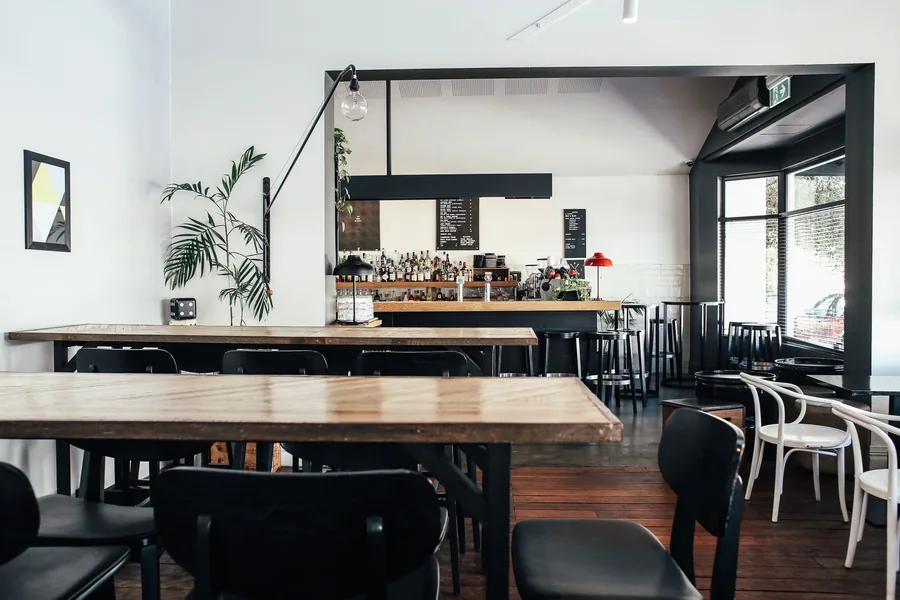
Opening a restaurant in Dubai is a tightly regulated construction project with measurable commercial outcomes baked into every square metre. Applying the right restaurant interior design principles from day one determines whether your layout wins authority approval, keeps staff productive, and turns first-time guests into regulars. This guide distils the spatial, regulatory, sensory, and brand principles that experienced fit-out teams use across the UAE, so you can brief your designers — or interrogate their proposals — with confidence. For end-to-end delivery, explore our restaurant interior design services.
Space Planning and Guest Flow
Effective space planning allocates roughly 40 percent of total floor area to back-of-house operations and 60 percent to the dining room, then designs both zones so guests and staff move through them without conflict. Getting this ratio wrong is the most common reason early layouts fail at the Dubai Municipality approval stage.
The 40/60 Rule for UAE Restaurants
The 40/60 split is not arbitrary — it reflects the kitchen equipment footprint, dry storage, cold rooms, and service corridors that a compliant UAE restaurant actually requires. Many first-time operators under-allocate BOH space, then discover at fit-out stage that the exhaust hood, grease trap, and walk-in chiller consume far more area than the original floor plan showed. Design the BOH first, then shape the dining room around what remains. Dubai Municipality’s Food Section reviews the ratio as part of the layout approval, so under-specifying kitchen area can block your licence entirely.
Aisle Widths and Circulation Paths
Service aisles must be a minimum of 1.2 metres wide to allow safe two-way staff movement during peak service and to comply with Dubai Municipality accessibility guidelines. Where possible, curved layouts outperform straight corridors: they reduce sharp turning conflicts between staff carrying trays and reduce the number of collision points near high-traffic stations such as the pass and the bar. Guest circulation paths should flow from entrance to seating without crossing service routes — a separation that also satisfies the DCD’s dirty/clean route requirement in the kitchen zone.
Zoning Front-of-House and Back-of-House
Correct FOH/BOH zoning is a regulatory requirement in UAE restaurants, not just an operational preference. Dubai Civil Defence mandates 2-hour fire-rated walls and certified fire doors between the kitchen and all dining areas, which means this boundary must be resolved on the architectural drawings before any construction begins.
Within the BOH itself, dirty and clean routes must be physically separated. Receiving and waste removal should enter and exit through a dedicated service door — never through the dining room or main entrance. Soiled crockery returns on a separate path from clean plated food heading to the pass. This separation reduces cross-contamination risk and is assessed during DM and DCD inspections. Service corridors that connect the kitchen to satellite stations (bar, dessert counter, barista) need clear sightlines and a minimum 1.2 m clearance even when staff are working at counters on either side.
Seating Capacity Without Sacrificing Comfort
Dubai Municipality guidelines specify a minimum of 1.2 to 1.5 square metres of dining area per person. Calculating your maximum permissible covers from the net dining floor area — after deducting columns, service stations, and circulation — is essential before purchasing any furniture or finalising a seating layout.
At the furniture level, individual seat widths should be 60–70 cm, with a 45–50 cm gap between adjacent chairs. These dimensions are the difference between guests who feel comfortable lingering over dessert and guests who instinctively rush through their meal because their neighbours are too close. Minimum restaurant area on DM-regulated mainland sites is 750 sq ft total, with the kitchen occupying at least 300 sq ft of that — figures that set a hard floor on the smallest viable concept. For detailed cost modelling against different seating densities, see our breakdown of restaurant interior design cost in Dubai.
Cultural zoning matters as much as density in the UAE. Family concepts benefit from discrete sections with higher banquette backs or partial screens for visual privacy. Singles and couples sections near windows serve the urban professional crowd. These zoning decisions must be shown on the DM layout submission.
Lighting Layers That Drive Revenue
A three-layer lighting system — ambient, task, and accent — gives operators control over guest behaviour and revenue per cover. Colour temperature is the lever that most directly affects spend: research consistently shows that warm light in the 2700K–3000K range encourages guests to linger, order dessert, and add another glass, while cooler, brighter light above 4000K creates the psychological cue to eat quickly and leave.
Ambient lighting sets the room’s mood. Dining rooms should target 2700K–3000K with dimmable circuits so the same space can operate at lunch brightness and evening intimacy without a refit. Task lighting at 4000K is appropriate in the kitchen and service areas, where staff accuracy and alertness are safety-critical — the 500 lux minimum in BOH zones is both a DM hygiene requirement and a practical standard for food preparation. Accent lighting highlights architectural features, artwork, or a hero product: a dramatically lit dessert display or a backlit bottle wall functions as an Instagram moment and drives incremental revenue from impulse orders. Install dimmable LED drivers on every circuit from the outset — retrofitting dimmer capability after handover is expensive and often requires new wiring.
Acoustics in Hard-Surface Environments
Hard surfaces dominate UAE restaurant interiors — floor-to-ceiling tile, polished concrete, glass partitions, and exposed ceilings are all common choices that look clean and meet DM washability requirements but create reverberation times that make conversation uncomfortable at full covers. The target ambient noise level in a dining room is 60–65 dB; above 70 dB, guests raise their voices, creating a feedback loop that can push rooms past 80 dB at capacity.
The fix is layered absorption at ceiling, wall, and furniture level simultaneously. Acoustic ceiling baffles made from mineral fibre or recycled PET panels reduce mid-frequency reverberation. Upholstered seating — booth backs, banquette bases, fabric seat pads — absorbs sound where tiled surfaces are worst. Fabric wall panels in back-of-dining alcoves contribute meaningfully. The key principle: plan acoustic treatment as part of the original material schedule, not as an afterthought when guests complain.
Materials and Finishes Built for the UAE Climate
Material selection in UAE restaurants must satisfy three simultaneous demands: Dubai Municipality hygiene specifications in food preparation areas, Civil Defence fire classification requirements on walls and ceilings, and the practical reality of extreme summer heat combined with coastal humidity. Standard European hospitality finishes often fail within two seasons if not specified for the local climate.
Dubai Municipality requires all food-preparation surfaces to be non-absorbent, washable, light-coloured, and crack-free. In dining areas, the priority shifts to durability under heavy commercial use: high-pressure laminate (HPL) and sintered quartz tabletops are rated for 50,000-plus wear cycles and resist the UV exposure common near glazed facades. Technical porcelain stoneware flooring handles the thermal expansion cycles that UAE summers impose on standard ceramic. Terrazzo is experiencing a revival in upmarket UAE concepts because it is monolithic, seamless, and highly durable.
HVAC duct penetrations through fire-rated walls must be wrapped in calcium silicate boards providing 2-hour fire resistance — a detail frequently missed by operators importing European fit-out teams unfamiliar with DCD requirements. Outdoor terraces need condensation-proof duct insulation; between April and October, cooling towers or high-pressure misting systems are essential for guest comfort.
Brand Storytelling and Color Psychology
A restaurant interior communicates brand identity before a single word is spoken or a dish is served. The materials, colours, lighting, and spatial sequence together create the emotional context that guests use to judge whether the price point is justified. In Dubai’s competitive dining market, where international luxury brands set guest expectations, brand storytelling through interior design is a commercial necessity, not a creative indulgence.
Colour temperature and palette both influence appetite and dwell time. Earth tones — terracotta, burnt sienna, warm ochre, raw linen — activate appetite cues and create psychological security, making guests feel settled enough to order multiple courses. Cool, bright palettes work in the opposite direction: they signal speed and efficiency, which makes them appropriate for fast-casual and QSR formats but counterproductive in mid-market and fine dining. For concepts seeking broad cultural appeal across the UAE’s diverse resident and tourist population, neutral warm palettes with one or two brand-specific accent colours are more effective than highly saturated or culturally specific schemes.
A single photogenic focal point — a dramatic tile mural, a backlit geometric screen, an oversized floral installation — generates organic social content that extends marketing reach beyond paid channels. Build this into the brief from the start as part of your restaurant concept design. Cultural sensitivity is equally important: family-section visual privacy, the avoidance of imagery that conflicts with UAE values, and inclusive design signals all affect whether a concept connects with its local community.
Ergonomics and Accessibility
Good ergonomics reduces staff injury rates and turnover — a direct cost concern for UAE operators. Standard kitchen worktop height is 85–90 cm; bar counter serving height is 110–115 cm. Pass heights at the kitchen/FOH interface should be consistent so expo staff are not repeatedly bending or reaching. Accessible guest seating is a Dubai Municipality requirement: at least one wheelchair-accessible table position with 70 cm knee clearance and a 1.2 m clear approach path. These are checked during licence inspections.
Navigating UAE Authority Approvals That Shape Your Layout
Every significant decision in the layout of a UAE restaurant is ultimately governed by one or more authority approvals. Understanding which body controls which element — before design begins — prevents expensive redesigns and construction delays. The approvals process directly shapes your floor plan, not just your paperwork.
Dubai Municipality’s Food Section reviews the restaurant layout for compliance with food safety spatial requirements: the 750 sq ft minimum total area, 300 sq ft minimum kitchen, the BOH/FOH ratio, hand-washing station positioning, and the separation of dirty and clean routes. This approval must be secured before a construction permit is issued. Dubai Civil Defence controls fire safety: 2-hour rated walls between kitchen and dining, certified fire doors on all openings in those walls, an automatic wet-chemical suppression system to UL300/NFPA 96 standard over all cooking equipment, and connection to the Hassantuk 24/7 central monitoring system. A frequently misunderstood detail: DCD requires heat detectors in commercial kitchens — not smoke detectors, which trigger false alarms from cooking vapour — and smoke detectors in the dining room.
Gas supply lines must have detectors interlocked with automatic solenoid valves — a gas leak triggers automatic shut-off without staff intervention. DEWA approvals govern electrical load and three-phase supply sizing. Operators in free zones — DIFC, Dubai Design District, Trakhees-regulated areas — face an additional layer of zone-authority approvals on top of DM requirements. All wall and ceiling materials must carry Civil Defence-compliant fire classification: Class 1 surface spread of flame for dining areas, Class 0 in kitchen zones.
Authority requirements are inputs to the design, not a post-build checklist. Engage a contractor with documented UAE approval experience from day one — the alternative is 8–12 week delays at drawing-review stage. Our turnkey restaurant fit-out service manages the full cycle, and our restaurant fit-out guide for the UAE maps each authority’s requirements in detail.
Frequently Asked Questions
What is the minimum restaurant area allowed in Dubai?
Dubai Municipality requires a minimum restaurant area of 750 sq ft on the mainland, with the kitchen taking at least 300 sq ft. These minimums directly influence seating capacity and layout options, so confirm with DM’s Food Section before finalising any floor plan.
How many square metres per seat does Dubai Municipality require?
DM guidelines recommend 1.2 to 1.5 square metres of dining area per person. This affects your maximum permissible covers, table spacing, and the width of service aisles — all critical inputs to the space plan.
What fire safety systems are mandatory in a UAE restaurant interior?
Dubai Civil Defence mandates automatic wet-chemical suppression systems (UL300/NFPA 96) over cooking lines, 2-hour fire-rated walls between kitchen and dining, heat detectors in the kitchen (not smoke detectors), connection to the Hassantuk 24/7 monitoring system, and gas detector interlocks with automatic solenoid valves on fuel supplies.
How does the UAE climate affect material choices?
Extreme summer heat (45°C+) and high humidity in coastal emirates like Dubai mean standard finishes degrade faster. Moisture-resistant, non-absorbent finishes are mandatory in food prep zones per DM. For dining areas, specify moisture-resistant HPL, sintered quartz, or technical porcelain with appropriate sealants. HVAC duct penetrations need calcium silicate fire-rated wrapping to meet both thermal and DCD requirements.
Related guide: This article is part of our complete restaurant design and fit-out guide.
Make My Restaurant is the UAE's single-partner solution for opening and running restaurants — concept, fit-out, commercial kitchens, licensing, compliance, cleaning and back-office — serving Dubai, Sharjah and the UAE.