
- Our Services
- Concept Design›Kitchen Design›Renovation›Cloud Kitchen Setup›2D/3D Layout Design›Turnkey Solutions›Tile Work›Painting›Joinery›Custom Furniture›MEP Engineering›HVAC Installation›Kitchen Exhaust›Fire Suppression›Stainless Steel Fabrication›Food Truck & Container›Staff Uniforms›LED Signage›Bill of Quantities›OUR SERVICESConcept Design VIEW MAIN PAGE →
Brand, cuisine and concept development that defines your restaurant before design begins.
Turnkey DeliveryUAE-Code CompliantOn-Time HandoverLearn More →OUR SERVICESKitchen Design VIEW MAIN PAGE →Commercial kitchen layouts engineered for flow, capacity and UAE code.
Turnkey DeliveryUAE-Code CompliantOn-Time HandoverLearn More →OUR SERVICESRenovation VIEW MAIN PAGE →Refresh or fully transform an existing restaurant with minimal downtime.
Turnkey DeliveryUAE-Code CompliantOn-Time HandoverLearn More →OUR SERVICESCloud Kitchen Setup VIEW MAIN PAGE →Turnkey delivery-only kitchens — licensed, fitted and platform-ready.
Turnkey DeliveryUAE-Code CompliantOn-Time HandoverLearn More →OUR SERVICES2D/3D Layout Design VIEW MAIN PAGE →Concept layouts and photoreal 3D visuals so you see the space before you build it.
Turnkey DeliveryUAE-Code CompliantOn-Time HandoverLearn More →OUR SERVICESTurnkey Solutions VIEW MAIN PAGE →One contract from empty shell to opening day — design, build, MEP and handover.
Turnkey DeliveryUAE-Code CompliantOn-Time HandoverLearn More →OUR SERVICESTile Work VIEW MAIN PAGE →Durable, hygienic floor and wall tiling built for high-traffic F&B spaces.
Turnkey DeliveryUAE-Code CompliantOn-Time HandoverLearn More →OUR SERVICESPainting VIEW MAIN PAGE →Flawless interior and exterior finishes with food-safe, washable paints.
Turnkey DeliveryUAE-Code CompliantOn-Time HandoverLearn More →OUR SERVICESJoinery VIEW MAIN PAGE →Bespoke counters, bars, millwork and custom woodwork.
Turnkey DeliveryUAE-Code CompliantOn-Time HandoverLearn More →OUR SERVICESCustom Furniture VIEW MAIN PAGE →Made-to-measure seating, tables and fixtures for your concept.
Turnkey DeliveryUAE-Code CompliantOn-Time HandoverLearn More →OUR SERVICESMEP Engineering VIEW MAIN PAGE →Mechanical, electrical and plumbing designed and installed to UAE code.
Turnkey DeliveryUAE-Code CompliantOn-Time HandoverLearn More →OUR SERVICESHVAC Installation VIEW MAIN PAGE →Climate control sized for busy kitchens and comfortable dining.
Turnkey DeliveryUAE-Code CompliantOn-Time HandoverLearn More →OUR SERVICESKitchen Exhaust VIEW MAIN PAGE →Compliant kitchen exhaust and ventilation systems.
Turnkey DeliveryUAE-Code CompliantOn-Time HandoverLearn More →OUR SERVICESFire Suppression VIEW MAIN PAGE →Certified kitchen fire-suppression systems and Civil Defence sign-off.
Turnkey DeliveryUAE-Code CompliantOn-Time HandoverLearn More →OUR SERVICESStainless Steel Fabrication VIEW MAIN PAGE →Custom commercial kitchen steelwork — tables, hoods, shelving.
Turnkey DeliveryUAE-Code CompliantOn-Time HandoverLearn More →OUR SERVICESFood Truck & Container VIEW MAIN PAGE →Turnkey food trucks and container kitchens, built and fitted out.
Turnkey DeliveryUAE-Code CompliantOn-Time HandoverLearn More →OUR SERVICESStaff Uniforms VIEW MAIN PAGE →Branded uniforms for front and back of house.
Turnkey DeliveryUAE-Code CompliantOn-Time HandoverLearn More →OUR SERVICESLED Signage VIEW MAIN PAGE →Eye-catching LED signage and storefront branding.
Turnkey DeliveryUAE-Code CompliantOn-Time HandoverLearn More →OUR SERVICESBill of Quantities VIEW MAIN PAGE →Accurate costing and BoQ so your fit-out stays on budget.
Turnkey DeliveryUAE-Code CompliantOn-Time HandoverLearn More →MAKE MY RESTAURANTConcept DesignBrand, cuisine and concept development that defines your restaurant before design begins.
Turnkey DeliveryUAE-Code CompliantOn-Time HandoverGet a Free QuoteMAKE MY RESTAURANTKitchen DesignCommercial kitchen layouts engineered for flow, capacity and UAE code.
Turnkey DeliveryUAE-Code CompliantOn-Time HandoverGet a Free QuoteMAKE MY RESTAURANTRenovationRefresh or fully transform an existing restaurant with minimal downtime.
Turnkey DeliveryUAE-Code CompliantOn-Time HandoverGet a Free QuoteMAKE MY RESTAURANTCloud Kitchen SetupTurnkey delivery-only kitchens — licensed, fitted and platform-ready.
Turnkey DeliveryUAE-Code CompliantOn-Time HandoverGet a Free QuoteMAKE MY RESTAURANT2D/3D Layout DesignConcept layouts and photoreal 3D visuals so you see the space before you build it.
Turnkey DeliveryUAE-Code CompliantOn-Time HandoverGet a Free QuoteMAKE MY RESTAURANTTurnkey SolutionsOne contract from empty shell to opening day — design, build, MEP and handover.
Turnkey DeliveryUAE-Code CompliantOn-Time HandoverGet a Free QuoteMAKE MY RESTAURANTTile WorkDurable, hygienic floor and wall tiling built for high-traffic F&B spaces.
Turnkey DeliveryUAE-Code CompliantOn-Time HandoverGet a Free QuoteMAKE MY RESTAURANTPaintingFlawless interior and exterior finishes with food-safe, washable paints.
Turnkey DeliveryUAE-Code CompliantOn-Time HandoverGet a Free QuoteMAKE MY RESTAURANTJoineryBespoke counters, bars, millwork and custom woodwork.
Turnkey DeliveryUAE-Code CompliantOn-Time HandoverGet a Free QuoteMAKE MY RESTAURANTCustom FurnitureMade-to-measure seating, tables and fixtures for your concept.
Turnkey DeliveryUAE-Code CompliantOn-Time HandoverGet a Free QuoteMAKE MY RESTAURANTMEP EngineeringMechanical, electrical and plumbing designed and installed to UAE code.
Turnkey DeliveryUAE-Code CompliantOn-Time HandoverGet a Free QuoteMAKE MY RESTAURANTHVAC InstallationClimate control sized for busy kitchens and comfortable dining.
Turnkey DeliveryUAE-Code CompliantOn-Time HandoverGet a Free QuoteMAKE MY RESTAURANTKitchen ExhaustCompliant kitchen exhaust and ventilation systems.
Turnkey DeliveryUAE-Code CompliantOn-Time HandoverGet a Free QuoteMAKE MY RESTAURANTFire SuppressionCertified kitchen fire-suppression systems and Civil Defence sign-off.
Turnkey DeliveryUAE-Code CompliantOn-Time HandoverGet a Free QuoteMAKE MY RESTAURANTStainless Steel FabricationCustom commercial kitchen steelwork — tables, hoods, shelving.
Turnkey DeliveryUAE-Code CompliantOn-Time HandoverGet a Free QuoteMAKE MY RESTAURANTFood Truck & ContainerTurnkey food trucks and container kitchens, built and fitted out.
Turnkey DeliveryUAE-Code CompliantOn-Time HandoverGet a Free QuoteMAKE MY RESTAURANTStaff UniformsBranded uniforms for front and back of house.
Turnkey DeliveryUAE-Code CompliantOn-Time HandoverGet a Free QuoteMAKE MY RESTAURANTLED SignageEye-catching LED signage and storefront branding.
Turnkey DeliveryUAE-Code CompliantOn-Time HandoverGet a Free QuoteMAKE MY RESTAURANTBill of QuantitiesAccurate costing and BoQ so your fit-out stays on budget.
Turnkey DeliveryUAE-Code CompliantOn-Time HandoverGet a Free Quote
-
- Essential Services
- F&B Business Setup›Compliance Audit›Grease Trap Cleaning›Kitchen Hood Cleaning›Ecology Unit Cleaning›Pest Control›AC Maintenance›Stewarding›PIC Training›Food Safety Training›Fire Safety Training›PRO Services›VAT & Corporate Tax›Bookkeeping›Bank Account Opening›Social Media Mgmt›Delivery Apps Mgmt›ESSENTIAL SERVICESF&B Business Setup VIEW MAIN PAGE →
End-to-end licensing, permits and setup to launch your F&B business in the UAE.
Licensed & CertifiedAll 7 EmiratesAnnual ContractsLearn More →ESSENTIAL SERVICESCompliance Audit VIEW MAIN PAGE →Full municipality, Civil Defence and food-safety compliance audit and gap report.
Licensed & CertifiedAll 7 EmiratesAnnual ContractsLearn More →ESSENTIAL SERVICESGrease Trap Cleaning VIEW MAIN PAGE →Scheduled grease trap cleaning with full compliance documentation.
Licensed & CertifiedAll 7 EmiratesAnnual ContractsLearn More →ESSENTIAL SERVICESKitchen Hood Cleaning VIEW MAIN PAGE →Deep hood and duct cleaning on annual contracts.
Licensed & CertifiedAll 7 EmiratesAnnual ContractsLearn More →ESSENTIAL SERVICESEcology Unit Cleaning VIEW MAIN PAGE →ESP / ecology unit servicing with municipality reports.
Licensed & CertifiedAll 7 EmiratesAnnual ContractsLearn More →ESSENTIAL SERVICESPest Control VIEW MAIN PAGE →Food-safe pest management on annual contracts.
Licensed & CertifiedAll 7 EmiratesAnnual ContractsLearn More →ESSENTIAL SERVICESAC Maintenance VIEW MAIN PAGE →Preventive AC maintenance plans that avoid breakdowns.
Licensed & CertifiedAll 7 EmiratesAnnual ContractsLearn More →ESSENTIAL SERVICESStewarding VIEW MAIN PAGE →Trained stewarding and cleaning crews on call.
Licensed & CertifiedAll 7 EmiratesAnnual ContractsLearn More →ESSENTIAL SERVICESPIC Training VIEW MAIN PAGE →Person-in-Charge food safety certification for your team.
Licensed & CertifiedAll 7 EmiratesAnnual ContractsLearn More →ESSENTIAL SERVICESFood Safety Training VIEW MAIN PAGE →Municipality-approved food safety courses.
Licensed & CertifiedAll 7 EmiratesAnnual ContractsLearn More →ESSENTIAL SERVICESFire Safety Training VIEW MAIN PAGE →Staff fire safety and evacuation training.
Licensed & CertifiedAll 7 EmiratesAnnual ContractsLearn More →ESSENTIAL SERVICESPRO Services VIEW MAIN PAGE →Licensing, permits and government liaison, fully handled.
Licensed & CertifiedAll 7 EmiratesAnnual ContractsLearn More →ESSENTIAL SERVICESVAT & Corporate Tax VIEW MAIN PAGE →VAT and corporate tax registration and filings, managed.
Licensed & CertifiedAll 7 EmiratesAnnual ContractsLearn More →ESSENTIAL SERVICESBookkeeping VIEW MAIN PAGE →Monthly bookkeeping and accounts for restaurants.
Licensed & CertifiedAll 7 EmiratesAnnual ContractsLearn More →ESSENTIAL SERVICESBank Account Opening VIEW MAIN PAGE →Business bank account setup assistance.
Licensed & CertifiedAll 7 EmiratesAnnual ContractsLearn More →ESSENTIAL SERVICESSocial Media Mgmt VIEW MAIN PAGE →Content and ads that fill tables.
Licensed & CertifiedAll 7 EmiratesAnnual ContractsLearn More →ESSENTIAL SERVICESDelivery Apps Mgmt VIEW MAIN PAGE →Talabat, Deliveroo and Noon menu and listing optimisation.
Licensed & CertifiedAll 7 EmiratesAnnual ContractsLearn More →MAKE MY RESTAURANTF&B Business SetupEnd-to-end licensing, permits and setup to launch your F&B business in the UAE.
Licensed & CertifiedAll 7 EmiratesAnnual ContractsGet a Free QuoteMAKE MY RESTAURANTCompliance AuditFull municipality, Civil Defence and food-safety compliance audit and gap report.
Licensed & CertifiedAll 7 EmiratesAnnual ContractsGet a Free QuoteMAKE MY RESTAURANTGrease Trap CleaningScheduled grease trap cleaning with full compliance documentation.
Licensed & CertifiedAll 7 EmiratesAnnual ContractsGet a Free QuoteMAKE MY RESTAURANTKitchen Hood CleaningDeep hood and duct cleaning on annual contracts.
Licensed & CertifiedAll 7 EmiratesAnnual ContractsGet a Free QuoteMAKE MY RESTAURANTEcology Unit CleaningESP / ecology unit servicing with municipality reports.
Licensed & CertifiedAll 7 EmiratesAnnual ContractsGet a Free QuoteMAKE MY RESTAURANTPest ControlFood-safe pest management on annual contracts.
Licensed & CertifiedAll 7 EmiratesAnnual ContractsGet a Free QuoteMAKE MY RESTAURANTAC MaintenancePreventive AC maintenance plans that avoid breakdowns.
Licensed & CertifiedAll 7 EmiratesAnnual ContractsGet a Free QuoteMAKE MY RESTAURANTStewardingTrained stewarding and cleaning crews on call.
Licensed & CertifiedAll 7 EmiratesAnnual ContractsGet a Free QuoteMAKE MY RESTAURANTPIC TrainingPerson-in-Charge food safety certification for your team.
Licensed & CertifiedAll 7 EmiratesAnnual ContractsGet a Free QuoteMAKE MY RESTAURANTFood Safety TrainingMunicipality-approved food safety courses.
Licensed & CertifiedAll 7 EmiratesAnnual ContractsGet a Free QuoteMAKE MY RESTAURANTFire Safety TrainingStaff fire safety and evacuation training.
Licensed & CertifiedAll 7 EmiratesAnnual ContractsGet a Free QuoteMAKE MY RESTAURANTPRO ServicesLicensing, permits and government liaison, fully handled.
Licensed & CertifiedAll 7 EmiratesAnnual ContractsGet a Free QuoteMAKE MY RESTAURANTVAT & Corporate TaxVAT and corporate tax registration and filings, managed.
Licensed & CertifiedAll 7 EmiratesAnnual ContractsGet a Free QuoteMAKE MY RESTAURANTBookkeepingMonthly bookkeeping and accounts for restaurants.
Licensed & CertifiedAll 7 EmiratesAnnual ContractsGet a Free QuoteMAKE MY RESTAURANTBank Account OpeningBusiness bank account setup assistance.
Licensed & CertifiedAll 7 EmiratesAnnual ContractsGet a Free QuoteMAKE MY RESTAURANTSocial Media MgmtContent and ads that fill tables.
Licensed & CertifiedAll 7 EmiratesAnnual ContractsGet a Free QuoteMAKE MY RESTAURANTDelivery Apps MgmtTalabat, Deliveroo and Noon menu and listing optimisation.
Licensed & CertifiedAll 7 EmiratesAnnual ContractsGet a Free Quote
-
- Guides
- Blogs
- About
Enquiry
+971 58 570 7110

- Our Services
- Concept Design›Kitchen Design›Renovation›Cloud Kitchen Setup›2D/3D Layout Design›Turnkey Solutions›Tile Work›Painting›Joinery›Custom Furniture›MEP Engineering›HVAC Installation›Kitchen Exhaust›Fire Suppression›Stainless Steel Fabrication›Food Truck & Container›Staff Uniforms›LED Signage›Bill of Quantities›OUR SERVICESConcept Design VIEW MAIN PAGE →
Brand, cuisine and concept development that defines your restaurant before design begins.
Turnkey DeliveryUAE-Code CompliantOn-Time HandoverLearn More →OUR SERVICESKitchen Design VIEW MAIN PAGE →Commercial kitchen layouts engineered for flow, capacity and UAE code.
Turnkey DeliveryUAE-Code CompliantOn-Time HandoverLearn More →OUR SERVICESRenovation VIEW MAIN PAGE →Refresh or fully transform an existing restaurant with minimal downtime.
Turnkey DeliveryUAE-Code CompliantOn-Time HandoverLearn More →OUR SERVICESCloud Kitchen Setup VIEW MAIN PAGE →Turnkey delivery-only kitchens — licensed, fitted and platform-ready.
Turnkey DeliveryUAE-Code CompliantOn-Time HandoverLearn More →OUR SERVICES2D/3D Layout Design VIEW MAIN PAGE →Concept layouts and photoreal 3D visuals so you see the space before you build it.
Turnkey DeliveryUAE-Code CompliantOn-Time HandoverLearn More →OUR SERVICESTurnkey Solutions VIEW MAIN PAGE →One contract from empty shell to opening day — design, build, MEP and handover.
Turnkey DeliveryUAE-Code CompliantOn-Time HandoverLearn More →OUR SERVICESTile Work VIEW MAIN PAGE →Durable, hygienic floor and wall tiling built for high-traffic F&B spaces.
Turnkey DeliveryUAE-Code CompliantOn-Time HandoverLearn More →OUR SERVICESPainting VIEW MAIN PAGE →Flawless interior and exterior finishes with food-safe, washable paints.
Turnkey DeliveryUAE-Code CompliantOn-Time HandoverLearn More →OUR SERVICESJoinery VIEW MAIN PAGE →Bespoke counters, bars, millwork and custom woodwork.
Turnkey DeliveryUAE-Code CompliantOn-Time HandoverLearn More →OUR SERVICESCustom Furniture VIEW MAIN PAGE →Made-to-measure seating, tables and fixtures for your concept.
Turnkey DeliveryUAE-Code CompliantOn-Time HandoverLearn More →OUR SERVICESMEP Engineering VIEW MAIN PAGE →Mechanical, electrical and plumbing designed and installed to UAE code.
Turnkey DeliveryUAE-Code CompliantOn-Time HandoverLearn More →OUR SERVICESHVAC Installation VIEW MAIN PAGE →Climate control sized for busy kitchens and comfortable dining.
Turnkey DeliveryUAE-Code CompliantOn-Time HandoverLearn More →OUR SERVICESKitchen Exhaust VIEW MAIN PAGE →Compliant kitchen exhaust and ventilation systems.
Turnkey DeliveryUAE-Code CompliantOn-Time HandoverLearn More →OUR SERVICESFire Suppression VIEW MAIN PAGE →Certified kitchen fire-suppression systems and Civil Defence sign-off.
Turnkey DeliveryUAE-Code CompliantOn-Time HandoverLearn More →OUR SERVICESStainless Steel Fabrication VIEW MAIN PAGE →Custom commercial kitchen steelwork — tables, hoods, shelving.
Turnkey DeliveryUAE-Code CompliantOn-Time HandoverLearn More →OUR SERVICESFood Truck & Container VIEW MAIN PAGE →Turnkey food trucks and container kitchens, built and fitted out.
Turnkey DeliveryUAE-Code CompliantOn-Time HandoverLearn More →OUR SERVICESStaff Uniforms VIEW MAIN PAGE →Branded uniforms for front and back of house.
Turnkey DeliveryUAE-Code CompliantOn-Time HandoverLearn More →OUR SERVICESLED Signage VIEW MAIN PAGE →Eye-catching LED signage and storefront branding.
Turnkey DeliveryUAE-Code CompliantOn-Time HandoverLearn More →OUR SERVICESBill of Quantities VIEW MAIN PAGE →Accurate costing and BoQ so your fit-out stays on budget.
Turnkey DeliveryUAE-Code CompliantOn-Time HandoverLearn More →MAKE MY RESTAURANTConcept DesignBrand, cuisine and concept development that defines your restaurant before design begins.
Turnkey DeliveryUAE-Code CompliantOn-Time HandoverGet a Free QuoteMAKE MY RESTAURANTKitchen DesignCommercial kitchen layouts engineered for flow, capacity and UAE code.
Turnkey DeliveryUAE-Code CompliantOn-Time HandoverGet a Free QuoteMAKE MY RESTAURANTRenovationRefresh or fully transform an existing restaurant with minimal downtime.
Turnkey DeliveryUAE-Code CompliantOn-Time HandoverGet a Free QuoteMAKE MY RESTAURANTCloud Kitchen SetupTurnkey delivery-only kitchens — licensed, fitted and platform-ready.
Turnkey DeliveryUAE-Code CompliantOn-Time HandoverGet a Free QuoteMAKE MY RESTAURANT2D/3D Layout DesignConcept layouts and photoreal 3D visuals so you see the space before you build it.
Turnkey DeliveryUAE-Code CompliantOn-Time HandoverGet a Free QuoteMAKE MY RESTAURANTTurnkey SolutionsOne contract from empty shell to opening day — design, build, MEP and handover.
Turnkey DeliveryUAE-Code CompliantOn-Time HandoverGet a Free QuoteMAKE MY RESTAURANTTile WorkDurable, hygienic floor and wall tiling built for high-traffic F&B spaces.
Turnkey DeliveryUAE-Code CompliantOn-Time HandoverGet a Free QuoteMAKE MY RESTAURANTPaintingFlawless interior and exterior finishes with food-safe, washable paints.
Turnkey DeliveryUAE-Code CompliantOn-Time HandoverGet a Free QuoteMAKE MY RESTAURANTJoineryBespoke counters, bars, millwork and custom woodwork.
Turnkey DeliveryUAE-Code CompliantOn-Time HandoverGet a Free QuoteMAKE MY RESTAURANTCustom FurnitureMade-to-measure seating, tables and fixtures for your concept.
Turnkey DeliveryUAE-Code CompliantOn-Time HandoverGet a Free QuoteMAKE MY RESTAURANTMEP EngineeringMechanical, electrical and plumbing designed and installed to UAE code.
Turnkey DeliveryUAE-Code CompliantOn-Time HandoverGet a Free QuoteMAKE MY RESTAURANTHVAC InstallationClimate control sized for busy kitchens and comfortable dining.
Turnkey DeliveryUAE-Code CompliantOn-Time HandoverGet a Free QuoteMAKE MY RESTAURANTKitchen ExhaustCompliant kitchen exhaust and ventilation systems.
Turnkey DeliveryUAE-Code CompliantOn-Time HandoverGet a Free QuoteMAKE MY RESTAURANTFire SuppressionCertified kitchen fire-suppression systems and Civil Defence sign-off.
Turnkey DeliveryUAE-Code CompliantOn-Time HandoverGet a Free QuoteMAKE MY RESTAURANTStainless Steel FabricationCustom commercial kitchen steelwork — tables, hoods, shelving.
Turnkey DeliveryUAE-Code CompliantOn-Time HandoverGet a Free QuoteMAKE MY RESTAURANTFood Truck & ContainerTurnkey food trucks and container kitchens, built and fitted out.
Turnkey DeliveryUAE-Code CompliantOn-Time HandoverGet a Free QuoteMAKE MY RESTAURANTStaff UniformsBranded uniforms for front and back of house.
Turnkey DeliveryUAE-Code CompliantOn-Time HandoverGet a Free QuoteMAKE MY RESTAURANTLED SignageEye-catching LED signage and storefront branding.
Turnkey DeliveryUAE-Code CompliantOn-Time HandoverGet a Free QuoteMAKE MY RESTAURANTBill of QuantitiesAccurate costing and BoQ so your fit-out stays on budget.
Turnkey DeliveryUAE-Code CompliantOn-Time HandoverGet a Free Quote
-
- Essential Services
- F&B Business Setup›Compliance Audit›Grease Trap Cleaning›Kitchen Hood Cleaning›Ecology Unit Cleaning›Pest Control›AC Maintenance›Stewarding›PIC Training›Food Safety Training›Fire Safety Training›PRO Services›VAT & Corporate Tax›Bookkeeping›Bank Account Opening›Social Media Mgmt›Delivery Apps Mgmt›ESSENTIAL SERVICESF&B Business Setup VIEW MAIN PAGE →
End-to-end licensing, permits and setup to launch your F&B business in the UAE.
Licensed & CertifiedAll 7 EmiratesAnnual ContractsLearn More →ESSENTIAL SERVICESCompliance Audit VIEW MAIN PAGE →Full municipality, Civil Defence and food-safety compliance audit and gap report.
Licensed & CertifiedAll 7 EmiratesAnnual ContractsLearn More →ESSENTIAL SERVICESGrease Trap Cleaning VIEW MAIN PAGE →Scheduled grease trap cleaning with full compliance documentation.
Licensed & CertifiedAll 7 EmiratesAnnual ContractsLearn More →ESSENTIAL SERVICESKitchen Hood Cleaning VIEW MAIN PAGE →Deep hood and duct cleaning on annual contracts.
Licensed & CertifiedAll 7 EmiratesAnnual ContractsLearn More →ESSENTIAL SERVICESEcology Unit Cleaning VIEW MAIN PAGE →ESP / ecology unit servicing with municipality reports.
Licensed & CertifiedAll 7 EmiratesAnnual ContractsLearn More →ESSENTIAL SERVICESPest Control VIEW MAIN PAGE →Food-safe pest management on annual contracts.
Licensed & CertifiedAll 7 EmiratesAnnual ContractsLearn More →ESSENTIAL SERVICESAC Maintenance VIEW MAIN PAGE →Preventive AC maintenance plans that avoid breakdowns.
Licensed & CertifiedAll 7 EmiratesAnnual ContractsLearn More →ESSENTIAL SERVICESStewarding VIEW MAIN PAGE →Trained stewarding and cleaning crews on call.
Licensed & CertifiedAll 7 EmiratesAnnual ContractsLearn More →ESSENTIAL SERVICESPIC Training VIEW MAIN PAGE →Person-in-Charge food safety certification for your team.
Licensed & CertifiedAll 7 EmiratesAnnual ContractsLearn More →ESSENTIAL SERVICESFood Safety Training VIEW MAIN PAGE →Municipality-approved food safety courses.
Licensed & CertifiedAll 7 EmiratesAnnual ContractsLearn More →ESSENTIAL SERVICESFire Safety Training VIEW MAIN PAGE →Staff fire safety and evacuation training.
Licensed & CertifiedAll 7 EmiratesAnnual ContractsLearn More →ESSENTIAL SERVICESPRO Services VIEW MAIN PAGE →Licensing, permits and government liaison, fully handled.
Licensed & CertifiedAll 7 EmiratesAnnual ContractsLearn More →ESSENTIAL SERVICESVAT & Corporate Tax VIEW MAIN PAGE →VAT and corporate tax registration and filings, managed.
Licensed & CertifiedAll 7 EmiratesAnnual ContractsLearn More →ESSENTIAL SERVICESBookkeeping VIEW MAIN PAGE →Monthly bookkeeping and accounts for restaurants.
Licensed & CertifiedAll 7 EmiratesAnnual ContractsLearn More →ESSENTIAL SERVICESBank Account Opening VIEW MAIN PAGE →Business bank account setup assistance.
Licensed & CertifiedAll 7 EmiratesAnnual ContractsLearn More →ESSENTIAL SERVICESSocial Media Mgmt VIEW MAIN PAGE →Content and ads that fill tables.
Licensed & CertifiedAll 7 EmiratesAnnual ContractsLearn More →ESSENTIAL SERVICESDelivery Apps Mgmt VIEW MAIN PAGE →Talabat, Deliveroo and Noon menu and listing optimisation.
Licensed & CertifiedAll 7 EmiratesAnnual ContractsLearn More →MAKE MY RESTAURANTF&B Business SetupEnd-to-end licensing, permits and setup to launch your F&B business in the UAE.
Licensed & CertifiedAll 7 EmiratesAnnual ContractsGet a Free QuoteMAKE MY RESTAURANTCompliance AuditFull municipality, Civil Defence and food-safety compliance audit and gap report.
Licensed & CertifiedAll 7 EmiratesAnnual ContractsGet a Free QuoteMAKE MY RESTAURANTGrease Trap CleaningScheduled grease trap cleaning with full compliance documentation.
Licensed & CertifiedAll 7 EmiratesAnnual ContractsGet a Free QuoteMAKE MY RESTAURANTKitchen Hood CleaningDeep hood and duct cleaning on annual contracts.
Licensed & CertifiedAll 7 EmiratesAnnual ContractsGet a Free QuoteMAKE MY RESTAURANTEcology Unit CleaningESP / ecology unit servicing with municipality reports.
Licensed & CertifiedAll 7 EmiratesAnnual ContractsGet a Free QuoteMAKE MY RESTAURANTPest ControlFood-safe pest management on annual contracts.
Licensed & CertifiedAll 7 EmiratesAnnual ContractsGet a Free QuoteMAKE MY RESTAURANTAC MaintenancePreventive AC maintenance plans that avoid breakdowns.
Licensed & CertifiedAll 7 EmiratesAnnual ContractsGet a Free QuoteMAKE MY RESTAURANTStewardingTrained stewarding and cleaning crews on call.
Licensed & CertifiedAll 7 EmiratesAnnual ContractsGet a Free QuoteMAKE MY RESTAURANTPIC TrainingPerson-in-Charge food safety certification for your team.
Licensed & CertifiedAll 7 EmiratesAnnual ContractsGet a Free QuoteMAKE MY RESTAURANTFood Safety TrainingMunicipality-approved food safety courses.
Licensed & CertifiedAll 7 EmiratesAnnual ContractsGet a Free QuoteMAKE MY RESTAURANTFire Safety TrainingStaff fire safety and evacuation training.
Licensed & CertifiedAll 7 EmiratesAnnual ContractsGet a Free QuoteMAKE MY RESTAURANTPRO ServicesLicensing, permits and government liaison, fully handled.
Licensed & CertifiedAll 7 EmiratesAnnual ContractsGet a Free QuoteMAKE MY RESTAURANTVAT & Corporate TaxVAT and corporate tax registration and filings, managed.
Licensed & CertifiedAll 7 EmiratesAnnual ContractsGet a Free QuoteMAKE MY RESTAURANTBookkeepingMonthly bookkeeping and accounts for restaurants.
Licensed & CertifiedAll 7 EmiratesAnnual ContractsGet a Free QuoteMAKE MY RESTAURANTBank Account OpeningBusiness bank account setup assistance.
Licensed & CertifiedAll 7 EmiratesAnnual ContractsGet a Free QuoteMAKE MY RESTAURANTSocial Media MgmtContent and ads that fill tables.
Licensed & CertifiedAll 7 EmiratesAnnual ContractsGet a Free QuoteMAKE MY RESTAURANTDelivery Apps MgmtTalabat, Deliveroo and Noon menu and listing optimisation.
Licensed & CertifiedAll 7 EmiratesAnnual ContractsGet a Free Quote
-
- Guides
- Blogs
- About
×
Enquiry
+971 58 570 7110
- Our Services
- Concept Design›Kitchen Design›Renovation›Cloud Kitchen Setup›2D/3D Layout Design›Turnkey Solutions›Tile Work›Painting›Joinery›Custom Furniture›MEP Engineering›HVAC Installation›Kitchen Exhaust›Fire Suppression›Stainless Steel Fabrication›Food Truck & Container›Staff Uniforms›LED Signage›Bill of Quantities›OUR SERVICESConcept Design VIEW MAIN PAGE →
Brand, cuisine and concept development that defines your restaurant before design begins.
Turnkey DeliveryUAE-Code CompliantOn-Time HandoverLearn More →OUR SERVICESKitchen Design VIEW MAIN PAGE →Commercial kitchen layouts engineered for flow, capacity and UAE code.
Turnkey DeliveryUAE-Code CompliantOn-Time HandoverLearn More →OUR SERVICESRenovation VIEW MAIN PAGE →Refresh or fully transform an existing restaurant with minimal downtime.
Turnkey DeliveryUAE-Code CompliantOn-Time HandoverLearn More →OUR SERVICESCloud Kitchen Setup VIEW MAIN PAGE →Turnkey delivery-only kitchens — licensed, fitted and platform-ready.
Turnkey DeliveryUAE-Code CompliantOn-Time HandoverLearn More →OUR SERVICES2D/3D Layout Design VIEW MAIN PAGE →Concept layouts and photoreal 3D visuals so you see the space before you build it.
Turnkey DeliveryUAE-Code CompliantOn-Time HandoverLearn More →OUR SERVICESTurnkey Solutions VIEW MAIN PAGE →One contract from empty shell to opening day — design, build, MEP and handover.
Turnkey DeliveryUAE-Code CompliantOn-Time HandoverLearn More →OUR SERVICESTile Work VIEW MAIN PAGE →Durable, hygienic floor and wall tiling built for high-traffic F&B spaces.
Turnkey DeliveryUAE-Code CompliantOn-Time HandoverLearn More →OUR SERVICESPainting VIEW MAIN PAGE →Flawless interior and exterior finishes with food-safe, washable paints.
Turnkey DeliveryUAE-Code CompliantOn-Time HandoverLearn More →OUR SERVICESJoinery VIEW MAIN PAGE →Bespoke counters, bars, millwork and custom woodwork.
Turnkey DeliveryUAE-Code CompliantOn-Time HandoverLearn More →OUR SERVICESCustom Furniture VIEW MAIN PAGE →Made-to-measure seating, tables and fixtures for your concept.
Turnkey DeliveryUAE-Code CompliantOn-Time HandoverLearn More →OUR SERVICESMEP Engineering VIEW MAIN PAGE →Mechanical, electrical and plumbing designed and installed to UAE code.
Turnkey DeliveryUAE-Code CompliantOn-Time HandoverLearn More →OUR SERVICESHVAC Installation VIEW MAIN PAGE →Climate control sized for busy kitchens and comfortable dining.
Turnkey DeliveryUAE-Code CompliantOn-Time HandoverLearn More →OUR SERVICESKitchen Exhaust VIEW MAIN PAGE →Compliant kitchen exhaust and ventilation systems.
Turnkey DeliveryUAE-Code CompliantOn-Time HandoverLearn More →OUR SERVICESFire Suppression VIEW MAIN PAGE →Certified kitchen fire-suppression systems and Civil Defence sign-off.
Turnkey DeliveryUAE-Code CompliantOn-Time HandoverLearn More →OUR SERVICESStainless Steel Fabrication VIEW MAIN PAGE →Custom commercial kitchen steelwork — tables, hoods, shelving.
Turnkey DeliveryUAE-Code CompliantOn-Time HandoverLearn More →OUR SERVICESFood Truck & Container VIEW MAIN PAGE →Turnkey food trucks and container kitchens, built and fitted out.
Turnkey DeliveryUAE-Code CompliantOn-Time HandoverLearn More →OUR SERVICESStaff Uniforms VIEW MAIN PAGE →Branded uniforms for front and back of house.
Turnkey DeliveryUAE-Code CompliantOn-Time HandoverLearn More →OUR SERVICESLED Signage VIEW MAIN PAGE →Eye-catching LED signage and storefront branding.
Turnkey DeliveryUAE-Code CompliantOn-Time HandoverLearn More →OUR SERVICESBill of Quantities VIEW MAIN PAGE →Accurate costing and BoQ so your fit-out stays on budget.
Turnkey DeliveryUAE-Code CompliantOn-Time HandoverLearn More →MAKE MY RESTAURANTConcept DesignBrand, cuisine and concept development that defines your restaurant before design begins.
Turnkey DeliveryUAE-Code CompliantOn-Time HandoverGet a Free QuoteMAKE MY RESTAURANTKitchen DesignCommercial kitchen layouts engineered for flow, capacity and UAE code.
Turnkey DeliveryUAE-Code CompliantOn-Time HandoverGet a Free QuoteMAKE MY RESTAURANTRenovationRefresh or fully transform an existing restaurant with minimal downtime.
Turnkey DeliveryUAE-Code CompliantOn-Time HandoverGet a Free QuoteMAKE MY RESTAURANTCloud Kitchen SetupTurnkey delivery-only kitchens — licensed, fitted and platform-ready.
Turnkey DeliveryUAE-Code CompliantOn-Time HandoverGet a Free QuoteMAKE MY RESTAURANT2D/3D Layout DesignConcept layouts and photoreal 3D visuals so you see the space before you build it.
Turnkey DeliveryUAE-Code CompliantOn-Time HandoverGet a Free QuoteMAKE MY RESTAURANTTurnkey SolutionsOne contract from empty shell to opening day — design, build, MEP and handover.
Turnkey DeliveryUAE-Code CompliantOn-Time HandoverGet a Free QuoteMAKE MY RESTAURANTTile WorkDurable, hygienic floor and wall tiling built for high-traffic F&B spaces.
Turnkey DeliveryUAE-Code CompliantOn-Time HandoverGet a Free QuoteMAKE MY RESTAURANTPaintingFlawless interior and exterior finishes with food-safe, washable paints.
Turnkey DeliveryUAE-Code CompliantOn-Time HandoverGet a Free QuoteMAKE MY RESTAURANTJoineryBespoke counters, bars, millwork and custom woodwork.
Turnkey DeliveryUAE-Code CompliantOn-Time HandoverGet a Free QuoteMAKE MY RESTAURANTCustom FurnitureMade-to-measure seating, tables and fixtures for your concept.
Turnkey DeliveryUAE-Code CompliantOn-Time HandoverGet a Free QuoteMAKE MY RESTAURANTMEP EngineeringMechanical, electrical and plumbing designed and installed to UAE code.
Turnkey DeliveryUAE-Code CompliantOn-Time HandoverGet a Free QuoteMAKE MY RESTAURANTHVAC InstallationClimate control sized for busy kitchens and comfortable dining.
Turnkey DeliveryUAE-Code CompliantOn-Time HandoverGet a Free QuoteMAKE MY RESTAURANTKitchen ExhaustCompliant kitchen exhaust and ventilation systems.
Turnkey DeliveryUAE-Code CompliantOn-Time HandoverGet a Free QuoteMAKE MY RESTAURANTFire SuppressionCertified kitchen fire-suppression systems and Civil Defence sign-off.
Turnkey DeliveryUAE-Code CompliantOn-Time HandoverGet a Free QuoteMAKE MY RESTAURANTStainless Steel FabricationCustom commercial kitchen steelwork — tables, hoods, shelving.
Turnkey DeliveryUAE-Code CompliantOn-Time HandoverGet a Free QuoteMAKE MY RESTAURANTFood Truck & ContainerTurnkey food trucks and container kitchens, built and fitted out.
Turnkey DeliveryUAE-Code CompliantOn-Time HandoverGet a Free QuoteMAKE MY RESTAURANTStaff UniformsBranded uniforms for front and back of house.
Turnkey DeliveryUAE-Code CompliantOn-Time HandoverGet a Free QuoteMAKE MY RESTAURANTLED SignageEye-catching LED signage and storefront branding.
Turnkey DeliveryUAE-Code CompliantOn-Time HandoverGet a Free QuoteMAKE MY RESTAURANTBill of QuantitiesAccurate costing and BoQ so your fit-out stays on budget.
Turnkey DeliveryUAE-Code CompliantOn-Time HandoverGet a Free Quote
-
- Essential Services
- F&B Business Setup›Compliance Audit›Grease Trap Cleaning›Kitchen Hood Cleaning›Ecology Unit Cleaning›Pest Control›AC Maintenance›Stewarding›PIC Training›Food Safety Training›Fire Safety Training›PRO Services›VAT & Corporate Tax›Bookkeeping›Bank Account Opening›Social Media Mgmt›Delivery Apps Mgmt›ESSENTIAL SERVICESF&B Business Setup VIEW MAIN PAGE →
End-to-end licensing, permits and setup to launch your F&B business in the UAE.
Licensed & CertifiedAll 7 EmiratesAnnual ContractsLearn More →ESSENTIAL SERVICESCompliance Audit VIEW MAIN PAGE →Full municipality, Civil Defence and food-safety compliance audit and gap report.
Licensed & CertifiedAll 7 EmiratesAnnual ContractsLearn More →ESSENTIAL SERVICESGrease Trap Cleaning VIEW MAIN PAGE →Scheduled grease trap cleaning with full compliance documentation.
Licensed & CertifiedAll 7 EmiratesAnnual ContractsLearn More →ESSENTIAL SERVICESKitchen Hood Cleaning VIEW MAIN PAGE →Deep hood and duct cleaning on annual contracts.
Licensed & CertifiedAll 7 EmiratesAnnual ContractsLearn More →ESSENTIAL SERVICESEcology Unit Cleaning VIEW MAIN PAGE →ESP / ecology unit servicing with municipality reports.
Licensed & CertifiedAll 7 EmiratesAnnual ContractsLearn More →ESSENTIAL SERVICESPest Control VIEW MAIN PAGE →Food-safe pest management on annual contracts.
Licensed & CertifiedAll 7 EmiratesAnnual ContractsLearn More →ESSENTIAL SERVICESAC Maintenance VIEW MAIN PAGE →Preventive AC maintenance plans that avoid breakdowns.
Licensed & CertifiedAll 7 EmiratesAnnual ContractsLearn More →ESSENTIAL SERVICESStewarding VIEW MAIN PAGE →Trained stewarding and cleaning crews on call.
Licensed & CertifiedAll 7 EmiratesAnnual ContractsLearn More →ESSENTIAL SERVICESPIC Training VIEW MAIN PAGE →Person-in-Charge food safety certification for your team.
Licensed & CertifiedAll 7 EmiratesAnnual ContractsLearn More →ESSENTIAL SERVICESFood Safety Training VIEW MAIN PAGE →Municipality-approved food safety courses.
Licensed & CertifiedAll 7 EmiratesAnnual ContractsLearn More →ESSENTIAL SERVICESFire Safety Training VIEW MAIN PAGE →Staff fire safety and evacuation training.
Licensed & CertifiedAll 7 EmiratesAnnual ContractsLearn More →ESSENTIAL SERVICESPRO Services VIEW MAIN PAGE →Licensing, permits and government liaison, fully handled.
Licensed & CertifiedAll 7 EmiratesAnnual ContractsLearn More →ESSENTIAL SERVICESVAT & Corporate Tax VIEW MAIN PAGE →VAT and corporate tax registration and filings, managed.
Licensed & CertifiedAll 7 EmiratesAnnual ContractsLearn More →ESSENTIAL SERVICESBookkeeping VIEW MAIN PAGE →Monthly bookkeeping and accounts for restaurants.
Licensed & CertifiedAll 7 EmiratesAnnual ContractsLearn More →ESSENTIAL SERVICESBank Account Opening VIEW MAIN PAGE →Business bank account setup assistance.
Licensed & CertifiedAll 7 EmiratesAnnual ContractsLearn More →ESSENTIAL SERVICESSocial Media Mgmt VIEW MAIN PAGE →Content and ads that fill tables.
Licensed & CertifiedAll 7 EmiratesAnnual ContractsLearn More →ESSENTIAL SERVICESDelivery Apps Mgmt VIEW MAIN PAGE →Talabat, Deliveroo and Noon menu and listing optimisation.
Licensed & CertifiedAll 7 EmiratesAnnual ContractsLearn More →MAKE MY RESTAURANTF&B Business SetupEnd-to-end licensing, permits and setup to launch your F&B business in the UAE.
Licensed & CertifiedAll 7 EmiratesAnnual ContractsGet a Free QuoteMAKE MY RESTAURANTCompliance AuditFull municipality, Civil Defence and food-safety compliance audit and gap report.
Licensed & CertifiedAll 7 EmiratesAnnual ContractsGet a Free QuoteMAKE MY RESTAURANTGrease Trap CleaningScheduled grease trap cleaning with full compliance documentation.
Licensed & CertifiedAll 7 EmiratesAnnual ContractsGet a Free QuoteMAKE MY RESTAURANTKitchen Hood CleaningDeep hood and duct cleaning on annual contracts.
Licensed & CertifiedAll 7 EmiratesAnnual ContractsGet a Free QuoteMAKE MY RESTAURANTEcology Unit CleaningESP / ecology unit servicing with municipality reports.
Licensed & CertifiedAll 7 EmiratesAnnual ContractsGet a Free QuoteMAKE MY RESTAURANTPest ControlFood-safe pest management on annual contracts.
Licensed & CertifiedAll 7 EmiratesAnnual ContractsGet a Free QuoteMAKE MY RESTAURANTAC MaintenancePreventive AC maintenance plans that avoid breakdowns.
Licensed & CertifiedAll 7 EmiratesAnnual ContractsGet a Free QuoteMAKE MY RESTAURANTStewardingTrained stewarding and cleaning crews on call.
Licensed & CertifiedAll 7 EmiratesAnnual ContractsGet a Free QuoteMAKE MY RESTAURANTPIC TrainingPerson-in-Charge food safety certification for your team.
Licensed & CertifiedAll 7 EmiratesAnnual ContractsGet a Free QuoteMAKE MY RESTAURANTFood Safety TrainingMunicipality-approved food safety courses.
Licensed & CertifiedAll 7 EmiratesAnnual ContractsGet a Free QuoteMAKE MY RESTAURANTFire Safety TrainingStaff fire safety and evacuation training.
Licensed & CertifiedAll 7 EmiratesAnnual ContractsGet a Free QuoteMAKE MY RESTAURANTPRO ServicesLicensing, permits and government liaison, fully handled.
Licensed & CertifiedAll 7 EmiratesAnnual ContractsGet a Free QuoteMAKE MY RESTAURANTVAT & Corporate TaxVAT and corporate tax registration and filings, managed.
Licensed & CertifiedAll 7 EmiratesAnnual ContractsGet a Free QuoteMAKE MY RESTAURANTBookkeepingMonthly bookkeeping and accounts for restaurants.
Licensed & CertifiedAll 7 EmiratesAnnual ContractsGet a Free QuoteMAKE MY RESTAURANTBank Account OpeningBusiness bank account setup assistance.
Licensed & CertifiedAll 7 EmiratesAnnual ContractsGet a Free QuoteMAKE MY RESTAURANTSocial Media MgmtContent and ads that fill tables.
Licensed & CertifiedAll 7 EmiratesAnnual ContractsGet a Free QuoteMAKE MY RESTAURANTDelivery Apps MgmtTalabat, Deliveroo and Noon menu and listing optimisation.
Licensed & CertifiedAll 7 EmiratesAnnual ContractsGet a Free Quote
-
- Guides
- Blogs
- About
Industrial Area 13, Sharjah & Al Saqr Business Tower, Dubai, UAE
×
Types of Restaurant Flooring: A Complete Guide for UAE Operators
- Home
- Fit-Out & Design
- Types of Restaurant Flooring: A Complete Guide for UAE Operators
This website uses cookies to ensure you get the best experience on our website.
Need Help?
Send Mail us at
info@makemyrestaurant.com
Start Your Project
Tell us what you need — get a free quote and expert advice from our UAE team.
Essentials
Restaurant Design
Kitchen Fit-Out & Equipment
Licensing, PRO & Compliance
Cleaning & Maintenance
MEP & Engineering
Branding & Signage
Annual Service Contracts
Quick Links
Our Services
Essential Services
Guides
Blogs
About Us
Contact Us
Just Mail Us:
Al Saqr Business Tower, Sheikh Zayed Road, Dubai & Industrial Area 13, Sharjah, UAE
Phone
+971 58 570 7110
Reliable
 Quality Assured
Budget-Friendly
Reliable
Quality Assured
Budget-Friendly
Quality Assured
Budget-Friendly
Reliable
Quality Assured
Budget-Friendly
Copyrights© 2026 Make My Restaurant. All rights reserved.
Terms & Conditions
Privacy Policy
Sitemap.
×
Beat Your Quote
Already have a quote? We'll beat it.
Send us your current fit-out, interior or kitchen-equipment quote — we source factory-direct and come back with a better price within 24 hours.
What Are the Main Types of Restaurant Flooring Available in the UAE?
The main restaurant flooring types used in UAE fit-outs are epoxy and resin systems, ceramic and porcelain tile, quarry tile, luxury vinyl tile (LVT), polished concrete, natural stone, engineered wood, rubber flooring, and specialist anti-slip safety flooring. The right choice depends on whether the zone is a kitchen, dining room, bar, restroom, or entrance — because Dubai Municipality imposes strict surface requirements for food-preparation areas that rule out several popular options.
This guide covers every major flooring category, a side-by-side comparison table, Dubai Municipality kitchen floor requirements, UAE climate factors, verified cost data in AED, and answers to the most common questions from operators planning a turnkey restaurant fit-out in the UAE.
What Does Dubai Municipality Require for Restaurant Kitchen Flooring?
Dubai Municipality Food Code requires kitchen floors to be light-coloured, non-absorbent, fire-proof, and seamless. Floors must also be smooth, non-combustible, and non-toxic, with a coved junction between floor and wall — curved rather than square — to prevent bacterial accumulation in corners. Standard cement-grouted ceramic tiles frequently fail inspection because the grout lines are absorbent and harbour bacteria.
Polyurethane (PU) and epoxy systems are explicitly cited as compliant — impervious to grease and chemicals. The coved skirting requirement is non-negotiable: any floor-to-wall junction must be curved, requiring an integral cove base rather than a square tile trim. Every cooking area must also drain to a grease trap, with the floor pitched consistently toward the drain.
If using ceramic or porcelain tile in a kitchen, the only grout option that consistently passes inspection is epoxy grout. Cement grout is porous and cannot be made seamless — it absorbs fat, water, and cleaning chemicals, triggering bacteria growth and reinspection failure. For a broader view of flooring within your interior scheme, see our guide to restaurant interior design principles.
How Do Slip-Resistance Ratings Apply to UAE Restaurant Floors?
Slip resistance is measured on the R-rating scale: R9 (low), R10 (medium), R11 (high), R12–R13 (industrial/extreme). The ANSI A326.3 standard sets a minimum wet DCOF of 0.42 for commercial floors; grease-heavy kitchens should target 0.50 or above. No flooring is truly non-slip — resistance degrades with wear and cleaning chemical residue, so a maintenance schedule must be built into operations.
Which Flooring Type Is Best for a Commercial Kitchen in Dubai?
Epoxy or polyurethane resin flooring is the best choice for a commercial kitchen in Dubai because it is seamless, non-porous, chemically resistant, and explicitly recommended by Dubai Municipality. When specified with an anti-slip aggregate, it meets both food-code hygiene requirements and practical safety standards for a high-traffic, high-grease environment.
Here is a detailed breakdown of the top kitchen flooring options:
Epoxy and Resin Flooring
Epoxy is the gold standard for UAE commercial kitchens. Its seamless surface eliminates grout lines, it is non-porous, and it resists the full range of kitchen chemicals. Multi-layer systems with broadcast anti-slip aggregate reach R11 or higher. Always specify anti-slip aggregate — plain epoxy is slippery when wet.
Verified Dubai costs: AED 80–120 per sqm (basic coating), AED 130–180 (mid-range anti-slip or metallic), AED 200–250 (high-end multi-layer). Commercial range overall: AED 150–300 per sqm. Cracked substrates add AED 25–40 per sqm for preparation.
Quarry Tile
Quarry tile is made from natural clay fired at high temperatures, giving it high natural slip resistance and excellent durability under heavy foot traffic. It is a proven choice for pizzerias, bakeries, and bars with demanding floor conditions. The main limitation in a Dubai Municipality context is the grout lines: like all tile systems, quarry tile requires epoxy grout to pass inspection. The tiles themselves are compliant; standard cement grout is not.
Ceramic and Porcelain Tile with Epoxy Grout
Ceramic and porcelain tiles with a 20-to-25-year commercial lifespan are a workable kitchen floor when the specification includes textured R10 or R11 slip-rated tiles and epoxy grout throughout. They are heat-resistant, moisture-resistant, and easy to clean on the tile surface itself. The failure mode is always the grout — specify epoxy grout in writing and confirm it in the as-built inspection. Our restaurant tiling services cover full commercial kitchen tile installations with compliant epoxy grout systems.
Anti-Slip Safety Flooring and Cementitious Urethane
Specifically engineered anti-slip safety flooring — including cementitious urethane systems — is designed for the highest-risk kitchen zones: areas with constant grease, continuous water flow, or both. Cementitious urethane is especially resistant to thermal shock (hot liquids spilled on a cool floor) and impact. It is a specialist product with a higher installed cost but often the right choice for high-volume fry stations and dishwash areas.
What Flooring Works Best for Restaurant Dining Areas and Front-of-House?
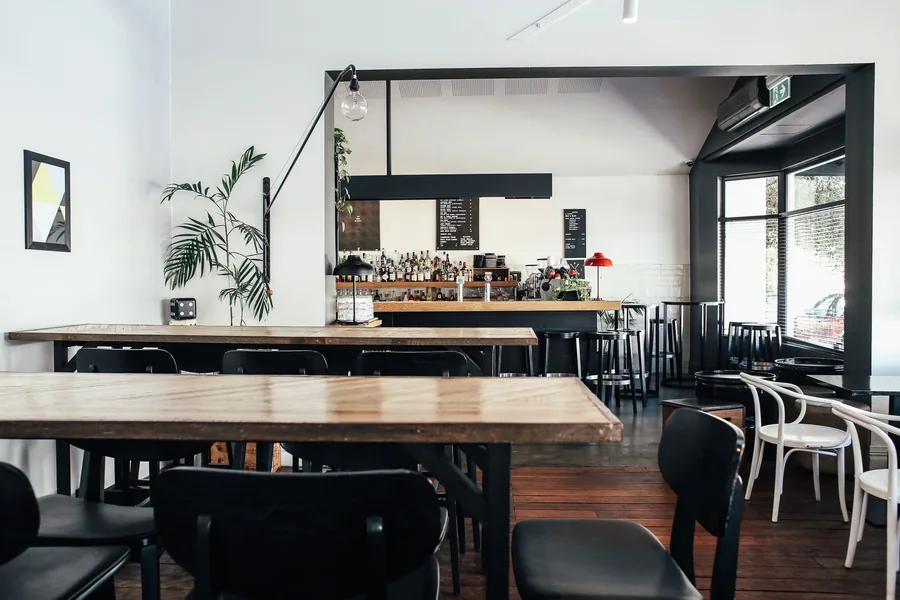
For dining areas and front-of-house zones, the best restaurant flooring options in the UAE are luxury vinyl tile (LVT), polished concrete, natural stone, and engineered wood — chosen to match the concept, maintenance budget, and foot-traffic level of the space. Unlike kitchens, dining rooms are not subject to the same strict seamless-surface requirements, giving designers more latitude.
Luxury Vinyl Tile (LVT) and Vinyl Flooring
LVT is one of the most practical choices for UAE dining areas. It is extremely durable, water-resistant, non-porous, and comfortable underfoot. Commercial LVT carries a 10-to-15-year lifespan. For UAE installations, specify commercial-grade products with a heat-resistant adhesive: standard residential adhesives can fail under high ambient temperatures common in entrance zones. In coastal cities, use moisture-resistant adhesives and seal the substrate before laying.
Polished Concrete
Polished concrete suits restaurants with an industrial or modern concept. It is durable, low-maintenance, and creates a seamless aesthetic. Its limitation is moderate slip resistance — it becomes slippery when wet, ruling it out for kitchens and bar areas with frequent spills.
Natural Stone — Marble and Granite
Natural stone delivers a premium aesthetic for fine-dining restaurants and hotel F&B entrances. Both marble and granite are porous and require sealing on a maintenance schedule. The installed cost is high (AED 200–500+ per sqft equivalent) and the material requires specialist care. Best reserved for entrance areas and dining rooms where spills are managed quickly.
Hardwood and Engineered Wood
Engineered wood creates a warm atmosphere for fine-dining rooms and lounges. It performs better than solid hardwood under UAE humidity cycling, but both are moisture-sensitive and unsuitable for kitchens or any wet area.
Rubber Flooring
Rubber flooring provides excellent slip resistance, shock absorption, and anti-fatigue benefits — well suited to coffee shops, bars, and back-of-house employee areas. Its limitation is degradation under repeated cooking oil and fat exposure, so it should not be used in food-handling zones.
For a full picture of how flooring choices integrate with lighting, furniture, and concept design, read our article on restaurant interior design principles and our restaurant fit-out guide UAE.
How Does UAE Climate Affect Restaurant Flooring Performance?
UAE climate — extreme heat, high coastal humidity, thermal cycling between air-conditioned interiors and 45°C+ exteriors, and pervasive fine sand — affects every flooring system in ways that do not apply in temperate markets.
These factors should be reviewed by your restaurant interior design team before materials are ordered.
Restaurant Flooring Comparison Table: All Types at a Glance
Use this table to compare all major restaurant flooring types across the dimensions most relevant to UAE operators.
What Does Restaurant Flooring Cost in Dubai and the UAE?
Restaurant flooring costs in Dubai vary widely by material, zone, and specification. Epoxy is the dominant kitchen flooring product in the UAE market, and its pricing is the most transparent. For dining areas and front-of-house spaces, costs depend heavily on the concept and material grade chosen.
Verified AED cost data for UAE restaurant flooring:
Budget kitchen flooring separately from dining room flooring. An 80 sqm kitchen at mid-range anti-slip epoxy (AED 130–180 per sqm) is an AED 10,400–14,400 line item before surface preparation — a fraction of the total fit-out but a non-negotiable compliance cost that should never be value-engineered away.
For a complete breakdown of what drives fit-out budgets, see our restaurant fit-out guide UAE.
Frequently Asked Questions About Restaurant Flooring in the UAE
Does Dubai Municipality require a specific flooring material for restaurant kitchens?
Dubai Municipality does not mandate a single product, but its Food Code requirements narrow compliant options to seamless, non-absorbent, non-combustible systems. Epoxy and polyurethane are explicitly cited as impervious to grease and chemicals. Tile is permitted only with epoxy grout and a coved floor-to-wall junction. Cement-grouted tile and any absorbent surface will fail inspection.
Can I use the same flooring in the kitchen and the dining area?
Yes — epoxy or resin flooring can run throughout the restaurant in a contemporary concept. Most operators, however, choose different materials: food-grade epoxy in the kitchen for DM compliance, and LVT, engineered wood, or natural stone in the dining room for ambience. The kitchen must always meet the seamless, non-absorbent standard regardless of front-of-house choice.
How long does restaurant flooring last in the UAE climate?
Ceramic and porcelain tile carries a 20-to-25-year commercial lifespan if grout is maintained. Commercial LVT lasts 10 to 15 years. Epoxy, properly installed, lasts 10 to 20 years depending on traffic. In the UAE, the main lifespan risks are thermal cycling stress on grout and adhesives, coastal moisture ingress, and sand abrasion. Specifying commercial-grade products rated for Middle East conditions extends service life across all material types.
What is the most important flooring mistake UAE restaurant operators make?
Specifying ceramic kitchen tile with standard cement grout is the most costly error. The fit-out passes visual inspection but fails Dubai Municipality food-safety inspection at opening or reinspection. Regrout or relay during operations is expensive and disruptive. The second mistake is ordering plain epoxy without anti-slip aggregate — a slip-and-fall liability. Both are avoidable at specification stage with no additional cost if caught before the order is placed.
Related guide: This article is part of our complete restaurant design and fit-out guide.
Make My Restaurant is the UAE's single-partner solution for opening and running restaurants — concept, fit-out, commercial kitchens, licensing, compliance, cleaning and back-office — serving Dubai, Sharjah and the UAE.