
- Our Services
- Concept Design›Kitchen Design›Renovation›Cloud Kitchen Setup›2D/3D Layout Design›Turnkey Solutions›Tile Work›Painting›Joinery›Custom Furniture›MEP Engineering›HVAC Installation›Kitchen Exhaust›Fire Suppression›Stainless Steel Fabrication›Food Truck & Container›Staff Uniforms›LED Signage›Bill of Quantities›OUR SERVICESConcept Design VIEW MAIN PAGE →
Brand, cuisine and concept development that defines your restaurant before design begins.
Turnkey DeliveryUAE-Code CompliantOn-Time HandoverLearn More →OUR SERVICESKitchen Design VIEW MAIN PAGE →Commercial kitchen layouts engineered for flow, capacity and UAE code.
Turnkey DeliveryUAE-Code CompliantOn-Time HandoverLearn More →OUR SERVICESRenovation VIEW MAIN PAGE →Refresh or fully transform an existing restaurant with minimal downtime.
Turnkey DeliveryUAE-Code CompliantOn-Time HandoverLearn More →OUR SERVICESCloud Kitchen Setup VIEW MAIN PAGE →Turnkey delivery-only kitchens — licensed, fitted and platform-ready.
Turnkey DeliveryUAE-Code CompliantOn-Time HandoverLearn More →OUR SERVICES2D/3D Layout Design VIEW MAIN PAGE →Concept layouts and photoreal 3D visuals so you see the space before you build it.
Turnkey DeliveryUAE-Code CompliantOn-Time HandoverLearn More →OUR SERVICESTurnkey Solutions VIEW MAIN PAGE →One contract from empty shell to opening day — design, build, MEP and handover.
Turnkey DeliveryUAE-Code CompliantOn-Time HandoverLearn More →OUR SERVICESTile Work VIEW MAIN PAGE →Durable, hygienic floor and wall tiling built for high-traffic F&B spaces.
Turnkey DeliveryUAE-Code CompliantOn-Time HandoverLearn More →OUR SERVICESPainting VIEW MAIN PAGE →Flawless interior and exterior finishes with food-safe, washable paints.
Turnkey DeliveryUAE-Code CompliantOn-Time HandoverLearn More →OUR SERVICESJoinery VIEW MAIN PAGE →Bespoke counters, bars, millwork and custom woodwork.
Turnkey DeliveryUAE-Code CompliantOn-Time HandoverLearn More →OUR SERVICESCustom Furniture VIEW MAIN PAGE →Made-to-measure seating, tables and fixtures for your concept.
Turnkey DeliveryUAE-Code CompliantOn-Time HandoverLearn More →OUR SERVICESMEP Engineering VIEW MAIN PAGE →Mechanical, electrical and plumbing designed and installed to UAE code.
Turnkey DeliveryUAE-Code CompliantOn-Time HandoverLearn More →OUR SERVICESHVAC Installation VIEW MAIN PAGE →Climate control sized for busy kitchens and comfortable dining.
Turnkey DeliveryUAE-Code CompliantOn-Time HandoverLearn More →OUR SERVICESKitchen Exhaust VIEW MAIN PAGE →Compliant kitchen exhaust and ventilation systems.
Turnkey DeliveryUAE-Code CompliantOn-Time HandoverLearn More →OUR SERVICESFire Suppression VIEW MAIN PAGE →Certified kitchen fire-suppression systems and Civil Defence sign-off.
Turnkey DeliveryUAE-Code CompliantOn-Time HandoverLearn More →OUR SERVICESStainless Steel Fabrication VIEW MAIN PAGE →Custom commercial kitchen steelwork — tables, hoods, shelving.
Turnkey DeliveryUAE-Code CompliantOn-Time HandoverLearn More →OUR SERVICESFood Truck & Container VIEW MAIN PAGE →Turnkey food trucks and container kitchens, built and fitted out.
Turnkey DeliveryUAE-Code CompliantOn-Time HandoverLearn More →OUR SERVICESStaff Uniforms VIEW MAIN PAGE →Branded uniforms for front and back of house.
Turnkey DeliveryUAE-Code CompliantOn-Time HandoverLearn More →OUR SERVICESLED Signage VIEW MAIN PAGE →Eye-catching LED signage and storefront branding.
Turnkey DeliveryUAE-Code CompliantOn-Time HandoverLearn More →OUR SERVICESBill of Quantities VIEW MAIN PAGE →Accurate costing and BoQ so your fit-out stays on budget.
Turnkey DeliveryUAE-Code CompliantOn-Time HandoverLearn More →MAKE MY RESTAURANTConcept DesignBrand, cuisine and concept development that defines your restaurant before design begins.
Turnkey DeliveryUAE-Code CompliantOn-Time HandoverGet a Free QuoteMAKE MY RESTAURANTKitchen DesignCommercial kitchen layouts engineered for flow, capacity and UAE code.
Turnkey DeliveryUAE-Code CompliantOn-Time HandoverGet a Free QuoteMAKE MY RESTAURANTRenovationRefresh or fully transform an existing restaurant with minimal downtime.
Turnkey DeliveryUAE-Code CompliantOn-Time HandoverGet a Free QuoteMAKE MY RESTAURANTCloud Kitchen SetupTurnkey delivery-only kitchens — licensed, fitted and platform-ready.
Turnkey DeliveryUAE-Code CompliantOn-Time HandoverGet a Free QuoteMAKE MY RESTAURANT2D/3D Layout DesignConcept layouts and photoreal 3D visuals so you see the space before you build it.
Turnkey DeliveryUAE-Code CompliantOn-Time HandoverGet a Free QuoteMAKE MY RESTAURANTTurnkey SolutionsOne contract from empty shell to opening day — design, build, MEP and handover.
Turnkey DeliveryUAE-Code CompliantOn-Time HandoverGet a Free QuoteMAKE MY RESTAURANTTile WorkDurable, hygienic floor and wall tiling built for high-traffic F&B spaces.
Turnkey DeliveryUAE-Code CompliantOn-Time HandoverGet a Free QuoteMAKE MY RESTAURANTPaintingFlawless interior and exterior finishes with food-safe, washable paints.
Turnkey DeliveryUAE-Code CompliantOn-Time HandoverGet a Free QuoteMAKE MY RESTAURANTJoineryBespoke counters, bars, millwork and custom woodwork.
Turnkey DeliveryUAE-Code CompliantOn-Time HandoverGet a Free QuoteMAKE MY RESTAURANTCustom FurnitureMade-to-measure seating, tables and fixtures for your concept.
Turnkey DeliveryUAE-Code CompliantOn-Time HandoverGet a Free QuoteMAKE MY RESTAURANTMEP EngineeringMechanical, electrical and plumbing designed and installed to UAE code.
Turnkey DeliveryUAE-Code CompliantOn-Time HandoverGet a Free QuoteMAKE MY RESTAURANTHVAC InstallationClimate control sized for busy kitchens and comfortable dining.
Turnkey DeliveryUAE-Code CompliantOn-Time HandoverGet a Free QuoteMAKE MY RESTAURANTKitchen ExhaustCompliant kitchen exhaust and ventilation systems.
Turnkey DeliveryUAE-Code CompliantOn-Time HandoverGet a Free QuoteMAKE MY RESTAURANTFire SuppressionCertified kitchen fire-suppression systems and Civil Defence sign-off.
Turnkey DeliveryUAE-Code CompliantOn-Time HandoverGet a Free QuoteMAKE MY RESTAURANTStainless Steel FabricationCustom commercial kitchen steelwork — tables, hoods, shelving.
Turnkey DeliveryUAE-Code CompliantOn-Time HandoverGet a Free QuoteMAKE MY RESTAURANTFood Truck & ContainerTurnkey food trucks and container kitchens, built and fitted out.
Turnkey DeliveryUAE-Code CompliantOn-Time HandoverGet a Free QuoteMAKE MY RESTAURANTStaff UniformsBranded uniforms for front and back of house.
Turnkey DeliveryUAE-Code CompliantOn-Time HandoverGet a Free QuoteMAKE MY RESTAURANTLED SignageEye-catching LED signage and storefront branding.
Turnkey DeliveryUAE-Code CompliantOn-Time HandoverGet a Free QuoteMAKE MY RESTAURANTBill of QuantitiesAccurate costing and BoQ so your fit-out stays on budget.
Turnkey DeliveryUAE-Code CompliantOn-Time HandoverGet a Free Quote
-
- Essential Services
- F&B Business Setup›Compliance Audit›Grease Trap Cleaning›Kitchen Hood Cleaning›Ecology Unit Cleaning›Pest Control›AC Maintenance›Stewarding›PIC Training›Food Safety Training›Fire Safety Training›PRO Services›VAT & Corporate Tax›Bookkeeping›Bank Account Opening›Social Media Mgmt›Delivery Apps Mgmt›ESSENTIAL SERVICESF&B Business Setup VIEW MAIN PAGE →
End-to-end licensing, permits and setup to launch your F&B business in the UAE.
Licensed & CertifiedAll 7 EmiratesAnnual ContractsLearn More →ESSENTIAL SERVICESCompliance Audit VIEW MAIN PAGE →Full municipality, Civil Defence and food-safety compliance audit and gap report.
Licensed & CertifiedAll 7 EmiratesAnnual ContractsLearn More →ESSENTIAL SERVICESGrease Trap Cleaning VIEW MAIN PAGE →Scheduled grease trap cleaning with full compliance documentation.
Licensed & CertifiedAll 7 EmiratesAnnual ContractsLearn More →ESSENTIAL SERVICESKitchen Hood Cleaning VIEW MAIN PAGE →Deep hood and duct cleaning on annual contracts.
Licensed & CertifiedAll 7 EmiratesAnnual ContractsLearn More →ESSENTIAL SERVICESEcology Unit Cleaning VIEW MAIN PAGE →ESP / ecology unit servicing with municipality reports.
Licensed & CertifiedAll 7 EmiratesAnnual ContractsLearn More →ESSENTIAL SERVICESPest Control VIEW MAIN PAGE →Food-safe pest management on annual contracts.
Licensed & CertifiedAll 7 EmiratesAnnual ContractsLearn More →ESSENTIAL SERVICESAC Maintenance VIEW MAIN PAGE →Preventive AC maintenance plans that avoid breakdowns.
Licensed & CertifiedAll 7 EmiratesAnnual ContractsLearn More →ESSENTIAL SERVICESStewarding VIEW MAIN PAGE →Trained stewarding and cleaning crews on call.
Licensed & CertifiedAll 7 EmiratesAnnual ContractsLearn More →ESSENTIAL SERVICESPIC Training VIEW MAIN PAGE →Person-in-Charge food safety certification for your team.
Licensed & CertifiedAll 7 EmiratesAnnual ContractsLearn More →ESSENTIAL SERVICESFood Safety Training VIEW MAIN PAGE →Municipality-approved food safety courses.
Licensed & CertifiedAll 7 EmiratesAnnual ContractsLearn More →ESSENTIAL SERVICESFire Safety Training VIEW MAIN PAGE →Staff fire safety and evacuation training.
Licensed & CertifiedAll 7 EmiratesAnnual ContractsLearn More →ESSENTIAL SERVICESPRO Services VIEW MAIN PAGE →Licensing, permits and government liaison, fully handled.
Licensed & CertifiedAll 7 EmiratesAnnual ContractsLearn More →ESSENTIAL SERVICESVAT & Corporate Tax VIEW MAIN PAGE →VAT and corporate tax registration and filings, managed.
Licensed & CertifiedAll 7 EmiratesAnnual ContractsLearn More →ESSENTIAL SERVICESBookkeeping VIEW MAIN PAGE →Monthly bookkeeping and accounts for restaurants.
Licensed & CertifiedAll 7 EmiratesAnnual ContractsLearn More →ESSENTIAL SERVICESBank Account Opening VIEW MAIN PAGE →Business bank account setup assistance.
Licensed & CertifiedAll 7 EmiratesAnnual ContractsLearn More →ESSENTIAL SERVICESSocial Media Mgmt VIEW MAIN PAGE →Content and ads that fill tables.
Licensed & CertifiedAll 7 EmiratesAnnual ContractsLearn More →ESSENTIAL SERVICESDelivery Apps Mgmt VIEW MAIN PAGE →Talabat, Deliveroo and Noon menu and listing optimisation.
Licensed & CertifiedAll 7 EmiratesAnnual ContractsLearn More →MAKE MY RESTAURANTF&B Business SetupEnd-to-end licensing, permits and setup to launch your F&B business in the UAE.
Licensed & CertifiedAll 7 EmiratesAnnual ContractsGet a Free QuoteMAKE MY RESTAURANTCompliance AuditFull municipality, Civil Defence and food-safety compliance audit and gap report.
Licensed & CertifiedAll 7 EmiratesAnnual ContractsGet a Free QuoteMAKE MY RESTAURANTGrease Trap CleaningScheduled grease trap cleaning with full compliance documentation.
Licensed & CertifiedAll 7 EmiratesAnnual ContractsGet a Free QuoteMAKE MY RESTAURANTKitchen Hood CleaningDeep hood and duct cleaning on annual contracts.
Licensed & CertifiedAll 7 EmiratesAnnual ContractsGet a Free QuoteMAKE MY RESTAURANTEcology Unit CleaningESP / ecology unit servicing with municipality reports.
Licensed & CertifiedAll 7 EmiratesAnnual ContractsGet a Free QuoteMAKE MY RESTAURANTPest ControlFood-safe pest management on annual contracts.
Licensed & CertifiedAll 7 EmiratesAnnual ContractsGet a Free QuoteMAKE MY RESTAURANTAC MaintenancePreventive AC maintenance plans that avoid breakdowns.
Licensed & CertifiedAll 7 EmiratesAnnual ContractsGet a Free QuoteMAKE MY RESTAURANTStewardingTrained stewarding and cleaning crews on call.
Licensed & CertifiedAll 7 EmiratesAnnual ContractsGet a Free QuoteMAKE MY RESTAURANTPIC TrainingPerson-in-Charge food safety certification for your team.
Licensed & CertifiedAll 7 EmiratesAnnual ContractsGet a Free QuoteMAKE MY RESTAURANTFood Safety TrainingMunicipality-approved food safety courses.
Licensed & CertifiedAll 7 EmiratesAnnual ContractsGet a Free QuoteMAKE MY RESTAURANTFire Safety TrainingStaff fire safety and evacuation training.
Licensed & CertifiedAll 7 EmiratesAnnual ContractsGet a Free QuoteMAKE MY RESTAURANTPRO ServicesLicensing, permits and government liaison, fully handled.
Licensed & CertifiedAll 7 EmiratesAnnual ContractsGet a Free QuoteMAKE MY RESTAURANTVAT & Corporate TaxVAT and corporate tax registration and filings, managed.
Licensed & CertifiedAll 7 EmiratesAnnual ContractsGet a Free QuoteMAKE MY RESTAURANTBookkeepingMonthly bookkeeping and accounts for restaurants.
Licensed & CertifiedAll 7 EmiratesAnnual ContractsGet a Free QuoteMAKE MY RESTAURANTBank Account OpeningBusiness bank account setup assistance.
Licensed & CertifiedAll 7 EmiratesAnnual ContractsGet a Free QuoteMAKE MY RESTAURANTSocial Media MgmtContent and ads that fill tables.
Licensed & CertifiedAll 7 EmiratesAnnual ContractsGet a Free QuoteMAKE MY RESTAURANTDelivery Apps MgmtTalabat, Deliveroo and Noon menu and listing optimisation.
Licensed & CertifiedAll 7 EmiratesAnnual ContractsGet a Free Quote
-
- Guides
- Blogs
- About
Enquiry
+971 58 570 7110

- Our Services
- Concept Design›Kitchen Design›Renovation›Cloud Kitchen Setup›2D/3D Layout Design›Turnkey Solutions›Tile Work›Painting›Joinery›Custom Furniture›MEP Engineering›HVAC Installation›Kitchen Exhaust›Fire Suppression›Stainless Steel Fabrication›Food Truck & Container›Staff Uniforms›LED Signage›Bill of Quantities›OUR SERVICESConcept Design VIEW MAIN PAGE →
Brand, cuisine and concept development that defines your restaurant before design begins.
Turnkey DeliveryUAE-Code CompliantOn-Time HandoverLearn More →OUR SERVICESKitchen Design VIEW MAIN PAGE →Commercial kitchen layouts engineered for flow, capacity and UAE code.
Turnkey DeliveryUAE-Code CompliantOn-Time HandoverLearn More →OUR SERVICESRenovation VIEW MAIN PAGE →Refresh or fully transform an existing restaurant with minimal downtime.
Turnkey DeliveryUAE-Code CompliantOn-Time HandoverLearn More →OUR SERVICESCloud Kitchen Setup VIEW MAIN PAGE →Turnkey delivery-only kitchens — licensed, fitted and platform-ready.
Turnkey DeliveryUAE-Code CompliantOn-Time HandoverLearn More →OUR SERVICES2D/3D Layout Design VIEW MAIN PAGE →Concept layouts and photoreal 3D visuals so you see the space before you build it.
Turnkey DeliveryUAE-Code CompliantOn-Time HandoverLearn More →OUR SERVICESTurnkey Solutions VIEW MAIN PAGE →One contract from empty shell to opening day — design, build, MEP and handover.
Turnkey DeliveryUAE-Code CompliantOn-Time HandoverLearn More →OUR SERVICESTile Work VIEW MAIN PAGE →Durable, hygienic floor and wall tiling built for high-traffic F&B spaces.
Turnkey DeliveryUAE-Code CompliantOn-Time HandoverLearn More →OUR SERVICESPainting VIEW MAIN PAGE →Flawless interior and exterior finishes with food-safe, washable paints.
Turnkey DeliveryUAE-Code CompliantOn-Time HandoverLearn More →OUR SERVICESJoinery VIEW MAIN PAGE →Bespoke counters, bars, millwork and custom woodwork.
Turnkey DeliveryUAE-Code CompliantOn-Time HandoverLearn More →OUR SERVICESCustom Furniture VIEW MAIN PAGE →Made-to-measure seating, tables and fixtures for your concept.
Turnkey DeliveryUAE-Code CompliantOn-Time HandoverLearn More →OUR SERVICESMEP Engineering VIEW MAIN PAGE →Mechanical, electrical and plumbing designed and installed to UAE code.
Turnkey DeliveryUAE-Code CompliantOn-Time HandoverLearn More →OUR SERVICESHVAC Installation VIEW MAIN PAGE →Climate control sized for busy kitchens and comfortable dining.
Turnkey DeliveryUAE-Code CompliantOn-Time HandoverLearn More →OUR SERVICESKitchen Exhaust VIEW MAIN PAGE →Compliant kitchen exhaust and ventilation systems.
Turnkey DeliveryUAE-Code CompliantOn-Time HandoverLearn More →OUR SERVICESFire Suppression VIEW MAIN PAGE →Certified kitchen fire-suppression systems and Civil Defence sign-off.
Turnkey DeliveryUAE-Code CompliantOn-Time HandoverLearn More →OUR SERVICESStainless Steel Fabrication VIEW MAIN PAGE →Custom commercial kitchen steelwork — tables, hoods, shelving.
Turnkey DeliveryUAE-Code CompliantOn-Time HandoverLearn More →OUR SERVICESFood Truck & Container VIEW MAIN PAGE →Turnkey food trucks and container kitchens, built and fitted out.
Turnkey DeliveryUAE-Code CompliantOn-Time HandoverLearn More →OUR SERVICESStaff Uniforms VIEW MAIN PAGE →Branded uniforms for front and back of house.
Turnkey DeliveryUAE-Code CompliantOn-Time HandoverLearn More →OUR SERVICESLED Signage VIEW MAIN PAGE →Eye-catching LED signage and storefront branding.
Turnkey DeliveryUAE-Code CompliantOn-Time HandoverLearn More →OUR SERVICESBill of Quantities VIEW MAIN PAGE →Accurate costing and BoQ so your fit-out stays on budget.
Turnkey DeliveryUAE-Code CompliantOn-Time HandoverLearn More →MAKE MY RESTAURANTConcept DesignBrand, cuisine and concept development that defines your restaurant before design begins.
Turnkey DeliveryUAE-Code CompliantOn-Time HandoverGet a Free QuoteMAKE MY RESTAURANTKitchen DesignCommercial kitchen layouts engineered for flow, capacity and UAE code.
Turnkey DeliveryUAE-Code CompliantOn-Time HandoverGet a Free QuoteMAKE MY RESTAURANTRenovationRefresh or fully transform an existing restaurant with minimal downtime.
Turnkey DeliveryUAE-Code CompliantOn-Time HandoverGet a Free QuoteMAKE MY RESTAURANTCloud Kitchen SetupTurnkey delivery-only kitchens — licensed, fitted and platform-ready.
Turnkey DeliveryUAE-Code CompliantOn-Time HandoverGet a Free QuoteMAKE MY RESTAURANT2D/3D Layout DesignConcept layouts and photoreal 3D visuals so you see the space before you build it.
Turnkey DeliveryUAE-Code CompliantOn-Time HandoverGet a Free QuoteMAKE MY RESTAURANTTurnkey SolutionsOne contract from empty shell to opening day — design, build, MEP and handover.
Turnkey DeliveryUAE-Code CompliantOn-Time HandoverGet a Free QuoteMAKE MY RESTAURANTTile WorkDurable, hygienic floor and wall tiling built for high-traffic F&B spaces.
Turnkey DeliveryUAE-Code CompliantOn-Time HandoverGet a Free QuoteMAKE MY RESTAURANTPaintingFlawless interior and exterior finishes with food-safe, washable paints.
Turnkey DeliveryUAE-Code CompliantOn-Time HandoverGet a Free QuoteMAKE MY RESTAURANTJoineryBespoke counters, bars, millwork and custom woodwork.
Turnkey DeliveryUAE-Code CompliantOn-Time HandoverGet a Free QuoteMAKE MY RESTAURANTCustom FurnitureMade-to-measure seating, tables and fixtures for your concept.
Turnkey DeliveryUAE-Code CompliantOn-Time HandoverGet a Free QuoteMAKE MY RESTAURANTMEP EngineeringMechanical, electrical and plumbing designed and installed to UAE code.
Turnkey DeliveryUAE-Code CompliantOn-Time HandoverGet a Free QuoteMAKE MY RESTAURANTHVAC InstallationClimate control sized for busy kitchens and comfortable dining.
Turnkey DeliveryUAE-Code CompliantOn-Time HandoverGet a Free QuoteMAKE MY RESTAURANTKitchen ExhaustCompliant kitchen exhaust and ventilation systems.
Turnkey DeliveryUAE-Code CompliantOn-Time HandoverGet a Free QuoteMAKE MY RESTAURANTFire SuppressionCertified kitchen fire-suppression systems and Civil Defence sign-off.
Turnkey DeliveryUAE-Code CompliantOn-Time HandoverGet a Free QuoteMAKE MY RESTAURANTStainless Steel FabricationCustom commercial kitchen steelwork — tables, hoods, shelving.
Turnkey DeliveryUAE-Code CompliantOn-Time HandoverGet a Free QuoteMAKE MY RESTAURANTFood Truck & ContainerTurnkey food trucks and container kitchens, built and fitted out.
Turnkey DeliveryUAE-Code CompliantOn-Time HandoverGet a Free QuoteMAKE MY RESTAURANTStaff UniformsBranded uniforms for front and back of house.
Turnkey DeliveryUAE-Code CompliantOn-Time HandoverGet a Free QuoteMAKE MY RESTAURANTLED SignageEye-catching LED signage and storefront branding.
Turnkey DeliveryUAE-Code CompliantOn-Time HandoverGet a Free QuoteMAKE MY RESTAURANTBill of QuantitiesAccurate costing and BoQ so your fit-out stays on budget.
Turnkey DeliveryUAE-Code CompliantOn-Time HandoverGet a Free Quote
-
- Essential Services
- F&B Business Setup›Compliance Audit›Grease Trap Cleaning›Kitchen Hood Cleaning›Ecology Unit Cleaning›Pest Control›AC Maintenance›Stewarding›PIC Training›Food Safety Training›Fire Safety Training›PRO Services›VAT & Corporate Tax›Bookkeeping›Bank Account Opening›Social Media Mgmt›Delivery Apps Mgmt›ESSENTIAL SERVICESF&B Business Setup VIEW MAIN PAGE →
End-to-end licensing, permits and setup to launch your F&B business in the UAE.
Licensed & CertifiedAll 7 EmiratesAnnual ContractsLearn More →ESSENTIAL SERVICESCompliance Audit VIEW MAIN PAGE →Full municipality, Civil Defence and food-safety compliance audit and gap report.
Licensed & CertifiedAll 7 EmiratesAnnual ContractsLearn More →ESSENTIAL SERVICESGrease Trap Cleaning VIEW MAIN PAGE →Scheduled grease trap cleaning with full compliance documentation.
Licensed & CertifiedAll 7 EmiratesAnnual ContractsLearn More →ESSENTIAL SERVICESKitchen Hood Cleaning VIEW MAIN PAGE →Deep hood and duct cleaning on annual contracts.
Licensed & CertifiedAll 7 EmiratesAnnual ContractsLearn More →ESSENTIAL SERVICESEcology Unit Cleaning VIEW MAIN PAGE →ESP / ecology unit servicing with municipality reports.
Licensed & CertifiedAll 7 EmiratesAnnual ContractsLearn More →ESSENTIAL SERVICESPest Control VIEW MAIN PAGE →Food-safe pest management on annual contracts.
Licensed & CertifiedAll 7 EmiratesAnnual ContractsLearn More →ESSENTIAL SERVICESAC Maintenance VIEW MAIN PAGE →Preventive AC maintenance plans that avoid breakdowns.
Licensed & CertifiedAll 7 EmiratesAnnual ContractsLearn More →ESSENTIAL SERVICESStewarding VIEW MAIN PAGE →Trained stewarding and cleaning crews on call.
Licensed & CertifiedAll 7 EmiratesAnnual ContractsLearn More →ESSENTIAL SERVICESPIC Training VIEW MAIN PAGE →Person-in-Charge food safety certification for your team.
Licensed & CertifiedAll 7 EmiratesAnnual ContractsLearn More →ESSENTIAL SERVICESFood Safety Training VIEW MAIN PAGE →Municipality-approved food safety courses.
Licensed & CertifiedAll 7 EmiratesAnnual ContractsLearn More →ESSENTIAL SERVICESFire Safety Training VIEW MAIN PAGE →Staff fire safety and evacuation training.
Licensed & CertifiedAll 7 EmiratesAnnual ContractsLearn More →ESSENTIAL SERVICESPRO Services VIEW MAIN PAGE →Licensing, permits and government liaison, fully handled.
Licensed & CertifiedAll 7 EmiratesAnnual ContractsLearn More →ESSENTIAL SERVICESVAT & Corporate Tax VIEW MAIN PAGE →VAT and corporate tax registration and filings, managed.
Licensed & CertifiedAll 7 EmiratesAnnual ContractsLearn More →ESSENTIAL SERVICESBookkeeping VIEW MAIN PAGE →Monthly bookkeeping and accounts for restaurants.
Licensed & CertifiedAll 7 EmiratesAnnual ContractsLearn More →ESSENTIAL SERVICESBank Account Opening VIEW MAIN PAGE →Business bank account setup assistance.
Licensed & CertifiedAll 7 EmiratesAnnual ContractsLearn More →ESSENTIAL SERVICESSocial Media Mgmt VIEW MAIN PAGE →Content and ads that fill tables.
Licensed & CertifiedAll 7 EmiratesAnnual ContractsLearn More →ESSENTIAL SERVICESDelivery Apps Mgmt VIEW MAIN PAGE →Talabat, Deliveroo and Noon menu and listing optimisation.
Licensed & CertifiedAll 7 EmiratesAnnual ContractsLearn More →MAKE MY RESTAURANTF&B Business SetupEnd-to-end licensing, permits and setup to launch your F&B business in the UAE.
Licensed & CertifiedAll 7 EmiratesAnnual ContractsGet a Free QuoteMAKE MY RESTAURANTCompliance AuditFull municipality, Civil Defence and food-safety compliance audit and gap report.
Licensed & CertifiedAll 7 EmiratesAnnual ContractsGet a Free QuoteMAKE MY RESTAURANTGrease Trap CleaningScheduled grease trap cleaning with full compliance documentation.
Licensed & CertifiedAll 7 EmiratesAnnual ContractsGet a Free QuoteMAKE MY RESTAURANTKitchen Hood CleaningDeep hood and duct cleaning on annual contracts.
Licensed & CertifiedAll 7 EmiratesAnnual ContractsGet a Free QuoteMAKE MY RESTAURANTEcology Unit CleaningESP / ecology unit servicing with municipality reports.
Licensed & CertifiedAll 7 EmiratesAnnual ContractsGet a Free QuoteMAKE MY RESTAURANTPest ControlFood-safe pest management on annual contracts.
Licensed & CertifiedAll 7 EmiratesAnnual ContractsGet a Free QuoteMAKE MY RESTAURANTAC MaintenancePreventive AC maintenance plans that avoid breakdowns.
Licensed & CertifiedAll 7 EmiratesAnnual ContractsGet a Free QuoteMAKE MY RESTAURANTStewardingTrained stewarding and cleaning crews on call.
Licensed & CertifiedAll 7 EmiratesAnnual ContractsGet a Free QuoteMAKE MY RESTAURANTPIC TrainingPerson-in-Charge food safety certification for your team.
Licensed & CertifiedAll 7 EmiratesAnnual ContractsGet a Free QuoteMAKE MY RESTAURANTFood Safety TrainingMunicipality-approved food safety courses.
Licensed & CertifiedAll 7 EmiratesAnnual ContractsGet a Free QuoteMAKE MY RESTAURANTFire Safety TrainingStaff fire safety and evacuation training.
Licensed & CertifiedAll 7 EmiratesAnnual ContractsGet a Free QuoteMAKE MY RESTAURANTPRO ServicesLicensing, permits and government liaison, fully handled.
Licensed & CertifiedAll 7 EmiratesAnnual ContractsGet a Free QuoteMAKE MY RESTAURANTVAT & Corporate TaxVAT and corporate tax registration and filings, managed.
Licensed & CertifiedAll 7 EmiratesAnnual ContractsGet a Free QuoteMAKE MY RESTAURANTBookkeepingMonthly bookkeeping and accounts for restaurants.
Licensed & CertifiedAll 7 EmiratesAnnual ContractsGet a Free QuoteMAKE MY RESTAURANTBank Account OpeningBusiness bank account setup assistance.
Licensed & CertifiedAll 7 EmiratesAnnual ContractsGet a Free QuoteMAKE MY RESTAURANTSocial Media MgmtContent and ads that fill tables.
Licensed & CertifiedAll 7 EmiratesAnnual ContractsGet a Free QuoteMAKE MY RESTAURANTDelivery Apps MgmtTalabat, Deliveroo and Noon menu and listing optimisation.
Licensed & CertifiedAll 7 EmiratesAnnual ContractsGet a Free Quote
-
- Guides
- Blogs
- About
×
Enquiry
+971 58 570 7110
- Our Services
- Concept Design›Kitchen Design›Renovation›Cloud Kitchen Setup›2D/3D Layout Design›Turnkey Solutions›Tile Work›Painting›Joinery›Custom Furniture›MEP Engineering›HVAC Installation›Kitchen Exhaust›Fire Suppression›Stainless Steel Fabrication›Food Truck & Container›Staff Uniforms›LED Signage›Bill of Quantities›OUR SERVICESConcept Design VIEW MAIN PAGE →
Brand, cuisine and concept development that defines your restaurant before design begins.
Turnkey DeliveryUAE-Code CompliantOn-Time HandoverLearn More →OUR SERVICESKitchen Design VIEW MAIN PAGE →Commercial kitchen layouts engineered for flow, capacity and UAE code.
Turnkey DeliveryUAE-Code CompliantOn-Time HandoverLearn More →OUR SERVICESRenovation VIEW MAIN PAGE →Refresh or fully transform an existing restaurant with minimal downtime.
Turnkey DeliveryUAE-Code CompliantOn-Time HandoverLearn More →OUR SERVICESCloud Kitchen Setup VIEW MAIN PAGE →Turnkey delivery-only kitchens — licensed, fitted and platform-ready.
Turnkey DeliveryUAE-Code CompliantOn-Time HandoverLearn More →OUR SERVICES2D/3D Layout Design VIEW MAIN PAGE →Concept layouts and photoreal 3D visuals so you see the space before you build it.
Turnkey DeliveryUAE-Code CompliantOn-Time HandoverLearn More →OUR SERVICESTurnkey Solutions VIEW MAIN PAGE →One contract from empty shell to opening day — design, build, MEP and handover.
Turnkey DeliveryUAE-Code CompliantOn-Time HandoverLearn More →OUR SERVICESTile Work VIEW MAIN PAGE →Durable, hygienic floor and wall tiling built for high-traffic F&B spaces.
Turnkey DeliveryUAE-Code CompliantOn-Time HandoverLearn More →OUR SERVICESPainting VIEW MAIN PAGE →Flawless interior and exterior finishes with food-safe, washable paints.
Turnkey DeliveryUAE-Code CompliantOn-Time HandoverLearn More →OUR SERVICESJoinery VIEW MAIN PAGE →Bespoke counters, bars, millwork and custom woodwork.
Turnkey DeliveryUAE-Code CompliantOn-Time HandoverLearn More →OUR SERVICESCustom Furniture VIEW MAIN PAGE →Made-to-measure seating, tables and fixtures for your concept.
Turnkey DeliveryUAE-Code CompliantOn-Time HandoverLearn More →OUR SERVICESMEP Engineering VIEW MAIN PAGE →Mechanical, electrical and plumbing designed and installed to UAE code.
Turnkey DeliveryUAE-Code CompliantOn-Time HandoverLearn More →OUR SERVICESHVAC Installation VIEW MAIN PAGE →Climate control sized for busy kitchens and comfortable dining.
Turnkey DeliveryUAE-Code CompliantOn-Time HandoverLearn More →OUR SERVICESKitchen Exhaust VIEW MAIN PAGE →Compliant kitchen exhaust and ventilation systems.
Turnkey DeliveryUAE-Code CompliantOn-Time HandoverLearn More →OUR SERVICESFire Suppression VIEW MAIN PAGE →Certified kitchen fire-suppression systems and Civil Defence sign-off.
Turnkey DeliveryUAE-Code CompliantOn-Time HandoverLearn More →OUR SERVICESStainless Steel Fabrication VIEW MAIN PAGE →Custom commercial kitchen steelwork — tables, hoods, shelving.
Turnkey DeliveryUAE-Code CompliantOn-Time HandoverLearn More →OUR SERVICESFood Truck & Container VIEW MAIN PAGE →Turnkey food trucks and container kitchens, built and fitted out.
Turnkey DeliveryUAE-Code CompliantOn-Time HandoverLearn More →OUR SERVICESStaff Uniforms VIEW MAIN PAGE →Branded uniforms for front and back of house.
Turnkey DeliveryUAE-Code CompliantOn-Time HandoverLearn More →OUR SERVICESLED Signage VIEW MAIN PAGE →Eye-catching LED signage and storefront branding.
Turnkey DeliveryUAE-Code CompliantOn-Time HandoverLearn More →OUR SERVICESBill of Quantities VIEW MAIN PAGE →Accurate costing and BoQ so your fit-out stays on budget.
Turnkey DeliveryUAE-Code CompliantOn-Time HandoverLearn More →MAKE MY RESTAURANTConcept DesignBrand, cuisine and concept development that defines your restaurant before design begins.
Turnkey DeliveryUAE-Code CompliantOn-Time HandoverGet a Free QuoteMAKE MY RESTAURANTKitchen DesignCommercial kitchen layouts engineered for flow, capacity and UAE code.
Turnkey DeliveryUAE-Code CompliantOn-Time HandoverGet a Free QuoteMAKE MY RESTAURANTRenovationRefresh or fully transform an existing restaurant with minimal downtime.
Turnkey DeliveryUAE-Code CompliantOn-Time HandoverGet a Free QuoteMAKE MY RESTAURANTCloud Kitchen SetupTurnkey delivery-only kitchens — licensed, fitted and platform-ready.
Turnkey DeliveryUAE-Code CompliantOn-Time HandoverGet a Free QuoteMAKE MY RESTAURANT2D/3D Layout DesignConcept layouts and photoreal 3D visuals so you see the space before you build it.
Turnkey DeliveryUAE-Code CompliantOn-Time HandoverGet a Free QuoteMAKE MY RESTAURANTTurnkey SolutionsOne contract from empty shell to opening day — design, build, MEP and handover.
Turnkey DeliveryUAE-Code CompliantOn-Time HandoverGet a Free QuoteMAKE MY RESTAURANTTile WorkDurable, hygienic floor and wall tiling built for high-traffic F&B spaces.
Turnkey DeliveryUAE-Code CompliantOn-Time HandoverGet a Free QuoteMAKE MY RESTAURANTPaintingFlawless interior and exterior finishes with food-safe, washable paints.
Turnkey DeliveryUAE-Code CompliantOn-Time HandoverGet a Free QuoteMAKE MY RESTAURANTJoineryBespoke counters, bars, millwork and custom woodwork.
Turnkey DeliveryUAE-Code CompliantOn-Time HandoverGet a Free QuoteMAKE MY RESTAURANTCustom FurnitureMade-to-measure seating, tables and fixtures for your concept.
Turnkey DeliveryUAE-Code CompliantOn-Time HandoverGet a Free QuoteMAKE MY RESTAURANTMEP EngineeringMechanical, electrical and plumbing designed and installed to UAE code.
Turnkey DeliveryUAE-Code CompliantOn-Time HandoverGet a Free QuoteMAKE MY RESTAURANTHVAC InstallationClimate control sized for busy kitchens and comfortable dining.
Turnkey DeliveryUAE-Code CompliantOn-Time HandoverGet a Free QuoteMAKE MY RESTAURANTKitchen ExhaustCompliant kitchen exhaust and ventilation systems.
Turnkey DeliveryUAE-Code CompliantOn-Time HandoverGet a Free QuoteMAKE MY RESTAURANTFire SuppressionCertified kitchen fire-suppression systems and Civil Defence sign-off.
Turnkey DeliveryUAE-Code CompliantOn-Time HandoverGet a Free QuoteMAKE MY RESTAURANTStainless Steel FabricationCustom commercial kitchen steelwork — tables, hoods, shelving.
Turnkey DeliveryUAE-Code CompliantOn-Time HandoverGet a Free QuoteMAKE MY RESTAURANTFood Truck & ContainerTurnkey food trucks and container kitchens, built and fitted out.
Turnkey DeliveryUAE-Code CompliantOn-Time HandoverGet a Free QuoteMAKE MY RESTAURANTStaff UniformsBranded uniforms for front and back of house.
Turnkey DeliveryUAE-Code CompliantOn-Time HandoverGet a Free QuoteMAKE MY RESTAURANTLED SignageEye-catching LED signage and storefront branding.
Turnkey DeliveryUAE-Code CompliantOn-Time HandoverGet a Free QuoteMAKE MY RESTAURANTBill of QuantitiesAccurate costing and BoQ so your fit-out stays on budget.
Turnkey DeliveryUAE-Code CompliantOn-Time HandoverGet a Free Quote
-
- Essential Services
- F&B Business Setup›Compliance Audit›Grease Trap Cleaning›Kitchen Hood Cleaning›Ecology Unit Cleaning›Pest Control›AC Maintenance›Stewarding›PIC Training›Food Safety Training›Fire Safety Training›PRO Services›VAT & Corporate Tax›Bookkeeping›Bank Account Opening›Social Media Mgmt›Delivery Apps Mgmt›ESSENTIAL SERVICESF&B Business Setup VIEW MAIN PAGE →
End-to-end licensing, permits and setup to launch your F&B business in the UAE.
Licensed & CertifiedAll 7 EmiratesAnnual ContractsLearn More →ESSENTIAL SERVICESCompliance Audit VIEW MAIN PAGE →Full municipality, Civil Defence and food-safety compliance audit and gap report.
Licensed & CertifiedAll 7 EmiratesAnnual ContractsLearn More →ESSENTIAL SERVICESGrease Trap Cleaning VIEW MAIN PAGE →Scheduled grease trap cleaning with full compliance documentation.
Licensed & CertifiedAll 7 EmiratesAnnual ContractsLearn More →ESSENTIAL SERVICESKitchen Hood Cleaning VIEW MAIN PAGE →Deep hood and duct cleaning on annual contracts.
Licensed & CertifiedAll 7 EmiratesAnnual ContractsLearn More →ESSENTIAL SERVICESEcology Unit Cleaning VIEW MAIN PAGE →ESP / ecology unit servicing with municipality reports.
Licensed & CertifiedAll 7 EmiratesAnnual ContractsLearn More →ESSENTIAL SERVICESPest Control VIEW MAIN PAGE →Food-safe pest management on annual contracts.
Licensed & CertifiedAll 7 EmiratesAnnual ContractsLearn More →ESSENTIAL SERVICESAC Maintenance VIEW MAIN PAGE →Preventive AC maintenance plans that avoid breakdowns.
Licensed & CertifiedAll 7 EmiratesAnnual ContractsLearn More →ESSENTIAL SERVICESStewarding VIEW MAIN PAGE →Trained stewarding and cleaning crews on call.
Licensed & CertifiedAll 7 EmiratesAnnual ContractsLearn More →ESSENTIAL SERVICESPIC Training VIEW MAIN PAGE →Person-in-Charge food safety certification for your team.
Licensed & CertifiedAll 7 EmiratesAnnual ContractsLearn More →ESSENTIAL SERVICESFood Safety Training VIEW MAIN PAGE →Municipality-approved food safety courses.
Licensed & CertifiedAll 7 EmiratesAnnual ContractsLearn More →ESSENTIAL SERVICESFire Safety Training VIEW MAIN PAGE →Staff fire safety and evacuation training.
Licensed & CertifiedAll 7 EmiratesAnnual ContractsLearn More →ESSENTIAL SERVICESPRO Services VIEW MAIN PAGE →Licensing, permits and government liaison, fully handled.
Licensed & CertifiedAll 7 EmiratesAnnual ContractsLearn More →ESSENTIAL SERVICESVAT & Corporate Tax VIEW MAIN PAGE →VAT and corporate tax registration and filings, managed.
Licensed & CertifiedAll 7 EmiratesAnnual ContractsLearn More →ESSENTIAL SERVICESBookkeeping VIEW MAIN PAGE →Monthly bookkeeping and accounts for restaurants.
Licensed & CertifiedAll 7 EmiratesAnnual ContractsLearn More →ESSENTIAL SERVICESBank Account Opening VIEW MAIN PAGE →Business bank account setup assistance.
Licensed & CertifiedAll 7 EmiratesAnnual ContractsLearn More →ESSENTIAL SERVICESSocial Media Mgmt VIEW MAIN PAGE →Content and ads that fill tables.
Licensed & CertifiedAll 7 EmiratesAnnual ContractsLearn More →ESSENTIAL SERVICESDelivery Apps Mgmt VIEW MAIN PAGE →Talabat, Deliveroo and Noon menu and listing optimisation.
Licensed & CertifiedAll 7 EmiratesAnnual ContractsLearn More →MAKE MY RESTAURANTF&B Business SetupEnd-to-end licensing, permits and setup to launch your F&B business in the UAE.
Licensed & CertifiedAll 7 EmiratesAnnual ContractsGet a Free QuoteMAKE MY RESTAURANTCompliance AuditFull municipality, Civil Defence and food-safety compliance audit and gap report.
Licensed & CertifiedAll 7 EmiratesAnnual ContractsGet a Free QuoteMAKE MY RESTAURANTGrease Trap CleaningScheduled grease trap cleaning with full compliance documentation.
Licensed & CertifiedAll 7 EmiratesAnnual ContractsGet a Free QuoteMAKE MY RESTAURANTKitchen Hood CleaningDeep hood and duct cleaning on annual contracts.
Licensed & CertifiedAll 7 EmiratesAnnual ContractsGet a Free QuoteMAKE MY RESTAURANTEcology Unit CleaningESP / ecology unit servicing with municipality reports.
Licensed & CertifiedAll 7 EmiratesAnnual ContractsGet a Free QuoteMAKE MY RESTAURANTPest ControlFood-safe pest management on annual contracts.
Licensed & CertifiedAll 7 EmiratesAnnual ContractsGet a Free QuoteMAKE MY RESTAURANTAC MaintenancePreventive AC maintenance plans that avoid breakdowns.
Licensed & CertifiedAll 7 EmiratesAnnual ContractsGet a Free QuoteMAKE MY RESTAURANTStewardingTrained stewarding and cleaning crews on call.
Licensed & CertifiedAll 7 EmiratesAnnual ContractsGet a Free QuoteMAKE MY RESTAURANTPIC TrainingPerson-in-Charge food safety certification for your team.
Licensed & CertifiedAll 7 EmiratesAnnual ContractsGet a Free QuoteMAKE MY RESTAURANTFood Safety TrainingMunicipality-approved food safety courses.
Licensed & CertifiedAll 7 EmiratesAnnual ContractsGet a Free QuoteMAKE MY RESTAURANTFire Safety TrainingStaff fire safety and evacuation training.
Licensed & CertifiedAll 7 EmiratesAnnual ContractsGet a Free QuoteMAKE MY RESTAURANTPRO ServicesLicensing, permits and government liaison, fully handled.
Licensed & CertifiedAll 7 EmiratesAnnual ContractsGet a Free QuoteMAKE MY RESTAURANTVAT & Corporate TaxVAT and corporate tax registration and filings, managed.
Licensed & CertifiedAll 7 EmiratesAnnual ContractsGet a Free QuoteMAKE MY RESTAURANTBookkeepingMonthly bookkeeping and accounts for restaurants.
Licensed & CertifiedAll 7 EmiratesAnnual ContractsGet a Free QuoteMAKE MY RESTAURANTBank Account OpeningBusiness bank account setup assistance.
Licensed & CertifiedAll 7 EmiratesAnnual ContractsGet a Free QuoteMAKE MY RESTAURANTSocial Media MgmtContent and ads that fill tables.
Licensed & CertifiedAll 7 EmiratesAnnual ContractsGet a Free QuoteMAKE MY RESTAURANTDelivery Apps MgmtTalabat, Deliveroo and Noon menu and listing optimisation.
Licensed & CertifiedAll 7 EmiratesAnnual ContractsGet a Free Quote
-
- Guides
- Blogs
- About
Industrial Area 13, Sharjah & Al Saqr Business Tower, Dubai, UAE
×
Restaurant Acoustics Design in the UAE: A Complete Guide to Noise Control
- Home
- Fit-Out & Design
- Restaurant Acoustics Design in the UAE: A Complete Guide to Noise Control
This website uses cookies to ensure you get the best experience on our website.
Need Help?
Send Mail us at
info@makemyrestaurant.com
Start Your Project
Tell us what you need — get a free quote and expert advice from our UAE team.
Essentials
Restaurant Design
Kitchen Fit-Out & Equipment
Licensing, PRO & Compliance
Cleaning & Maintenance
MEP & Engineering
Branding & Signage
Annual Service Contracts
Quick Links
Our Services
Essential Services
Guides
Blogs
About Us
Contact Us
Just Mail Us:
Al Saqr Business Tower, Sheikh Zayed Road, Dubai & Industrial Area 13, Sharjah, UAE
Phone
+971 58 570 7110
Reliable
 Quality Assured
Budget-Friendly
Reliable
Quality Assured
Budget-Friendly
Quality Assured
Budget-Friendly
Reliable
Quality Assured
Budget-Friendly
Copyrights© 2026 Make My Restaurant. All rights reserved.
Terms & Conditions
Privacy Policy
Sitemap.
×
Beat Your Quote
Already have a quote? We'll beat it.
Send us your current fit-out, interior or kitchen-equipment quote — we source factory-direct and come back with a better price within 24 hours.
Quick answer: UAE dining rooms commonly reach 75-85 dB at peak service, and noise above roughly 78-85 dB correlates with negative reviews and lower repeat visits — research even shows loud rooms make food taste less sweet and salty to diners. Hard surfaces like marble and glass, favoured in UAE interiors, amplify this by reflecting rather than absorbing sound.
Walk into almost any popular UAE restaurant during peak service and you will notice something beyond the aroma and the ambience: it is loud. Conversations compete with clinking cutlery, the HVAC hum of a mall unit, an open kitchen, and dozens of other tables all doing the same thing. Research consistently places noise as one of the top complaints diners raise in reviews, yet acoustics rarely receives the same attention as lighting or furniture during a fit-out. Getting restaurant acoustics design right from the start protects your guests, your staff, and your revenue — and in a market as competitive as the UAE, it can be a genuine differentiator.
Why Restaurant Acoustics Matter for UAE Dining
Restaurant acoustics directly affect how long guests stay, how much they order, and whether they return. Studies measuring dining behaviour show that excessive noise — typically above 78 to 85 decibels — correlates strongly with negative reviews citing an inability to hold a conversation, which is a leading reason diners choose not to return.
Research published in the journal Food Quality and Preference found that when dining in loud environments (75–85 dB) compared with quieter settings, diners perceive food as less sweet and less salty, reducing overall meal satisfaction. Acoustics, in other words, shapes the entire sensory experience — not just how the room sounds.
For UAE operators, the stakes are higher than in many other markets. The dining scene is exceptionally competitive, review platforms drive significant booking decisions, and guests dining at mid-to-premium venues have elevated expectations of comfort. Integrating acoustic thinking into your restaurant interior design principles from the concept stage is far more cost-effective than retrofitting treatment after opening.
The Main Sources of Noise in a UAE Restaurant
Noise in UAE restaurants comes from multiple overlapping sources that compound one another. Understanding each source is the first step toward controlling the overall sound environment effectively.
During peak service, untreated dining rooms commonly reach 75–85 dB — a level at which guests must raise their voices significantly to be heard. This triggers the Lombard Effect: people automatically speak louder to compete with background noise, raising the ambient level further in a self-reinforcing cycle.
How UAE’s Hard-Surface Interiors Amplify Noise Problems
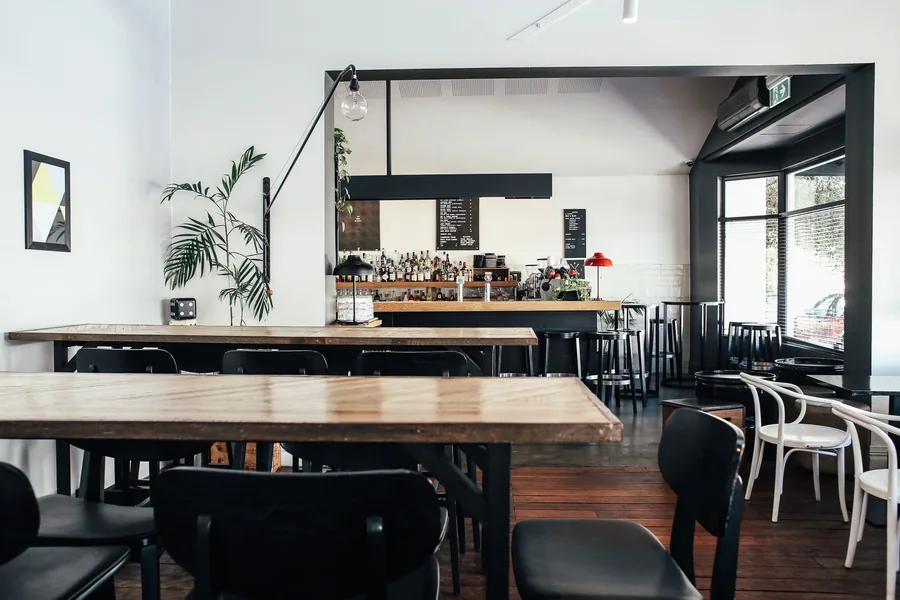
The UAE’s premium design aesthetic — marble floors, large glass facades, polished concrete ceilings, and minimal soft furnishings — creates the worst possible conditions for acoustic control. Every hard surface reflects sound rather than absorbing it, dramatically extending the time sound waves remain active in the room.
Acoustic engineers measure this as RT60: the time in seconds it takes for sound to decay by 60 decibels after a source stops. Untreated dining rooms with predominantly hard surfaces typically measure an RT60 of 1.5 to 3.0 seconds. A well-treated restaurant should target 0.6 to 1.0 seconds. The difference between 2.5 seconds and 0.8 seconds is the difference between a room that feels chaotic and one that feels lively but intelligible.
Common UAE interior finishes and their acoustic impact:
These challenges are why acoustic planning must be embedded into your restaurant interior design services brief, not added as an afterthought once the hard finishes are fixed.
Acoustic Treatment Options for Restaurant Fit-Out
Achieving a well-controlled acoustic environment requires combining absorption (reducing echo within the room) with appropriate sound isolation (blocking noise from entering or leaving). For most UAE restaurant fit-outs, absorption is the primary intervention.
Ceiling Treatments
The ceiling is the most impactful single surface to treat because it is the largest flat, hard, unobstructed reflector in most dining rooms. Options include:
Wall Panels
Fabric-wrapped panels, perforated timber cladding, and stretched-fabric systems all add meaningful wall absorption. Perforated wooden panels suit the premium UAE hospitality aesthetic — they introduce warm natural texture while controlling mid-frequency reverberation. As a general rule, aim to cover at least 40% of exposed wall and ceiling area with absorptive materials; for a 1,000 sq ft dining room, this means roughly 400 sq ft of treatment distributed across surfaces.
Soft Furnishings and Upholstery
Upholstered banquettes, padded chairs, and curtains provide distributed absorption across the room. Even replacing hard-seat chairs with upholstered equivalents measurably reduces reverberation. Area rugs over tiled floors — feasible in lounge zones and private dining rooms — are among the most cost-effective treatments available.
Acoustic Dividers and Booth Seating
High-backed booth seating performs a dual function: it provides privacy screens that block line-of-sight between tables (reducing direct sound transmission) while upholstered surfaces absorb ambient energy. Free-standing acoustic dividers between tables serve a similar purpose and can be repositioned as layouts change.
Sound Isolation at Kitchen and Service Boundaries
Sound-rated doors at kitchen pass-throughs, mass-loaded vinyl or double-layer drywall on kitchen walls, and acoustic-rated ceiling tiles above kitchen ceilings prevent bleed into the dining room. These are structural decisions that must be made during the restaurant turnkey fit-out stage — they cannot be retrofitted without major disruption.
Balancing Buzz vs Intelligibility: Finding the Right Level
The goal of restaurant acoustics design is not silence. A completely dead acoustic environment — below 45 dB with no ambient energy — feels uncomfortable, makes conversations feel exposed, and signals to guests that lingering is not welcome. The goal is controlled energy at the right level for your concept.
A practical target by concept type:
Research from performance acoustics specialists maps 78–85 dB to the review language of “too loud to have a conversation” — the threshold operators should treat as an absolute ceiling during peak service in any seated dining context.
Background music level is one of the most controllable variables. Music played 3–5 dB below ambient speech levels adds atmosphere without amplifying the overall noise load. Music played above speech level forces the Lombard Effect into overdrive.
Acoustic Zoning: Designing Different Areas for Different Moods
Rather than treating a restaurant as a single acoustic space, the most sophisticated approach maps different acoustic targets to different zones — reflecting both the function of each area and the guest experience you want to deliver there.
Acoustic zoning works hand-in-hand with restaurant lighting design: intimate zones with warmer, dimmer light benefit from softer acoustics; livelier zones with brighter lighting can carry higher ambient energy. Both systems together define each area’s character.
Planning Acoustics During Your Restaurant Fit-Out
The most important principle in restaurant acoustics design is timing. Decisions made at concept stage cost a fraction of what they cost once construction has started. A ceiling baffle system specified during fit-out integrates cleanly with MEP routing and lighting. The same system installed as a retrofit must work around existing infrastructure at significantly higher cost.
A practical acoustic planning sequence for UAE restaurant fit-outs:
Acoustic treatment is a standard fit-out component, not an optional upgrade. The return in guest satisfaction, staff wellbeing, and review quality consistently justifies the investment — especially when specified at the start rather than retrofitted after opening.
FAQ
What decibel level is acceptable for a UAE restaurant during peak service?
For casual dining, aim to keep peak service levels below 75 dB. Fine dining and premium concepts should target 65–70 dB. Levels above 78 dB consistently generate negative reviews citing an inability to hold a conversation. The target varies by concept, but no seated dining venue benefits from sustained levels above 80 dB.
Can acoustic panels work in a UAE restaurant with a luxury marble interior?
Yes — and they are especially necessary. Marble, polished tile, and full-height glass create the worst reflective conditions for a dining room. Perforated timber panels, fabric-wrapped wall panels, and suspended ceiling baffles are all available in finishes appropriate for premium UAE hospitality interiors. Acoustic treatment does not require a compromise on aesthetics; the best solutions are designed as visual features in their own right.
How much absorptive surface coverage does a restaurant dining room need?
A commonly cited guideline is to cover at least 40% of exposed room surfaces with sound-absorbing materials. For a 1,000 sq ft dining room, this translates to approximately 400 sq ft of acoustic panels, baffles, upholstered surfaces, and soft flooring distributed across the ceiling and walls. The exact requirement depends on ceiling height, surface materials, and your target RT60 value.
Should acoustics be planned before or after the restaurant interior design is finalised?
Before — or more precisely, concurrently. Acoustic requirements influence ceiling height decisions, material selections, furniture specifications, and structural details for kitchen isolation. Retrofitting acoustic treatment after a restaurant has opened is possible but significantly more expensive and involves aesthetic compromises. The most cost-effective approach is to include acoustic planning as a defined scope item from day one of the fit-out process.
Related guide: This article is part of our complete restaurant design and fit-out guide.
Make My Restaurant is the UAE's single-partner solution for opening and running restaurants — concept, fit-out, commercial kitchens, licensing, compliance, cleaning and back-office — serving Dubai, Sharjah and the UAE.