
- Our Services
- Concept Design›Kitchen Design›Renovation›Cloud Kitchen Setup›2D/3D Layout Design›Turnkey Solutions›Tile Work›Painting›Joinery›Custom Furniture›MEP Engineering›HVAC Installation›Kitchen Exhaust›Fire Suppression›Stainless Steel Fabrication›Food Truck & Container›Staff Uniforms›LED Signage›Bill of Quantities›OUR SERVICESConcept Design VIEW MAIN PAGE →
Brand, cuisine and concept development that defines your restaurant before design begins.
Turnkey DeliveryUAE-Code CompliantOn-Time HandoverLearn More →OUR SERVICESKitchen Design VIEW MAIN PAGE →Commercial kitchen layouts engineered for flow, capacity and UAE code.
Turnkey DeliveryUAE-Code CompliantOn-Time HandoverLearn More →OUR SERVICESRenovation VIEW MAIN PAGE →Refresh or fully transform an existing restaurant with minimal downtime.
Turnkey DeliveryUAE-Code CompliantOn-Time HandoverLearn More →OUR SERVICESCloud Kitchen Setup VIEW MAIN PAGE →Turnkey delivery-only kitchens — licensed, fitted and platform-ready.
Turnkey DeliveryUAE-Code CompliantOn-Time HandoverLearn More →OUR SERVICES2D/3D Layout Design VIEW MAIN PAGE →Concept layouts and photoreal 3D visuals so you see the space before you build it.
Turnkey DeliveryUAE-Code CompliantOn-Time HandoverLearn More →OUR SERVICESTurnkey Solutions VIEW MAIN PAGE →One contract from empty shell to opening day — design, build, MEP and handover.
Turnkey DeliveryUAE-Code CompliantOn-Time HandoverLearn More →OUR SERVICESTile Work VIEW MAIN PAGE →Durable, hygienic floor and wall tiling built for high-traffic F&B spaces.
Turnkey DeliveryUAE-Code CompliantOn-Time HandoverLearn More →OUR SERVICESPainting VIEW MAIN PAGE →Flawless interior and exterior finishes with food-safe, washable paints.
Turnkey DeliveryUAE-Code CompliantOn-Time HandoverLearn More →OUR SERVICESJoinery VIEW MAIN PAGE →Bespoke counters, bars, millwork and custom woodwork.
Turnkey DeliveryUAE-Code CompliantOn-Time HandoverLearn More →OUR SERVICESCustom Furniture VIEW MAIN PAGE →Made-to-measure seating, tables and fixtures for your concept.
Turnkey DeliveryUAE-Code CompliantOn-Time HandoverLearn More →OUR SERVICESMEP Engineering VIEW MAIN PAGE →Mechanical, electrical and plumbing designed and installed to UAE code.
Turnkey DeliveryUAE-Code CompliantOn-Time HandoverLearn More →OUR SERVICESHVAC Installation VIEW MAIN PAGE →Climate control sized for busy kitchens and comfortable dining.
Turnkey DeliveryUAE-Code CompliantOn-Time HandoverLearn More →OUR SERVICESKitchen Exhaust VIEW MAIN PAGE →Compliant kitchen exhaust and ventilation systems.
Turnkey DeliveryUAE-Code CompliantOn-Time HandoverLearn More →OUR SERVICESFire Suppression VIEW MAIN PAGE →Certified kitchen fire-suppression systems and Civil Defence sign-off.
Turnkey DeliveryUAE-Code CompliantOn-Time HandoverLearn More →OUR SERVICESStainless Steel Fabrication VIEW MAIN PAGE →Custom commercial kitchen steelwork — tables, hoods, shelving.
Turnkey DeliveryUAE-Code CompliantOn-Time HandoverLearn More →OUR SERVICESFood Truck & Container VIEW MAIN PAGE →Turnkey food trucks and container kitchens, built and fitted out.
Turnkey DeliveryUAE-Code CompliantOn-Time HandoverLearn More →OUR SERVICESStaff Uniforms VIEW MAIN PAGE →Branded uniforms for front and back of house.
Turnkey DeliveryUAE-Code CompliantOn-Time HandoverLearn More →OUR SERVICESLED Signage VIEW MAIN PAGE →Eye-catching LED signage and storefront branding.
Turnkey DeliveryUAE-Code CompliantOn-Time HandoverLearn More →OUR SERVICESBill of Quantities VIEW MAIN PAGE →Accurate costing and BoQ so your fit-out stays on budget.
Turnkey DeliveryUAE-Code CompliantOn-Time HandoverLearn More →MAKE MY RESTAURANTConcept DesignBrand, cuisine and concept development that defines your restaurant before design begins.
Turnkey DeliveryUAE-Code CompliantOn-Time HandoverGet a Free QuoteMAKE MY RESTAURANTKitchen DesignCommercial kitchen layouts engineered for flow, capacity and UAE code.
Turnkey DeliveryUAE-Code CompliantOn-Time HandoverGet a Free QuoteMAKE MY RESTAURANTRenovationRefresh or fully transform an existing restaurant with minimal downtime.
Turnkey DeliveryUAE-Code CompliantOn-Time HandoverGet a Free QuoteMAKE MY RESTAURANTCloud Kitchen SetupTurnkey delivery-only kitchens — licensed, fitted and platform-ready.
Turnkey DeliveryUAE-Code CompliantOn-Time HandoverGet a Free QuoteMAKE MY RESTAURANT2D/3D Layout DesignConcept layouts and photoreal 3D visuals so you see the space before you build it.
Turnkey DeliveryUAE-Code CompliantOn-Time HandoverGet a Free QuoteMAKE MY RESTAURANTTurnkey SolutionsOne contract from empty shell to opening day — design, build, MEP and handover.
Turnkey DeliveryUAE-Code CompliantOn-Time HandoverGet a Free QuoteMAKE MY RESTAURANTTile WorkDurable, hygienic floor and wall tiling built for high-traffic F&B spaces.
Turnkey DeliveryUAE-Code CompliantOn-Time HandoverGet a Free QuoteMAKE MY RESTAURANTPaintingFlawless interior and exterior finishes with food-safe, washable paints.
Turnkey DeliveryUAE-Code CompliantOn-Time HandoverGet a Free QuoteMAKE MY RESTAURANTJoineryBespoke counters, bars, millwork and custom woodwork.
Turnkey DeliveryUAE-Code CompliantOn-Time HandoverGet a Free QuoteMAKE MY RESTAURANTCustom FurnitureMade-to-measure seating, tables and fixtures for your concept.
Turnkey DeliveryUAE-Code CompliantOn-Time HandoverGet a Free QuoteMAKE MY RESTAURANTMEP EngineeringMechanical, electrical and plumbing designed and installed to UAE code.
Turnkey DeliveryUAE-Code CompliantOn-Time HandoverGet a Free QuoteMAKE MY RESTAURANTHVAC InstallationClimate control sized for busy kitchens and comfortable dining.
Turnkey DeliveryUAE-Code CompliantOn-Time HandoverGet a Free QuoteMAKE MY RESTAURANTKitchen ExhaustCompliant kitchen exhaust and ventilation systems.
Turnkey DeliveryUAE-Code CompliantOn-Time HandoverGet a Free QuoteMAKE MY RESTAURANTFire SuppressionCertified kitchen fire-suppression systems and Civil Defence sign-off.
Turnkey DeliveryUAE-Code CompliantOn-Time HandoverGet a Free QuoteMAKE MY RESTAURANTStainless Steel FabricationCustom commercial kitchen steelwork — tables, hoods, shelving.
Turnkey DeliveryUAE-Code CompliantOn-Time HandoverGet a Free QuoteMAKE MY RESTAURANTFood Truck & ContainerTurnkey food trucks and container kitchens, built and fitted out.
Turnkey DeliveryUAE-Code CompliantOn-Time HandoverGet a Free QuoteMAKE MY RESTAURANTStaff UniformsBranded uniforms for front and back of house.
Turnkey DeliveryUAE-Code CompliantOn-Time HandoverGet a Free QuoteMAKE MY RESTAURANTLED SignageEye-catching LED signage and storefront branding.
Turnkey DeliveryUAE-Code CompliantOn-Time HandoverGet a Free QuoteMAKE MY RESTAURANTBill of QuantitiesAccurate costing and BoQ so your fit-out stays on budget.
Turnkey DeliveryUAE-Code CompliantOn-Time HandoverGet a Free Quote
-
- Essential Services
- F&B Business Setup›Compliance Audit›Grease Trap Cleaning›Kitchen Hood Cleaning›Ecology Unit Cleaning›Pest Control›AC Maintenance›Stewarding›PIC Training›Food Safety Training›Fire Safety Training›PRO Services›VAT & Corporate Tax›Bookkeeping›Bank Account Opening›Social Media Mgmt›Delivery Apps Mgmt›ESSENTIAL SERVICESF&B Business Setup VIEW MAIN PAGE →
End-to-end licensing, permits and setup to launch your F&B business in the UAE.
Licensed & CertifiedAll 7 EmiratesAnnual ContractsLearn More →ESSENTIAL SERVICESCompliance Audit VIEW MAIN PAGE →Full municipality, Civil Defence and food-safety compliance audit and gap report.
Licensed & CertifiedAll 7 EmiratesAnnual ContractsLearn More →ESSENTIAL SERVICESGrease Trap Cleaning VIEW MAIN PAGE →Scheduled grease trap cleaning with full compliance documentation.
Licensed & CertifiedAll 7 EmiratesAnnual ContractsLearn More →ESSENTIAL SERVICESKitchen Hood Cleaning VIEW MAIN PAGE →Deep hood and duct cleaning on annual contracts.
Licensed & CertifiedAll 7 EmiratesAnnual ContractsLearn More →ESSENTIAL SERVICESEcology Unit Cleaning VIEW MAIN PAGE →ESP / ecology unit servicing with municipality reports.
Licensed & CertifiedAll 7 EmiratesAnnual ContractsLearn More →ESSENTIAL SERVICESPest Control VIEW MAIN PAGE →Food-safe pest management on annual contracts.
Licensed & CertifiedAll 7 EmiratesAnnual ContractsLearn More →ESSENTIAL SERVICESAC Maintenance VIEW MAIN PAGE →Preventive AC maintenance plans that avoid breakdowns.
Licensed & CertifiedAll 7 EmiratesAnnual ContractsLearn More →ESSENTIAL SERVICESStewarding VIEW MAIN PAGE →Trained stewarding and cleaning crews on call.
Licensed & CertifiedAll 7 EmiratesAnnual ContractsLearn More →ESSENTIAL SERVICESPIC Training VIEW MAIN PAGE →Person-in-Charge food safety certification for your team.
Licensed & CertifiedAll 7 EmiratesAnnual ContractsLearn More →ESSENTIAL SERVICESFood Safety Training VIEW MAIN PAGE →Municipality-approved food safety courses.
Licensed & CertifiedAll 7 EmiratesAnnual ContractsLearn More →ESSENTIAL SERVICESFire Safety Training VIEW MAIN PAGE →Staff fire safety and evacuation training.
Licensed & CertifiedAll 7 EmiratesAnnual ContractsLearn More →ESSENTIAL SERVICESPRO Services VIEW MAIN PAGE →Licensing, permits and government liaison, fully handled.
Licensed & CertifiedAll 7 EmiratesAnnual ContractsLearn More →ESSENTIAL SERVICESVAT & Corporate Tax VIEW MAIN PAGE →VAT and corporate tax registration and filings, managed.
Licensed & CertifiedAll 7 EmiratesAnnual ContractsLearn More →ESSENTIAL SERVICESBookkeeping VIEW MAIN PAGE →Monthly bookkeeping and accounts for restaurants.
Licensed & CertifiedAll 7 EmiratesAnnual ContractsLearn More →ESSENTIAL SERVICESBank Account Opening VIEW MAIN PAGE →Business bank account setup assistance.
Licensed & CertifiedAll 7 EmiratesAnnual ContractsLearn More →ESSENTIAL SERVICESSocial Media Mgmt VIEW MAIN PAGE →Content and ads that fill tables.
Licensed & CertifiedAll 7 EmiratesAnnual ContractsLearn More →ESSENTIAL SERVICESDelivery Apps Mgmt VIEW MAIN PAGE →Talabat, Deliveroo and Noon menu and listing optimisation.
Licensed & CertifiedAll 7 EmiratesAnnual ContractsLearn More →MAKE MY RESTAURANTF&B Business SetupEnd-to-end licensing, permits and setup to launch your F&B business in the UAE.
Licensed & CertifiedAll 7 EmiratesAnnual ContractsGet a Free QuoteMAKE MY RESTAURANTCompliance AuditFull municipality, Civil Defence and food-safety compliance audit and gap report.
Licensed & CertifiedAll 7 EmiratesAnnual ContractsGet a Free QuoteMAKE MY RESTAURANTGrease Trap CleaningScheduled grease trap cleaning with full compliance documentation.
Licensed & CertifiedAll 7 EmiratesAnnual ContractsGet a Free QuoteMAKE MY RESTAURANTKitchen Hood CleaningDeep hood and duct cleaning on annual contracts.
Licensed & CertifiedAll 7 EmiratesAnnual ContractsGet a Free QuoteMAKE MY RESTAURANTEcology Unit CleaningESP / ecology unit servicing with municipality reports.
Licensed & CertifiedAll 7 EmiratesAnnual ContractsGet a Free QuoteMAKE MY RESTAURANTPest ControlFood-safe pest management on annual contracts.
Licensed & CertifiedAll 7 EmiratesAnnual ContractsGet a Free QuoteMAKE MY RESTAURANTAC MaintenancePreventive AC maintenance plans that avoid breakdowns.
Licensed & CertifiedAll 7 EmiratesAnnual ContractsGet a Free QuoteMAKE MY RESTAURANTStewardingTrained stewarding and cleaning crews on call.
Licensed & CertifiedAll 7 EmiratesAnnual ContractsGet a Free QuoteMAKE MY RESTAURANTPIC TrainingPerson-in-Charge food safety certification for your team.
Licensed & CertifiedAll 7 EmiratesAnnual ContractsGet a Free QuoteMAKE MY RESTAURANTFood Safety TrainingMunicipality-approved food safety courses.
Licensed & CertifiedAll 7 EmiratesAnnual ContractsGet a Free QuoteMAKE MY RESTAURANTFire Safety TrainingStaff fire safety and evacuation training.
Licensed & CertifiedAll 7 EmiratesAnnual ContractsGet a Free QuoteMAKE MY RESTAURANTPRO ServicesLicensing, permits and government liaison, fully handled.
Licensed & CertifiedAll 7 EmiratesAnnual ContractsGet a Free QuoteMAKE MY RESTAURANTVAT & Corporate TaxVAT and corporate tax registration and filings, managed.
Licensed & CertifiedAll 7 EmiratesAnnual ContractsGet a Free QuoteMAKE MY RESTAURANTBookkeepingMonthly bookkeeping and accounts for restaurants.
Licensed & CertifiedAll 7 EmiratesAnnual ContractsGet a Free QuoteMAKE MY RESTAURANTBank Account OpeningBusiness bank account setup assistance.
Licensed & CertifiedAll 7 EmiratesAnnual ContractsGet a Free QuoteMAKE MY RESTAURANTSocial Media MgmtContent and ads that fill tables.
Licensed & CertifiedAll 7 EmiratesAnnual ContractsGet a Free QuoteMAKE MY RESTAURANTDelivery Apps MgmtTalabat, Deliveroo and Noon menu and listing optimisation.
Licensed & CertifiedAll 7 EmiratesAnnual ContractsGet a Free Quote
-
- Guides
- Blogs
- About
Enquiry
+971 58 570 7110

- Our Services
- Concept Design›Kitchen Design›Renovation›Cloud Kitchen Setup›2D/3D Layout Design›Turnkey Solutions›Tile Work›Painting›Joinery›Custom Furniture›MEP Engineering›HVAC Installation›Kitchen Exhaust›Fire Suppression›Stainless Steel Fabrication›Food Truck & Container›Staff Uniforms›LED Signage›Bill of Quantities›OUR SERVICESConcept Design VIEW MAIN PAGE →
Brand, cuisine and concept development that defines your restaurant before design begins.
Turnkey DeliveryUAE-Code CompliantOn-Time HandoverLearn More →OUR SERVICESKitchen Design VIEW MAIN PAGE →Commercial kitchen layouts engineered for flow, capacity and UAE code.
Turnkey DeliveryUAE-Code CompliantOn-Time HandoverLearn More →OUR SERVICESRenovation VIEW MAIN PAGE →Refresh or fully transform an existing restaurant with minimal downtime.
Turnkey DeliveryUAE-Code CompliantOn-Time HandoverLearn More →OUR SERVICESCloud Kitchen Setup VIEW MAIN PAGE →Turnkey delivery-only kitchens — licensed, fitted and platform-ready.
Turnkey DeliveryUAE-Code CompliantOn-Time HandoverLearn More →OUR SERVICES2D/3D Layout Design VIEW MAIN PAGE →Concept layouts and photoreal 3D visuals so you see the space before you build it.
Turnkey DeliveryUAE-Code CompliantOn-Time HandoverLearn More →OUR SERVICESTurnkey Solutions VIEW MAIN PAGE →One contract from empty shell to opening day — design, build, MEP and handover.
Turnkey DeliveryUAE-Code CompliantOn-Time HandoverLearn More →OUR SERVICESTile Work VIEW MAIN PAGE →Durable, hygienic floor and wall tiling built for high-traffic F&B spaces.
Turnkey DeliveryUAE-Code CompliantOn-Time HandoverLearn More →OUR SERVICESPainting VIEW MAIN PAGE →Flawless interior and exterior finishes with food-safe, washable paints.
Turnkey DeliveryUAE-Code CompliantOn-Time HandoverLearn More →OUR SERVICESJoinery VIEW MAIN PAGE →Bespoke counters, bars, millwork and custom woodwork.
Turnkey DeliveryUAE-Code CompliantOn-Time HandoverLearn More →OUR SERVICESCustom Furniture VIEW MAIN PAGE →Made-to-measure seating, tables and fixtures for your concept.
Turnkey DeliveryUAE-Code CompliantOn-Time HandoverLearn More →OUR SERVICESMEP Engineering VIEW MAIN PAGE →Mechanical, electrical and plumbing designed and installed to UAE code.
Turnkey DeliveryUAE-Code CompliantOn-Time HandoverLearn More →OUR SERVICESHVAC Installation VIEW MAIN PAGE →Climate control sized for busy kitchens and comfortable dining.
Turnkey DeliveryUAE-Code CompliantOn-Time HandoverLearn More →OUR SERVICESKitchen Exhaust VIEW MAIN PAGE →Compliant kitchen exhaust and ventilation systems.
Turnkey DeliveryUAE-Code CompliantOn-Time HandoverLearn More →OUR SERVICESFire Suppression VIEW MAIN PAGE →Certified kitchen fire-suppression systems and Civil Defence sign-off.
Turnkey DeliveryUAE-Code CompliantOn-Time HandoverLearn More →OUR SERVICESStainless Steel Fabrication VIEW MAIN PAGE →Custom commercial kitchen steelwork — tables, hoods, shelving.
Turnkey DeliveryUAE-Code CompliantOn-Time HandoverLearn More →OUR SERVICESFood Truck & Container VIEW MAIN PAGE →Turnkey food trucks and container kitchens, built and fitted out.
Turnkey DeliveryUAE-Code CompliantOn-Time HandoverLearn More →OUR SERVICESStaff Uniforms VIEW MAIN PAGE →Branded uniforms for front and back of house.
Turnkey DeliveryUAE-Code CompliantOn-Time HandoverLearn More →OUR SERVICESLED Signage VIEW MAIN PAGE →Eye-catching LED signage and storefront branding.
Turnkey DeliveryUAE-Code CompliantOn-Time HandoverLearn More →OUR SERVICESBill of Quantities VIEW MAIN PAGE →Accurate costing and BoQ so your fit-out stays on budget.
Turnkey DeliveryUAE-Code CompliantOn-Time HandoverLearn More →MAKE MY RESTAURANTConcept DesignBrand, cuisine and concept development that defines your restaurant before design begins.
Turnkey DeliveryUAE-Code CompliantOn-Time HandoverGet a Free QuoteMAKE MY RESTAURANTKitchen DesignCommercial kitchen layouts engineered for flow, capacity and UAE code.
Turnkey DeliveryUAE-Code CompliantOn-Time HandoverGet a Free QuoteMAKE MY RESTAURANTRenovationRefresh or fully transform an existing restaurant with minimal downtime.
Turnkey DeliveryUAE-Code CompliantOn-Time HandoverGet a Free QuoteMAKE MY RESTAURANTCloud Kitchen SetupTurnkey delivery-only kitchens — licensed, fitted and platform-ready.
Turnkey DeliveryUAE-Code CompliantOn-Time HandoverGet a Free QuoteMAKE MY RESTAURANT2D/3D Layout DesignConcept layouts and photoreal 3D visuals so you see the space before you build it.
Turnkey DeliveryUAE-Code CompliantOn-Time HandoverGet a Free QuoteMAKE MY RESTAURANTTurnkey SolutionsOne contract from empty shell to opening day — design, build, MEP and handover.
Turnkey DeliveryUAE-Code CompliantOn-Time HandoverGet a Free QuoteMAKE MY RESTAURANTTile WorkDurable, hygienic floor and wall tiling built for high-traffic F&B spaces.
Turnkey DeliveryUAE-Code CompliantOn-Time HandoverGet a Free QuoteMAKE MY RESTAURANTPaintingFlawless interior and exterior finishes with food-safe, washable paints.
Turnkey DeliveryUAE-Code CompliantOn-Time HandoverGet a Free QuoteMAKE MY RESTAURANTJoineryBespoke counters, bars, millwork and custom woodwork.
Turnkey DeliveryUAE-Code CompliantOn-Time HandoverGet a Free QuoteMAKE MY RESTAURANTCustom FurnitureMade-to-measure seating, tables and fixtures for your concept.
Turnkey DeliveryUAE-Code CompliantOn-Time HandoverGet a Free QuoteMAKE MY RESTAURANTMEP EngineeringMechanical, electrical and plumbing designed and installed to UAE code.
Turnkey DeliveryUAE-Code CompliantOn-Time HandoverGet a Free QuoteMAKE MY RESTAURANTHVAC InstallationClimate control sized for busy kitchens and comfortable dining.
Turnkey DeliveryUAE-Code CompliantOn-Time HandoverGet a Free QuoteMAKE MY RESTAURANTKitchen ExhaustCompliant kitchen exhaust and ventilation systems.
Turnkey DeliveryUAE-Code CompliantOn-Time HandoverGet a Free QuoteMAKE MY RESTAURANTFire SuppressionCertified kitchen fire-suppression systems and Civil Defence sign-off.
Turnkey DeliveryUAE-Code CompliantOn-Time HandoverGet a Free QuoteMAKE MY RESTAURANTStainless Steel FabricationCustom commercial kitchen steelwork — tables, hoods, shelving.
Turnkey DeliveryUAE-Code CompliantOn-Time HandoverGet a Free QuoteMAKE MY RESTAURANTFood Truck & ContainerTurnkey food trucks and container kitchens, built and fitted out.
Turnkey DeliveryUAE-Code CompliantOn-Time HandoverGet a Free QuoteMAKE MY RESTAURANTStaff UniformsBranded uniforms for front and back of house.
Turnkey DeliveryUAE-Code CompliantOn-Time HandoverGet a Free QuoteMAKE MY RESTAURANTLED SignageEye-catching LED signage and storefront branding.
Turnkey DeliveryUAE-Code CompliantOn-Time HandoverGet a Free QuoteMAKE MY RESTAURANTBill of QuantitiesAccurate costing and BoQ so your fit-out stays on budget.
Turnkey DeliveryUAE-Code CompliantOn-Time HandoverGet a Free Quote
-
- Essential Services
- F&B Business Setup›Compliance Audit›Grease Trap Cleaning›Kitchen Hood Cleaning›Ecology Unit Cleaning›Pest Control›AC Maintenance›Stewarding›PIC Training›Food Safety Training›Fire Safety Training›PRO Services›VAT & Corporate Tax›Bookkeeping›Bank Account Opening›Social Media Mgmt›Delivery Apps Mgmt›ESSENTIAL SERVICESF&B Business Setup VIEW MAIN PAGE →
End-to-end licensing, permits and setup to launch your F&B business in the UAE.
Licensed & CertifiedAll 7 EmiratesAnnual ContractsLearn More →ESSENTIAL SERVICESCompliance Audit VIEW MAIN PAGE →Full municipality, Civil Defence and food-safety compliance audit and gap report.
Licensed & CertifiedAll 7 EmiratesAnnual ContractsLearn More →ESSENTIAL SERVICESGrease Trap Cleaning VIEW MAIN PAGE →Scheduled grease trap cleaning with full compliance documentation.
Licensed & CertifiedAll 7 EmiratesAnnual ContractsLearn More →ESSENTIAL SERVICESKitchen Hood Cleaning VIEW MAIN PAGE →Deep hood and duct cleaning on annual contracts.
Licensed & CertifiedAll 7 EmiratesAnnual ContractsLearn More →ESSENTIAL SERVICESEcology Unit Cleaning VIEW MAIN PAGE →ESP / ecology unit servicing with municipality reports.
Licensed & CertifiedAll 7 EmiratesAnnual ContractsLearn More →ESSENTIAL SERVICESPest Control VIEW MAIN PAGE →Food-safe pest management on annual contracts.
Licensed & CertifiedAll 7 EmiratesAnnual ContractsLearn More →ESSENTIAL SERVICESAC Maintenance VIEW MAIN PAGE →Preventive AC maintenance plans that avoid breakdowns.
Licensed & CertifiedAll 7 EmiratesAnnual ContractsLearn More →ESSENTIAL SERVICESStewarding VIEW MAIN PAGE →Trained stewarding and cleaning crews on call.
Licensed & CertifiedAll 7 EmiratesAnnual ContractsLearn More →ESSENTIAL SERVICESPIC Training VIEW MAIN PAGE →Person-in-Charge food safety certification for your team.
Licensed & CertifiedAll 7 EmiratesAnnual ContractsLearn More →ESSENTIAL SERVICESFood Safety Training VIEW MAIN PAGE →Municipality-approved food safety courses.
Licensed & CertifiedAll 7 EmiratesAnnual ContractsLearn More →ESSENTIAL SERVICESFire Safety Training VIEW MAIN PAGE →Staff fire safety and evacuation training.
Licensed & CertifiedAll 7 EmiratesAnnual ContractsLearn More →ESSENTIAL SERVICESPRO Services VIEW MAIN PAGE →Licensing, permits and government liaison, fully handled.
Licensed & CertifiedAll 7 EmiratesAnnual ContractsLearn More →ESSENTIAL SERVICESVAT & Corporate Tax VIEW MAIN PAGE →VAT and corporate tax registration and filings, managed.
Licensed & CertifiedAll 7 EmiratesAnnual ContractsLearn More →ESSENTIAL SERVICESBookkeeping VIEW MAIN PAGE →Monthly bookkeeping and accounts for restaurants.
Licensed & CertifiedAll 7 EmiratesAnnual ContractsLearn More →ESSENTIAL SERVICESBank Account Opening VIEW MAIN PAGE →Business bank account setup assistance.
Licensed & CertifiedAll 7 EmiratesAnnual ContractsLearn More →ESSENTIAL SERVICESSocial Media Mgmt VIEW MAIN PAGE →Content and ads that fill tables.
Licensed & CertifiedAll 7 EmiratesAnnual ContractsLearn More →ESSENTIAL SERVICESDelivery Apps Mgmt VIEW MAIN PAGE →Talabat, Deliveroo and Noon menu and listing optimisation.
Licensed & CertifiedAll 7 EmiratesAnnual ContractsLearn More →MAKE MY RESTAURANTF&B Business SetupEnd-to-end licensing, permits and setup to launch your F&B business in the UAE.
Licensed & CertifiedAll 7 EmiratesAnnual ContractsGet a Free QuoteMAKE MY RESTAURANTCompliance AuditFull municipality, Civil Defence and food-safety compliance audit and gap report.
Licensed & CertifiedAll 7 EmiratesAnnual ContractsGet a Free QuoteMAKE MY RESTAURANTGrease Trap CleaningScheduled grease trap cleaning with full compliance documentation.
Licensed & CertifiedAll 7 EmiratesAnnual ContractsGet a Free QuoteMAKE MY RESTAURANTKitchen Hood CleaningDeep hood and duct cleaning on annual contracts.
Licensed & CertifiedAll 7 EmiratesAnnual ContractsGet a Free QuoteMAKE MY RESTAURANTEcology Unit CleaningESP / ecology unit servicing with municipality reports.
Licensed & CertifiedAll 7 EmiratesAnnual ContractsGet a Free QuoteMAKE MY RESTAURANTPest ControlFood-safe pest management on annual contracts.
Licensed & CertifiedAll 7 EmiratesAnnual ContractsGet a Free QuoteMAKE MY RESTAURANTAC MaintenancePreventive AC maintenance plans that avoid breakdowns.
Licensed & CertifiedAll 7 EmiratesAnnual ContractsGet a Free QuoteMAKE MY RESTAURANTStewardingTrained stewarding and cleaning crews on call.
Licensed & CertifiedAll 7 EmiratesAnnual ContractsGet a Free QuoteMAKE MY RESTAURANTPIC TrainingPerson-in-Charge food safety certification for your team.
Licensed & CertifiedAll 7 EmiratesAnnual ContractsGet a Free QuoteMAKE MY RESTAURANTFood Safety TrainingMunicipality-approved food safety courses.
Licensed & CertifiedAll 7 EmiratesAnnual ContractsGet a Free QuoteMAKE MY RESTAURANTFire Safety TrainingStaff fire safety and evacuation training.
Licensed & CertifiedAll 7 EmiratesAnnual ContractsGet a Free QuoteMAKE MY RESTAURANTPRO ServicesLicensing, permits and government liaison, fully handled.
Licensed & CertifiedAll 7 EmiratesAnnual ContractsGet a Free QuoteMAKE MY RESTAURANTVAT & Corporate TaxVAT and corporate tax registration and filings, managed.
Licensed & CertifiedAll 7 EmiratesAnnual ContractsGet a Free QuoteMAKE MY RESTAURANTBookkeepingMonthly bookkeeping and accounts for restaurants.
Licensed & CertifiedAll 7 EmiratesAnnual ContractsGet a Free QuoteMAKE MY RESTAURANTBank Account OpeningBusiness bank account setup assistance.
Licensed & CertifiedAll 7 EmiratesAnnual ContractsGet a Free QuoteMAKE MY RESTAURANTSocial Media MgmtContent and ads that fill tables.
Licensed & CertifiedAll 7 EmiratesAnnual ContractsGet a Free QuoteMAKE MY RESTAURANTDelivery Apps MgmtTalabat, Deliveroo and Noon menu and listing optimisation.
Licensed & CertifiedAll 7 EmiratesAnnual ContractsGet a Free Quote
-
- Guides
- Blogs
- About
×
Enquiry
+971 58 570 7110
- Our Services
- Concept Design›Kitchen Design›Renovation›Cloud Kitchen Setup›2D/3D Layout Design›Turnkey Solutions›Tile Work›Painting›Joinery›Custom Furniture›MEP Engineering›HVAC Installation›Kitchen Exhaust›Fire Suppression›Stainless Steel Fabrication›Food Truck & Container›Staff Uniforms›LED Signage›Bill of Quantities›OUR SERVICESConcept Design VIEW MAIN PAGE →
Brand, cuisine and concept development that defines your restaurant before design begins.
Turnkey DeliveryUAE-Code CompliantOn-Time HandoverLearn More →OUR SERVICESKitchen Design VIEW MAIN PAGE →Commercial kitchen layouts engineered for flow, capacity and UAE code.
Turnkey DeliveryUAE-Code CompliantOn-Time HandoverLearn More →OUR SERVICESRenovation VIEW MAIN PAGE →Refresh or fully transform an existing restaurant with minimal downtime.
Turnkey DeliveryUAE-Code CompliantOn-Time HandoverLearn More →OUR SERVICESCloud Kitchen Setup VIEW MAIN PAGE →Turnkey delivery-only kitchens — licensed, fitted and platform-ready.
Turnkey DeliveryUAE-Code CompliantOn-Time HandoverLearn More →OUR SERVICES2D/3D Layout Design VIEW MAIN PAGE →Concept layouts and photoreal 3D visuals so you see the space before you build it.
Turnkey DeliveryUAE-Code CompliantOn-Time HandoverLearn More →OUR SERVICESTurnkey Solutions VIEW MAIN PAGE →One contract from empty shell to opening day — design, build, MEP and handover.
Turnkey DeliveryUAE-Code CompliantOn-Time HandoverLearn More →OUR SERVICESTile Work VIEW MAIN PAGE →Durable, hygienic floor and wall tiling built for high-traffic F&B spaces.
Turnkey DeliveryUAE-Code CompliantOn-Time HandoverLearn More →OUR SERVICESPainting VIEW MAIN PAGE →Flawless interior and exterior finishes with food-safe, washable paints.
Turnkey DeliveryUAE-Code CompliantOn-Time HandoverLearn More →OUR SERVICESJoinery VIEW MAIN PAGE →Bespoke counters, bars, millwork and custom woodwork.
Turnkey DeliveryUAE-Code CompliantOn-Time HandoverLearn More →OUR SERVICESCustom Furniture VIEW MAIN PAGE →Made-to-measure seating, tables and fixtures for your concept.
Turnkey DeliveryUAE-Code CompliantOn-Time HandoverLearn More →OUR SERVICESMEP Engineering VIEW MAIN PAGE →Mechanical, electrical and plumbing designed and installed to UAE code.
Turnkey DeliveryUAE-Code CompliantOn-Time HandoverLearn More →OUR SERVICESHVAC Installation VIEW MAIN PAGE →Climate control sized for busy kitchens and comfortable dining.
Turnkey DeliveryUAE-Code CompliantOn-Time HandoverLearn More →OUR SERVICESKitchen Exhaust VIEW MAIN PAGE →Compliant kitchen exhaust and ventilation systems.
Turnkey DeliveryUAE-Code CompliantOn-Time HandoverLearn More →OUR SERVICESFire Suppression VIEW MAIN PAGE →Certified kitchen fire-suppression systems and Civil Defence sign-off.
Turnkey DeliveryUAE-Code CompliantOn-Time HandoverLearn More →OUR SERVICESStainless Steel Fabrication VIEW MAIN PAGE →Custom commercial kitchen steelwork — tables, hoods, shelving.
Turnkey DeliveryUAE-Code CompliantOn-Time HandoverLearn More →OUR SERVICESFood Truck & Container VIEW MAIN PAGE →Turnkey food trucks and container kitchens, built and fitted out.
Turnkey DeliveryUAE-Code CompliantOn-Time HandoverLearn More →OUR SERVICESStaff Uniforms VIEW MAIN PAGE →Branded uniforms for front and back of house.
Turnkey DeliveryUAE-Code CompliantOn-Time HandoverLearn More →OUR SERVICESLED Signage VIEW MAIN PAGE →Eye-catching LED signage and storefront branding.
Turnkey DeliveryUAE-Code CompliantOn-Time HandoverLearn More →OUR SERVICESBill of Quantities VIEW MAIN PAGE →Accurate costing and BoQ so your fit-out stays on budget.
Turnkey DeliveryUAE-Code CompliantOn-Time HandoverLearn More →MAKE MY RESTAURANTConcept DesignBrand, cuisine and concept development that defines your restaurant before design begins.
Turnkey DeliveryUAE-Code CompliantOn-Time HandoverGet a Free QuoteMAKE MY RESTAURANTKitchen DesignCommercial kitchen layouts engineered for flow, capacity and UAE code.
Turnkey DeliveryUAE-Code CompliantOn-Time HandoverGet a Free QuoteMAKE MY RESTAURANTRenovationRefresh or fully transform an existing restaurant with minimal downtime.
Turnkey DeliveryUAE-Code CompliantOn-Time HandoverGet a Free QuoteMAKE MY RESTAURANTCloud Kitchen SetupTurnkey delivery-only kitchens — licensed, fitted and platform-ready.
Turnkey DeliveryUAE-Code CompliantOn-Time HandoverGet a Free QuoteMAKE MY RESTAURANT2D/3D Layout DesignConcept layouts and photoreal 3D visuals so you see the space before you build it.
Turnkey DeliveryUAE-Code CompliantOn-Time HandoverGet a Free QuoteMAKE MY RESTAURANTTurnkey SolutionsOne contract from empty shell to opening day — design, build, MEP and handover.
Turnkey DeliveryUAE-Code CompliantOn-Time HandoverGet a Free QuoteMAKE MY RESTAURANTTile WorkDurable, hygienic floor and wall tiling built for high-traffic F&B spaces.
Turnkey DeliveryUAE-Code CompliantOn-Time HandoverGet a Free QuoteMAKE MY RESTAURANTPaintingFlawless interior and exterior finishes with food-safe, washable paints.
Turnkey DeliveryUAE-Code CompliantOn-Time HandoverGet a Free QuoteMAKE MY RESTAURANTJoineryBespoke counters, bars, millwork and custom woodwork.
Turnkey DeliveryUAE-Code CompliantOn-Time HandoverGet a Free QuoteMAKE MY RESTAURANTCustom FurnitureMade-to-measure seating, tables and fixtures for your concept.
Turnkey DeliveryUAE-Code CompliantOn-Time HandoverGet a Free QuoteMAKE MY RESTAURANTMEP EngineeringMechanical, electrical and plumbing designed and installed to UAE code.
Turnkey DeliveryUAE-Code CompliantOn-Time HandoverGet a Free QuoteMAKE MY RESTAURANTHVAC InstallationClimate control sized for busy kitchens and comfortable dining.
Turnkey DeliveryUAE-Code CompliantOn-Time HandoverGet a Free QuoteMAKE MY RESTAURANTKitchen ExhaustCompliant kitchen exhaust and ventilation systems.
Turnkey DeliveryUAE-Code CompliantOn-Time HandoverGet a Free QuoteMAKE MY RESTAURANTFire SuppressionCertified kitchen fire-suppression systems and Civil Defence sign-off.
Turnkey DeliveryUAE-Code CompliantOn-Time HandoverGet a Free QuoteMAKE MY RESTAURANTStainless Steel FabricationCustom commercial kitchen steelwork — tables, hoods, shelving.
Turnkey DeliveryUAE-Code CompliantOn-Time HandoverGet a Free QuoteMAKE MY RESTAURANTFood Truck & ContainerTurnkey food trucks and container kitchens, built and fitted out.
Turnkey DeliveryUAE-Code CompliantOn-Time HandoverGet a Free QuoteMAKE MY RESTAURANTStaff UniformsBranded uniforms for front and back of house.
Turnkey DeliveryUAE-Code CompliantOn-Time HandoverGet a Free QuoteMAKE MY RESTAURANTLED SignageEye-catching LED signage and storefront branding.
Turnkey DeliveryUAE-Code CompliantOn-Time HandoverGet a Free QuoteMAKE MY RESTAURANTBill of QuantitiesAccurate costing and BoQ so your fit-out stays on budget.
Turnkey DeliveryUAE-Code CompliantOn-Time HandoverGet a Free Quote
-
- Essential Services
- F&B Business Setup›Compliance Audit›Grease Trap Cleaning›Kitchen Hood Cleaning›Ecology Unit Cleaning›Pest Control›AC Maintenance›Stewarding›PIC Training›Food Safety Training›Fire Safety Training›PRO Services›VAT & Corporate Tax›Bookkeeping›Bank Account Opening›Social Media Mgmt›Delivery Apps Mgmt›ESSENTIAL SERVICESF&B Business Setup VIEW MAIN PAGE →
End-to-end licensing, permits and setup to launch your F&B business in the UAE.
Licensed & CertifiedAll 7 EmiratesAnnual ContractsLearn More →ESSENTIAL SERVICESCompliance Audit VIEW MAIN PAGE →Full municipality, Civil Defence and food-safety compliance audit and gap report.
Licensed & CertifiedAll 7 EmiratesAnnual ContractsLearn More →ESSENTIAL SERVICESGrease Trap Cleaning VIEW MAIN PAGE →Scheduled grease trap cleaning with full compliance documentation.
Licensed & CertifiedAll 7 EmiratesAnnual ContractsLearn More →ESSENTIAL SERVICESKitchen Hood Cleaning VIEW MAIN PAGE →Deep hood and duct cleaning on annual contracts.
Licensed & CertifiedAll 7 EmiratesAnnual ContractsLearn More →ESSENTIAL SERVICESEcology Unit Cleaning VIEW MAIN PAGE →ESP / ecology unit servicing with municipality reports.
Licensed & CertifiedAll 7 EmiratesAnnual ContractsLearn More →ESSENTIAL SERVICESPest Control VIEW MAIN PAGE →Food-safe pest management on annual contracts.
Licensed & CertifiedAll 7 EmiratesAnnual ContractsLearn More →ESSENTIAL SERVICESAC Maintenance VIEW MAIN PAGE →Preventive AC maintenance plans that avoid breakdowns.
Licensed & CertifiedAll 7 EmiratesAnnual ContractsLearn More →ESSENTIAL SERVICESStewarding VIEW MAIN PAGE →Trained stewarding and cleaning crews on call.
Licensed & CertifiedAll 7 EmiratesAnnual ContractsLearn More →ESSENTIAL SERVICESPIC Training VIEW MAIN PAGE →Person-in-Charge food safety certification for your team.
Licensed & CertifiedAll 7 EmiratesAnnual ContractsLearn More →ESSENTIAL SERVICESFood Safety Training VIEW MAIN PAGE →Municipality-approved food safety courses.
Licensed & CertifiedAll 7 EmiratesAnnual ContractsLearn More →ESSENTIAL SERVICESFire Safety Training VIEW MAIN PAGE →Staff fire safety and evacuation training.
Licensed & CertifiedAll 7 EmiratesAnnual ContractsLearn More →ESSENTIAL SERVICESPRO Services VIEW MAIN PAGE →Licensing, permits and government liaison, fully handled.
Licensed & CertifiedAll 7 EmiratesAnnual ContractsLearn More →ESSENTIAL SERVICESVAT & Corporate Tax VIEW MAIN PAGE →VAT and corporate tax registration and filings, managed.
Licensed & CertifiedAll 7 EmiratesAnnual ContractsLearn More →ESSENTIAL SERVICESBookkeeping VIEW MAIN PAGE →Monthly bookkeeping and accounts for restaurants.
Licensed & CertifiedAll 7 EmiratesAnnual ContractsLearn More →ESSENTIAL SERVICESBank Account Opening VIEW MAIN PAGE →Business bank account setup assistance.
Licensed & CertifiedAll 7 EmiratesAnnual ContractsLearn More →ESSENTIAL SERVICESSocial Media Mgmt VIEW MAIN PAGE →Content and ads that fill tables.
Licensed & CertifiedAll 7 EmiratesAnnual ContractsLearn More →ESSENTIAL SERVICESDelivery Apps Mgmt VIEW MAIN PAGE →Talabat, Deliveroo and Noon menu and listing optimisation.
Licensed & CertifiedAll 7 EmiratesAnnual ContractsLearn More →MAKE MY RESTAURANTF&B Business SetupEnd-to-end licensing, permits and setup to launch your F&B business in the UAE.
Licensed & CertifiedAll 7 EmiratesAnnual ContractsGet a Free QuoteMAKE MY RESTAURANTCompliance AuditFull municipality, Civil Defence and food-safety compliance audit and gap report.
Licensed & CertifiedAll 7 EmiratesAnnual ContractsGet a Free QuoteMAKE MY RESTAURANTGrease Trap CleaningScheduled grease trap cleaning with full compliance documentation.
Licensed & CertifiedAll 7 EmiratesAnnual ContractsGet a Free QuoteMAKE MY RESTAURANTKitchen Hood CleaningDeep hood and duct cleaning on annual contracts.
Licensed & CertifiedAll 7 EmiratesAnnual ContractsGet a Free QuoteMAKE MY RESTAURANTEcology Unit CleaningESP / ecology unit servicing with municipality reports.
Licensed & CertifiedAll 7 EmiratesAnnual ContractsGet a Free QuoteMAKE MY RESTAURANTPest ControlFood-safe pest management on annual contracts.
Licensed & CertifiedAll 7 EmiratesAnnual ContractsGet a Free QuoteMAKE MY RESTAURANTAC MaintenancePreventive AC maintenance plans that avoid breakdowns.
Licensed & CertifiedAll 7 EmiratesAnnual ContractsGet a Free QuoteMAKE MY RESTAURANTStewardingTrained stewarding and cleaning crews on call.
Licensed & CertifiedAll 7 EmiratesAnnual ContractsGet a Free QuoteMAKE MY RESTAURANTPIC TrainingPerson-in-Charge food safety certification for your team.
Licensed & CertifiedAll 7 EmiratesAnnual ContractsGet a Free QuoteMAKE MY RESTAURANTFood Safety TrainingMunicipality-approved food safety courses.
Licensed & CertifiedAll 7 EmiratesAnnual ContractsGet a Free QuoteMAKE MY RESTAURANTFire Safety TrainingStaff fire safety and evacuation training.
Licensed & CertifiedAll 7 EmiratesAnnual ContractsGet a Free QuoteMAKE MY RESTAURANTPRO ServicesLicensing, permits and government liaison, fully handled.
Licensed & CertifiedAll 7 EmiratesAnnual ContractsGet a Free QuoteMAKE MY RESTAURANTVAT & Corporate TaxVAT and corporate tax registration and filings, managed.
Licensed & CertifiedAll 7 EmiratesAnnual ContractsGet a Free QuoteMAKE MY RESTAURANTBookkeepingMonthly bookkeeping and accounts for restaurants.
Licensed & CertifiedAll 7 EmiratesAnnual ContractsGet a Free QuoteMAKE MY RESTAURANTBank Account OpeningBusiness bank account setup assistance.
Licensed & CertifiedAll 7 EmiratesAnnual ContractsGet a Free QuoteMAKE MY RESTAURANTSocial Media MgmtContent and ads that fill tables.
Licensed & CertifiedAll 7 EmiratesAnnual ContractsGet a Free QuoteMAKE MY RESTAURANTDelivery Apps MgmtTalabat, Deliveroo and Noon menu and listing optimisation.
Licensed & CertifiedAll 7 EmiratesAnnual ContractsGet a Free Quote
-
- Guides
- Blogs
- About
Industrial Area 13, Sharjah & Al Saqr Business Tower, Dubai, UAE
×
Restaurant Furniture Guide UAE: How to Choose the Right Pieces for Your Venue
- Home
- Fit-Out & Design
- Restaurant Furniture Guide UAE: How to Choose the Right Pieces for Your Venue
This website uses cookies to ensure you get the best experience on our website.
Need Help?
Send Mail us at
info@makemyrestaurant.com
Start Your Project
Tell us what you need — get a free quote and expert advice from our UAE team.
Essentials
Restaurant Design
Kitchen Fit-Out & Equipment
Licensing, PRO & Compliance
Cleaning & Maintenance
MEP & Engineering
Branding & Signage
Annual Service Contracts
Quick Links
Our Services
Essential Services
Guides
Blogs
About Us
Contact Us
Just Mail Us:
Al Saqr Business Tower, Sheikh Zayed Road, Dubai & Industrial Area 13, Sharjah, UAE
Phone
+971 58 570 7110
Reliable
 Quality Assured
Budget-Friendly
Reliable
Quality Assured
Budget-Friendly
Quality Assured
Budget-Friendly
Reliable
Quality Assured
Budget-Friendly
Copyrights© 2026 Make My Restaurant. All rights reserved.
Terms & Conditions
Privacy Policy
Sitemap.
×
Beat Your Quote
Already have a quote? We'll beat it.
Send us your current fit-out, interior or kitchen-equipment quote — we source factory-direct and come back with a better price within 24 hours.
Quick answer: Choose UAE restaurant furniture by matching material to climate and concept: powder-coated aluminium, HDPE synthetic rattan, or Grade-A teak for outdoor use (standard wood and fabric can’t survive UAE heat and UV), and commercial-grade chairs rated for 150 kg and 50,000+ sit-cycles indoors. Budget AED 100-1,499 per chair depending on tier, and AED 50,000-500,000+ total depending on cover count.
Why Furniture Selection Matters for UAE Restaurants
Restaurant furniture is one of the highest-impact capital decisions an operator makes — it shapes customer comfort, seating capacity, brand perception, and long-term maintenance costs simultaneously. In the UAE, a poor choice carries outsized consequences: extreme heat accelerates outdoor material failure, competition density in Dubai and Abu Dhabi raises guest expectations, and municipality compliance adds a formal approval layer most markets do not require.
Furniture is not a cosmetic afterthought. Research by the Cornell Center for Hospitality Research shows 40–60 percent of casual restaurant visits involve parties of one or two, meaning table configuration directly determines covers turned. A strategic table-mix reconfiguration — without adding a single seat — can generate a 5.1 percent revenue increase. That gain starts with furniture choices made before doors open.
This guide goes deeper on furniture selection than our overview of restaurant interior design principles, covering commercial-grade specs, UAE climate ratings, AED cost bands, and local sourcing from brief to installation.
Types of Restaurant Furniture
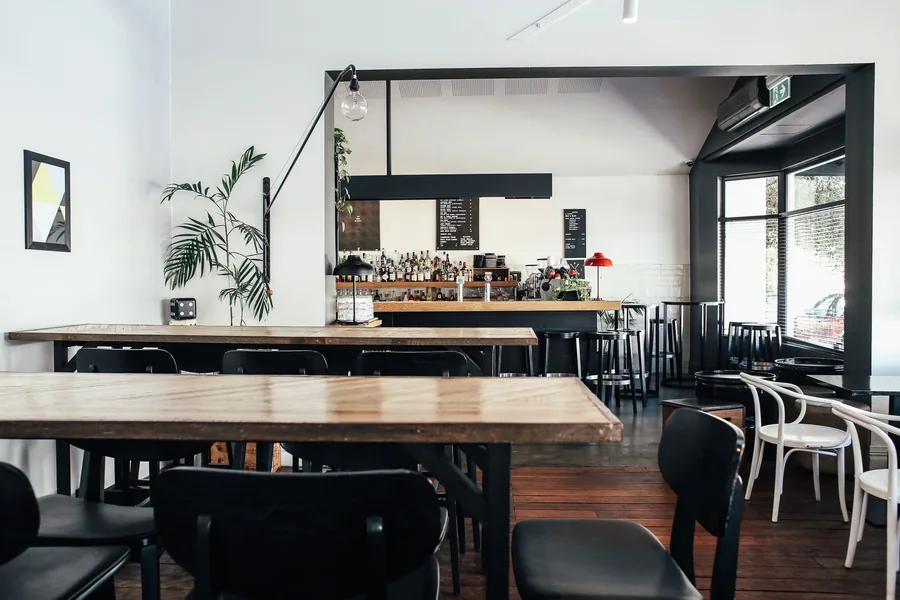
Understanding the full furniture category — chairs, tables, booths, bar stools, and outdoor pieces — before committing to a style ensures the layout serves both brand and operational flow.
Dining Chairs and Seating Types
Commercial dining chairs are the highest-turnover item in any fit-out. Specify chairs tested to support minimum 150 kg and rated for 50,000+ sit-cycles under BIFMA ANSI/X5.1. For upholstered seats in high-traffic venues, require a Martindale abrasion rating of at least 30,000 rubs; premium contract-grade fabric starts at 100,000 rubs. Common seating types and their use cases:
Dining Tables
Table shape determines cover density and reconfiguration flexibility. Square tables (60×60 cm or 70×70 cm) are the most versatile — two push together for a party of four. Round tables reduce sharp-corner injuries in tight layouts. Rectangular tables (70×120 cm or 75×150 cm) suit booth and banquette pairings. For commercial use, specify cast-iron or heavy-gauge steel bases; tops should be rated for cleaning agents — laminate, solid surface, or sealed stone.
Booths and Banquettes
Fixed booth seating maximises cover density along walls and perimeter zones. Banquettes — continuous upholstered bench runs — add visual warmth and acoustic softening but require upfront joinery investment (see our restaurant joinery service). Booth and banquette upholstery must be vinyl, faux leather, or high-Martindale fabric for easy cleaning in food service.
Bar Stools and Counter Seating
Bar and counter seating creates a secondary revenue zone at bar tops, pass-throughs, or open kitchen counters. Standard bar-stool seat height is 73–76 cm for a 105–110 cm counter; footrests at 25–30 cm are ergonomically critical for comfort. UAE venues increasingly use counter seating along window frontages to maximise covers in tight footprints.
Outdoor and Patio Furniture
Outdoor dining is a major UAE revenue driver from October to April. Outdoor furniture must always be specified separately from indoor pieces using climate-rated materials — covered in detail in the indoor vs. outdoor section below.
Materials and Durability for Commercial Use
Commercial furniture materials must be evaluated on structural strength, maintenance ease, humidity and chemical resistance, and — for UAE outdoor use — UV and heat tolerance. The table below compares the most common options across five criteria relevant to UAE operators.
Comfort vs. Seat Turnover — The Business Balance
Every furniture decision implicitly sets a dwell-time policy. Deeply padded seating increases average check size through upsells but reduces table turns. Firm, upright seats encourage quicker departures, maximising covers in peak periods but risking satisfaction scores.
The right balance depends on concept and daypart. A quick-service café may specify firm polypropylene shells; a fine-dining venue gains nothing from hard seats. For most casual-dining concepts, the answer is supportive but not reclined seating with a 4–6 cm seat pad — enough comfort for a 60–90-minute visit without encouraging extended table-sitting.
Ergonomic seat height also matters. Standard dining table height is 73–76 cm; seat height should be 44–47 cm, giving a 29–30 cm clearance — the range most adults need to sit without slouching. Mismatched heights cause fatigue and negative reviews. Our restaurant interior design service integrates these ergonomic decisions with broader spatial planning.
Sizing, Spacing, and Capacity
Dubai Municipality sets minimum space standards for restaurant layouts: 1.2–1.5 sq m per person in dining areas, with layout approval required before a trade licence is issued. Approval takes 5–10 working days for straightforward cases. No furniture can be placed until the layout is approved, making early furniture planning essential to the fit-out timeline.
Dubai Municipality also requires the kitchen to occupy 30–40 percent of total restaurant area. For a 200 sq m venue, that leaves 120–140 sq m for dining — supporting around 92–107 covers at 1.3 sq m per person, before deducting aisles, host stand, service stations, and bar zones.
Key spacing minimums for furniture placement:
Because 40–60 percent of covers are parties of 1–2, include a strong proportion of 2-top tables that pair for larger groups. Avoid committing more than 25 percent of your floor to fixed 4-tops — they run half-empty in most services and suppress revenue per cover. See our restaurant fit-out guide for how furniture planning integrates with layout approval and construction sequencing.
Indoor vs. Outdoor: UAE Climate-Rated Outdoor Furniture
Outdoor dining is commercially significant in the UAE — terraces add 20–40 percent to cover count during the October–April cooler season — but the climate makes standard outdoor furniture specifications inadequate.
Key UAE outdoor conditions driving material choice:
Materials rated for UAE outdoor commercial use:
Avoid outdoors: natural rattan, untreated pine or MDF, non-UV-stabilised polypropylene, chrome-plated steel in coastal areas, and any cushion fabric not rated as solution-dyed acrylic or equivalent marine-grade textile.
Custom vs. Off-the-Shelf Sourcing in UAE
The UAE has a well-developed commercial furniture supply chain, from imported catalogue pieces to fully bespoke local joinery. The right sourcing path depends on brand positioning, budget, timeline, and required differentiation.
Off-the-shelf suppliers offer faster lead times (2–8 weeks versus 8–16 weeks for custom), established warranties, and known durability specs. Key UAE-based commercial suppliers include:
Custom joinery and bespoke furniture enables unique brand expression — signature booths, proprietary table profiles, brand-colour frames — but requires longer lead times and project management experience. Custom joinery adds a 25–60 percent cost premium over comparable catalogue pieces, and design errors discovered after manufacture cannot be fixed without additional cost. Engage a restaurant furniture service early to identify which items warrant custom spec and which are well served by standard commercial pieces.
A hybrid approach — custom banquettes from a local joinery, standard chairs and tables from a catalogue supplier — typically delivers the best brand differentiation per AED spent.
Budgeting in AED
Restaurant furniture budgets in the UAE vary by concept, cover count, and specification. The ranges below reflect UAE market pricing for commercial-grade pieces — consumer or residential furniture will not survive commercial use.
Per-chair cost bands:
Ordering 20+ units of the same SKU from most UAE suppliers attracts a 15–30 percent bulk discount — a significant lever on a 100-cover fit-out.
Typical total furniture budgets by restaurant scale:
Add 25–60 percent if custom joinery replaces catalogue sourcing for key items, and reserve a 10–15 percent contingency — lead delays, transit damage, and measurement surprises are common on UAE fit-outs. See our restaurant fit-out guide for where furniture sits within the overall project budget.
FAQ
What is the minimum space per person required for a restaurant in Dubai?
Dubai Municipality requires 1.2–1.5 sq m per person in the dining area, excluding the kitchen (30–40 percent of total area), service stations, aisles, and the host zone. Always calculate cover count from net dining floor area after these deductions, not the total footprint.
How long does Dubai Municipality layout approval take?
Straightforward submissions typically take 5–10 working days. Complex cases — structural changes, liquor zones, multi-floor layouts — take longer. No furniture installation can proceed without an approved drawing, so factor this into your programme from day one.
What outdoor furniture materials work best in the UAE?
The top three are powder-coated aluminium (15–20+ years; withstands 70–80°C surface temps), HDPE synthetic rattan on an aluminium frame (20+ years; UV-stabilised), and Grade-A teak (15 years with biannual oiling). For outdoor cushions and umbrellas, specify solution-dyed acrylic only — standard outdoor fabrics fade within one UAE season.
Is custom furniture worth the extra cost for a UAE restaurant fit-out?
Custom furniture costs 25–60 percent more than comparable catalogue pieces. It is worth the premium for form factors catalogue suppliers cannot match — curved booths, brand-colour frames, proprietary table profiles — or where furniture differentiation is a core brand signal. For casual dining and café roll-outs, mid-range catalogue pieces with custom upholstery colours typically deliver sufficient brand expression at a fraction of the cost.
Related guide: This article is part of our complete restaurant design and fit-out guide.
Make My Restaurant is the UAE's single-partner solution for opening and running restaurants — concept, fit-out, commercial kitchens, licensing, compliance, cleaning and back-office — serving Dubai, Sharjah and the UAE.